
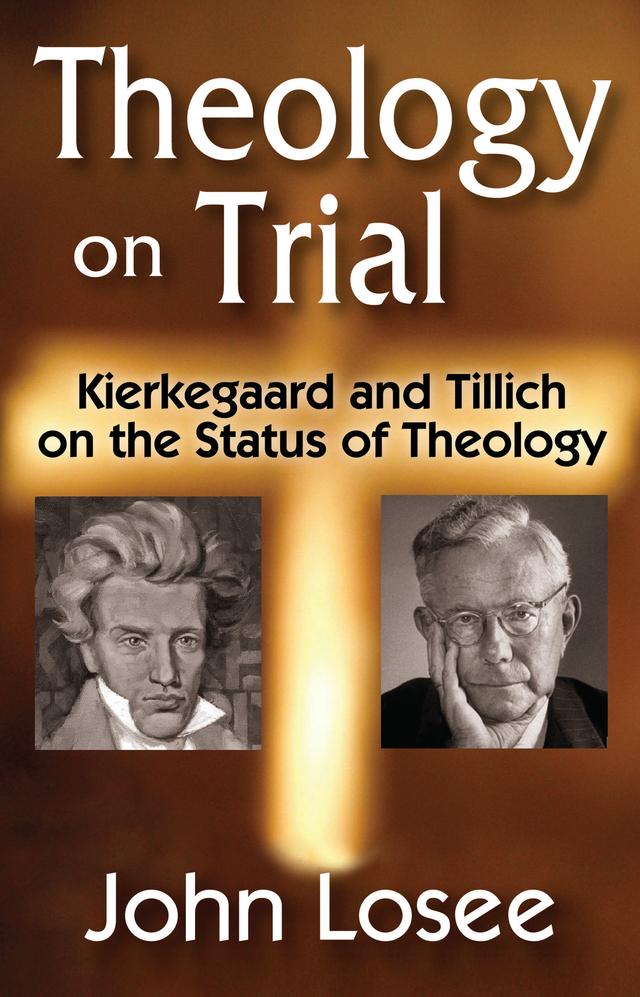
Soren Kierkegaard sought to clarify what it means to be a Christian. He concluded that a one-on-one relationship with God is required, to encounter the "Absolute Paradox," defined as an immutable being entering into and transforming human history. Kierkegaard's dim view of a systematic Christian theology includes a preoccupation with theological exposition that distracts from the essential task of achieving a personal relationship with Jesus Christ. Alternatively, Paul Tillich's theology is based on a triadic relationship of being, nonbeing and Being-Itself (God), a doctrine of symbols, and a reinterpretation of the Incarnation. It correlates a culture's questions and concerns with the Christian message to certain criteria of acceptability that, to Tillich, must satisfy the "Protestant Principle," stipulating that a theological system both restates the present-time Christian message and acknowledges that this restatement cannot be the definitive, ultimate expression of that message. Theology on Trial presents and assesses whether, and to what degree, Tillich's theology satisfies his own criteria of acceptability. An acceptable theology must be logically consistent and free of equivocation. The concluding section of the book examines the views of each author from the standpoint of the other.
Betal enkelt med kort, Klarna, Apple Pay eller Google Pay. Ikke fornøyd? Du har alltid 14 dagers angrerett. Les mer i våre vilkår. Har du spørsmål, send oss en e-post på hello@memmo.org.
Memmo gjør det enklere å studere – uansett hvor du er i verden. Hos oss samler du pensumbøker og smarte studieverktøy på ett og samme sted: sammendrag, quizer, podkaster og flashcards. Og så Ted, din studiekompis som svarer på alt du lurer på. Over 50 000 studenter studerer allerede her – bygget for at du skal lære raskere og stresse mindre.
Du vil kanskje også like
Kjøp boken0