
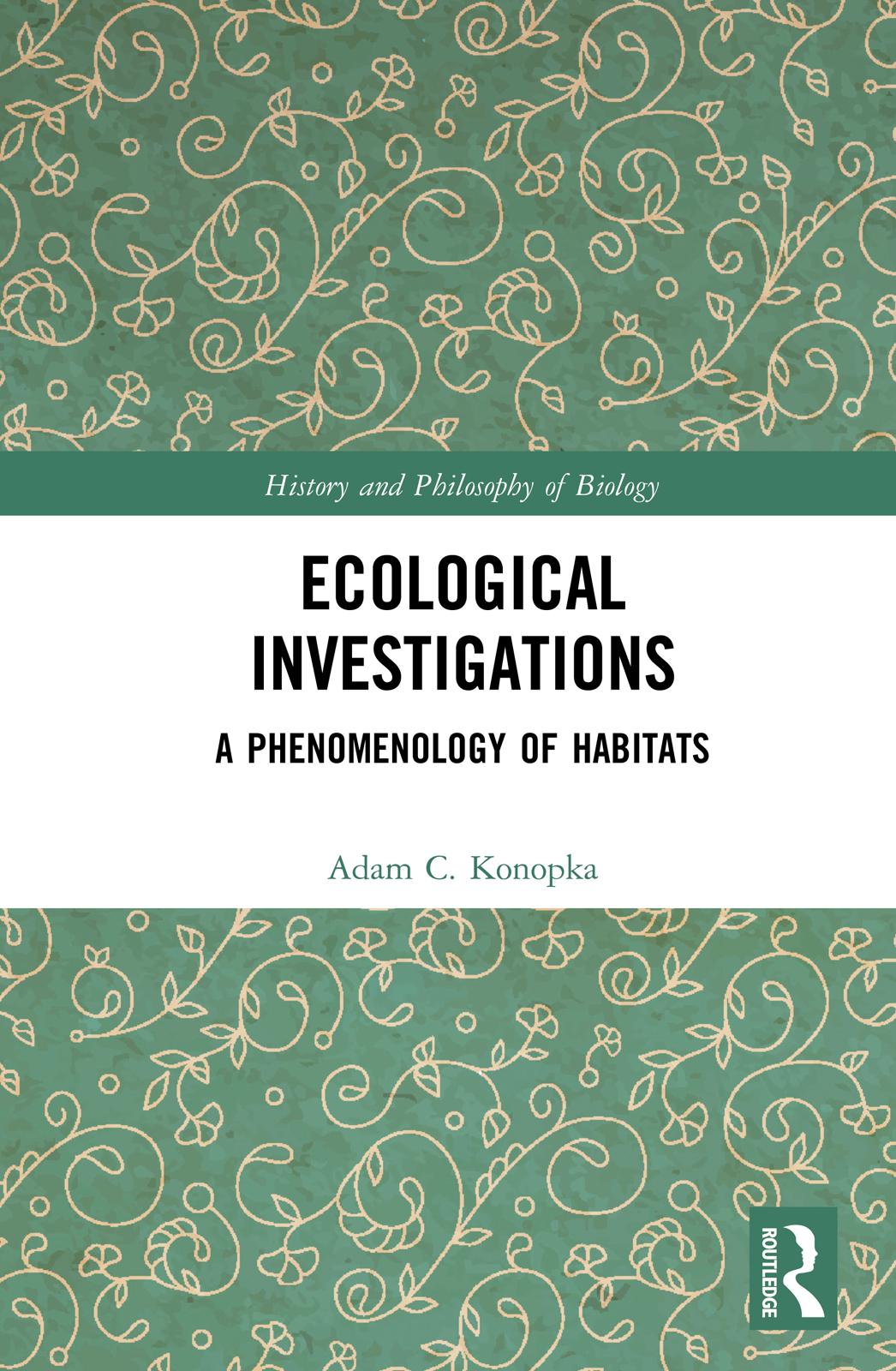
These investigations identify and clarify some basic assumptions and methodological principles involved in ecological explanations of plant associations. How are plants geographically distributed into characteristic groups? What are the basic conditions that organize groups of interspecific plant populations that are characteristic of particular kinds of habitats? Answers to these questions concerning the geographical distribution of plants in late 19th century European plant geography and early 20th century American plant ecology can be distinguished according to differing logical assumptions concerning the habitats of plant associations. Through an analysis of several significant case studies in the early history of plant ecology, Konopka distinguishes a logic of habitats that conceives of plant associations in an analogy to individual organisms with a logic that conceives of plant associations in a reciprocal relation to habitat physiography. He argues that a phenomenological conception of the logical attributes of habitats can philosophically complement the physiographic tradition in early plant ecology and provide an attractive alternative to standard reductionism and holism debates that persist today. This wide ranging and original analysis will be valuable for readers interested in the history and philosophy of ecology.
Betal enkelt med kort, Klarna, Apple Pay eller Google Pay. Ikke fornøyd? Du har alltid 14 dagers angrerett. Les mer i våre vilkår. Har du spørsmål, send oss en e-post på hello@memmo.org.
Memmo gjør det enklere å studere – uansett hvor du er i verden. Hos oss samler du pensumbøker og smarte studieverktøy på ett og samme sted: sammendrag, quizer, podkaster og flashcards. Og så Ted, din studiekompis som svarer på alt du lurer på. Over 50 000 studenter studerer allerede her – bygget for at du skal lære raskere og stresse mindre.