
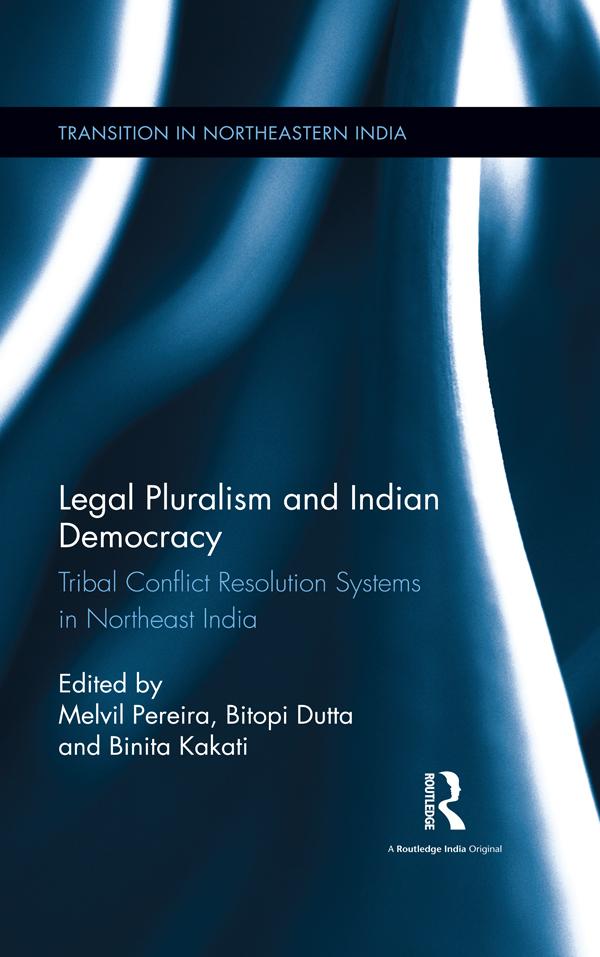
This book offers a multifaceted look at Northeast India and the customs and traditions that underpin its legal framework. The book:
- charts the transition of traditions from colonial rule to present day, through constitutionalism and the consolidation of autonomous identities, as well as outlines contemporary debates in an increasingly modernising region;
- explores the theoretical context of legal pluralism and its implications, compares the personal legal systems with that of the mainland, and discusses customary law’s continuing popularity (both pragmatic and ideological) and common law;
- brings together case studies from across the eight states and focuses on the way individual systems and procedures manifest among various tribes and communities in the voices of tribal and non-tribal scholars; and
- highlights the resilience and relevance of alternative systems of redressal, including conflict resolution and women’s rights.
Part of the prestigious ‘Transition in Northeastern India’ series, this book presents an interesting blend of theory and practice, key case studies and examples to study legal pluralism in multicultural contexts. It will be of great interest to students of law and social sciences, anthropology, political science, peace and conflict studies, besides administrators, judicial officers and lawyers in Northeast India, legal scholars and students of tribal law, and members of customary law courts of various tribal communities in Northeast India.
Betal enkelt med kort, Klarna, Apple Pay eller Google Pay. Ikke fornøyd? Du har alltid 14 dagers angrerett. Les mer i våre vilkår. Har du spørsmål, send oss en e-post på hello@memmo.org.
Memmo gjør det enklere å studere – uansett hvor du er i verden. Hos oss samler du pensumbøker og smarte studieverktøy på ett og samme sted: sammendrag, quizer, podkaster og flashcards. Og så Ted, din studiekompis som svarer på alt du lurer på. Over 50 000 studenter studerer allerede her – bygget for at du skal lære raskere og stresse mindre.