
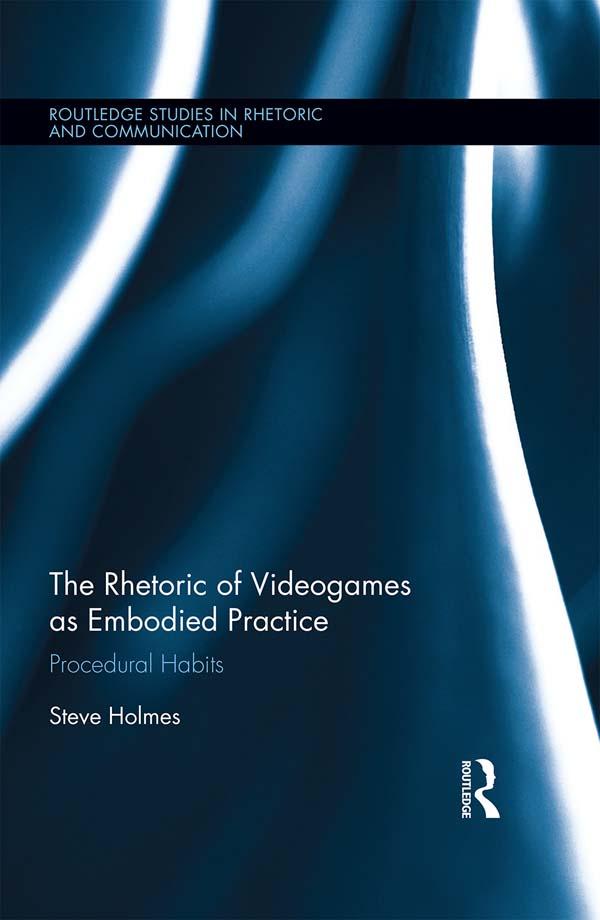
The Rhetoric of Videogames as Embodied Practice offers a critical reassessment of embodiment and materiality in rhetorical considerations of videogames. Holmes argues that rhetorical and philosophical conceptions of "habit" offer a critical resource for describing the interplay between thinking (writing and rhetoric) and embodiment. The book demonstrates how Aristotle's understanding of character (ethos), habit (hexis), and nature (phusis) can productively connect rhetoric to what Holmes calls "procedural habits": the ways in which rhetoric emerges from its interactions with the dynamic accumulation of conscious and nonconscious embodied experiences that consequently give rise to meaning, procedural subjectivity, control, and communicative agency both in digital game design discourse and the activity of play.
Betal enkelt med kort, Klarna, Apple Pay eller Google Pay. Ikke fornøyd? Du har alltid 14 dagers angrerett. Les mer i våre vilkår. Har du spørsmål, send oss en e-post på hello@memmo.org.
Memmo gjør det enklere å studere – uansett hvor du er i verden. Hos oss samler du pensumbøker og smarte studieverktøy på ett og samme sted: sammendrag, quizer, podkaster og flashcards. Og så Ted, din studiekompis som svarer på alt du lurer på. Over 50 000 studenter studerer allerede her – bygget for at du skal lære raskere og stresse mindre.