
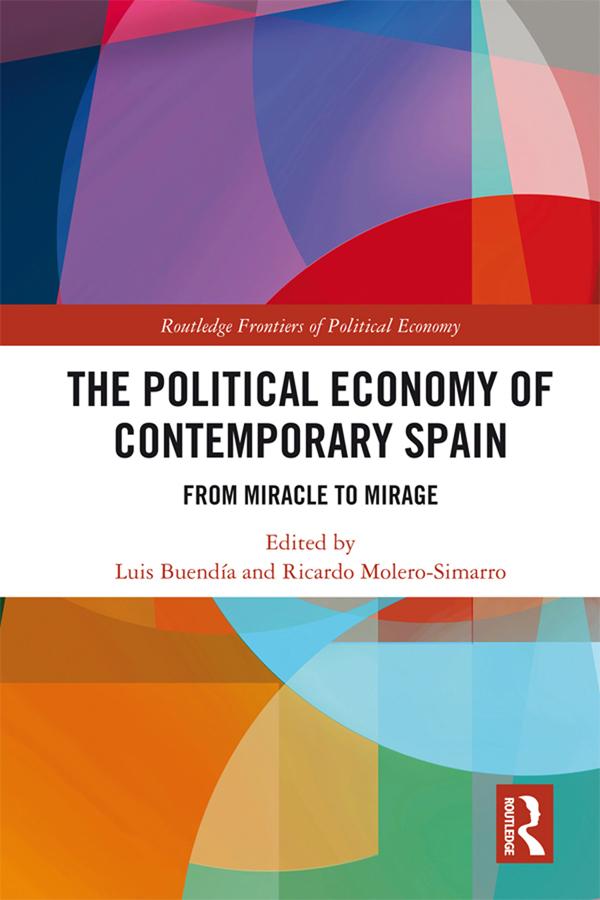
The so-called ‘Spanish miracle’, beginning in the mid-1990s, eventually became a nightmare for the majority of the population, culminating in the present-day economic and political crisis. This book explores the main features of the Spanish political-economic model during both the growth and crisis periods.
Analyzing the causes and consequences of the continuing economic crisis in Spain, this book delves into five analytical axes: the evolution of the growth model; the role of Spain in the international division of labor; the financial sector and its influence on the rest of the economy; changes in the labor market; and the distributional consequences of both the expansive phase and the later crisis. Furthermore, contributors examine the formation of a triangle of actors (the government sector, building sector, and financial capital) that shaped the Spanish growth model, together with the effects of Spain’s membership in the Economic and Monetary Union. Also considering ecological problems, gender issues, and the immigration question, this book challenges the alleged recovery of living conditions during recent years, as well as the explanation of the crisis as the result of irrational behaviors or the greedy nature of certain actors.
The Political Economy of Contemporary Spain provides a coherent explanation of the Spanish economic crisis based on a pluralistic approach, while proposing several measures that could contribute to a transformation of Spain’s economic and social models.
Betal enkelt med kort, Klarna, Apple Pay eller Google Pay. Ikke fornøyd? Du har alltid 14 dagers angrerett. Les mer i våre vilkår. Har du spørsmål, send oss en e-post på hello@memmo.org.
Memmo gjør det enklere å studere – uansett hvor du er i verden. Hos oss samler du pensumbøker og smarte studieverktøy på ett og samme sted: sammendrag, quizer, podkaster og flashcards. Og så Ted, din studiekompis som svarer på alt du lurer på. Over 50 000 studenter studerer allerede her – bygget for at du skal lære raskere og stresse mindre.