
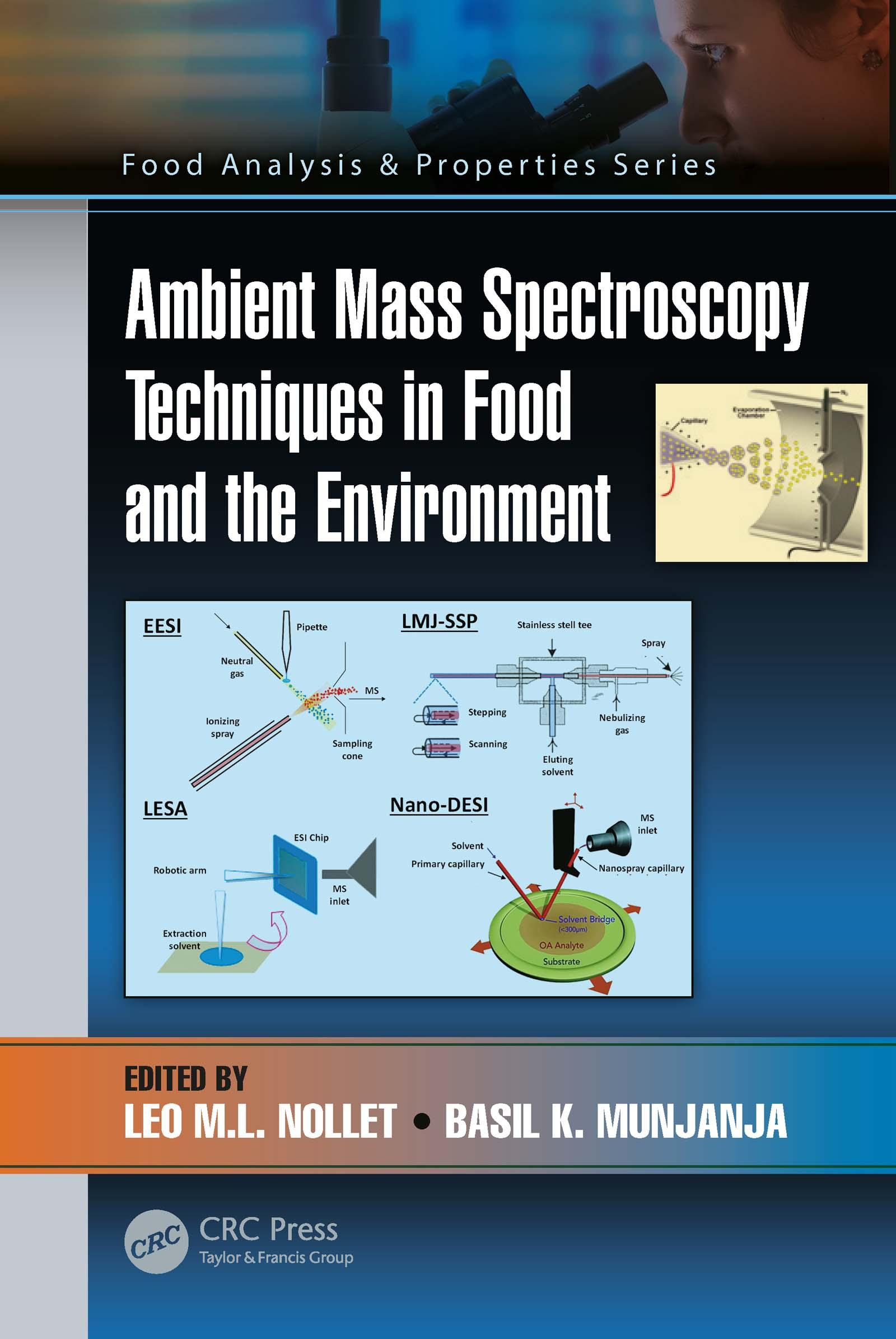
Ambient mass spectrometry—that is the use of mass spec but in the atmospheric environment—has been widely employed in food and environmental analysis. Ambient Mass Spectroscopy Techniques in Food and the Environment presents the theoretical underpinnings of mass spectrometry, and the benefits and pitfalls of ambient mass spectrometry, as well as the latest developments of the technique, in the analysis of food and environmental parameters. It describes methods that enable the detection of surface materials like waxes, alkaloids, flavors, or pesticides by plainly exposing the corresponding items to the ionization region of the interface, without harm to samples.
Features:
- Explains the theoretical aspects of ambient mass spectrometry
- Describes how to use ambient MS techniques for food safety, authenticity, and traceability screening
- Lists the benefits of ambient MS in analysis of food and environmental parameters
- Covers recent developments of ambient MS in analysis of food and environmental parameters
The specialized work provides insight to professionals practicing in food and the environment, including food scientists, food engineers, food biotechnologists, chemical engineers, and those working in research labs, universities, and government regulatory agencies.
Betal enkelt med kort, Klarna, Apple Pay eller Google Pay. Ikke fornøyd? Du har alltid 14 dagers angrerett. Les mer i våre vilkår. Har du spørsmål, send oss en e-post på hello@memmo.org.
Memmo gjør det enklere å studere – uansett hvor du er i verden. Hos oss samler du pensumbøker og smarte studieverktøy på ett og samme sted: sammendrag, quizer, podkaster og flashcards. Og så Ted, din studiekompis som svarer på alt du lurer på. Over 50 000 studenter studerer allerede her – bygget for at du skal lære raskere og stresse mindre.