
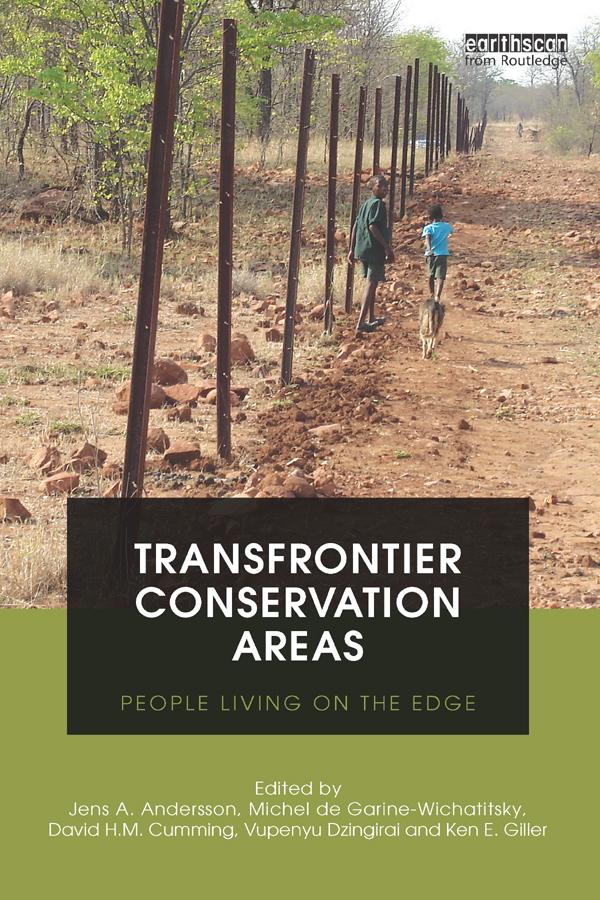
The introduction of transfrontier conservation areas (TFCAs) in southern Africa was based on an enchanting promise: simultaneously contributing to global biodiversity conservation initiatives, regional peace and integration, and the sustainable socio-economic development of rural communities. Cross-border collaboration and eco-tourism became seen as the vehicles of this promise, which would enhance regional peace and stability along the way. However, as these highly political projects take shape, conservation and development policymaking progressively shifts from the national to regional and global arenas, and the peoples most affected by TFCA formation tend to disappear from view.
This book focuses on the forgotten people displaced by, or living on the edge of, protected wildlife areas. It moves beyond the grand 'enchanting promise' of conservation and development across frontiers, and unfounded notions of TFCAs as integrated social-ecological systems. Peoples' dependency on natural resources – the specific combination of crop cultivation, livestock keeping and natural resource harvesting activities – varies enormously along the conservation frontier, as does their reliance on resources on the other side of the conservation boundary. Hence, the studies in this book move from the dream of eco-tourism-fuelled development supporting nature conservation and people towards the local realities facing marginalized people, living adjacent to protected areas in environments often poorly suited to agriculture.
Betal enkelt med kort, Klarna, Apple Pay eller Google Pay. Ikke fornøyd? Du har alltid 14 dagers angrerett. Les mer i våre vilkår. Har du spørsmål, send oss en e-post på hello@memmo.org.
Memmo gjør det enklere å studere – uansett hvor du er i verden. Hos oss samler du pensumbøker og smarte studieverktøy på ett og samme sted: sammendrag, quizer, podkaster og flashcards. Og så Ted, din studiekompis som svarer på alt du lurer på. Over 50 000 studenter studerer allerede her – bygget for at du skal lære raskere og stresse mindre.