
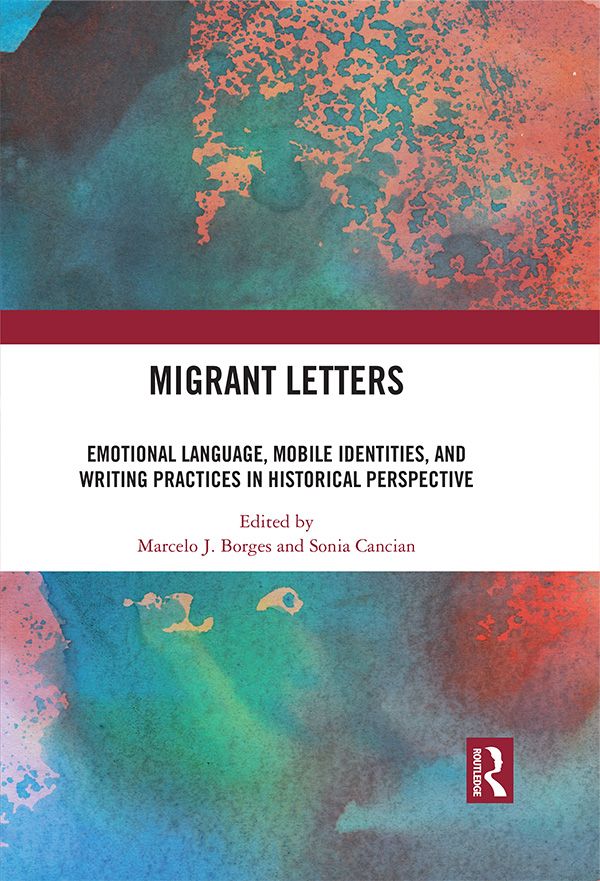
The migrant letter, whether written by family members, lovers, friends, or others, is a document that continues to attract the attention of scholars and general readers alike. What is it about migrant letters that fascinates us? Is it nostalgia for a distant, yet desired past? Is it the consequence of the eclipse of letter-writing in an age of digital communication technologies? Or is it about the parallels between transnational experiences in previous mass migrations and in the current globalized world, and the centrality of interpersonal relations, mobility, and communication, then and now?
Influenced by methodologies from diverse disciplines, the study of migrant letters has developed in myriad directions. Scholars have examined migrant letters through such lenses as identity and self-making, family relations, gender, and emotions. This volume contributes to this discussion by exploring the connection between the practice of letter writing and the emotional, economic, familial, and gendered experiences of men and women separated by migration. It combines theoretical and empirical discussions which illuminate a variety of historical experiences of migrants who built transnational lives as they moved across Europe, Africa, Latin America, and the United States. This volume was originally published as a special issue of The History of Family.
Betal enkelt med kort, Klarna, Apple Pay eller Google Pay. Ikke fornøyd? Du har alltid 14 dagers angrerett. Les mer i våre vilkår. Har du spørsmål, send oss en e-post på hello@memmo.org.
Memmo gjør det enklere å studere – uansett hvor du er i verden. Hos oss samler du pensumbøker og smarte studieverktøy på ett og samme sted: sammendrag, quizer, podkaster og flashcards. Og så Ted, din studiekompis som svarer på alt du lurer på. Over 50 000 studenter studerer allerede her – bygget for at du skal lære raskere og stresse mindre.