
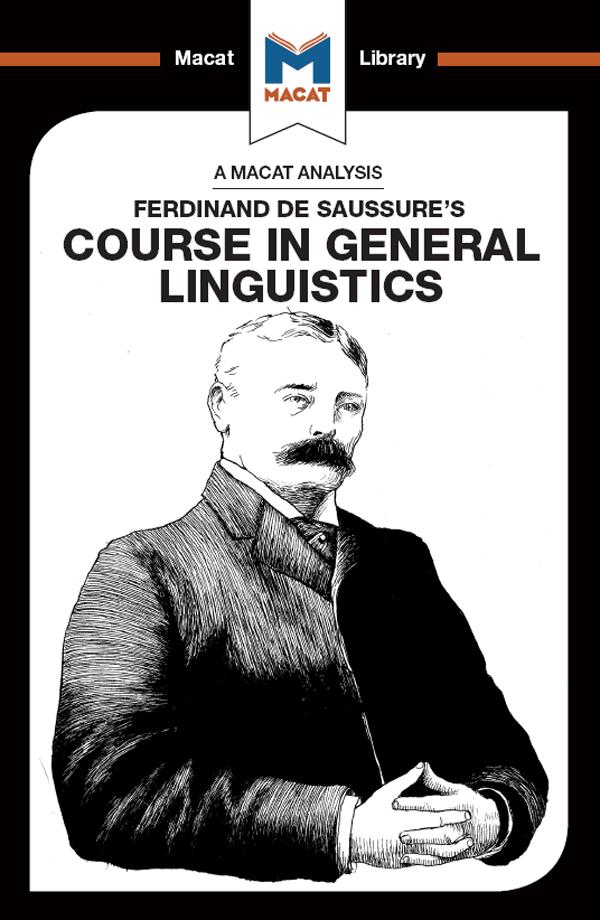
Ferdinand de Saussure’s Course in General Linguistics is one of the most influential texts of the 20th-century – an astonishing feat for what is, at heart, a series of deeply technical lectures about the structure of human languages.
What the Course’s vast influence shows, fundamentally, is the power of good interpretative skills. The interpretative tasks of laying down and clarifying definitions are often vital to providing the logical framework for all kinds of critical thinking – whether it be solving problems in business, or esoteric academic research. At the time sat which Saussure gave his lectures, linguistics was a scattered and inconsistent field, without a unified method or rigorous approach. He aimed to change that by setting down and clarifying definitions and distinctions that would provide a coherent methodological framework for the study of language.
The terms laid down in the Course did exactly that – and they still make up the core of linguistic terminology a full century later. More than this, however, Saussure also highlighted the centrality of linguistic interpretation to understanding how we relate to the world, founding “semiotics”, or the study of signs – a field whose influence on academics across the humanities and social sciences is unparalleled.
Betal enkelt med kort, Klarna, Apple Pay eller Google Pay. Ikke fornøyd? Du har alltid 14 dagers angrerett. Les mer i våre vilkår. Har du spørsmål, send oss en e-post på hello@memmo.org.
Memmo gjør det enklere å studere – uansett hvor du er i verden. Hos oss samler du pensumbøker og smarte studieverktøy på ett og samme sted: sammendrag, quizer, podkaster og flashcards. Og så Ted, din studiekompis som svarer på alt du lurer på. Over 50 000 studenter studerer allerede her – bygget for at du skal lære raskere og stresse mindre.