
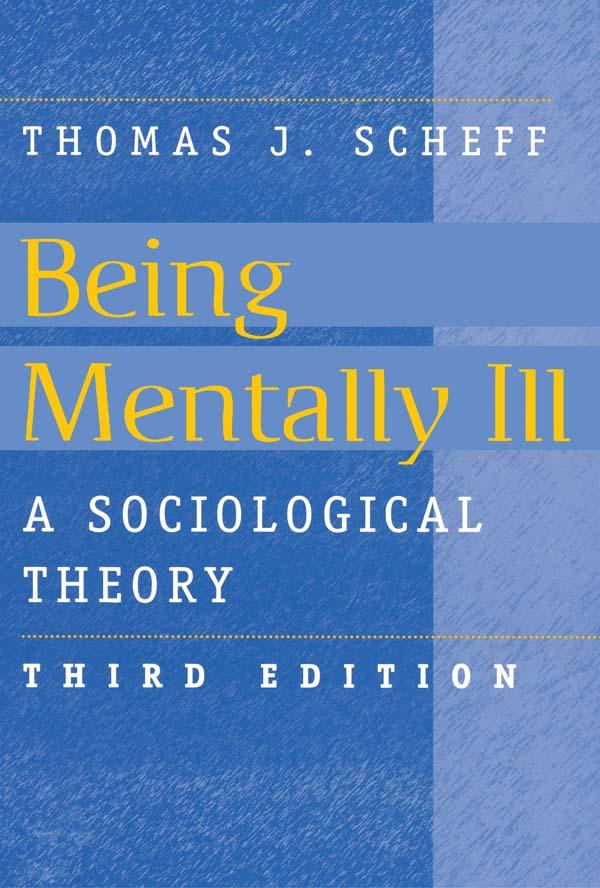
In incorporating social process into a model of the dynamics of mental disorders, this text questions the individualistic model favoured in current psychiatric and psychoanalytic theory. While the conventional psychiatric viewpoint seeks the causes of mental illness, Scheff views "the symptoms of mental illness" as the violation of residual rules - social norms so taken for granted that they are not explicitly verbalized. The sociological theory developed by Scheff to account for such behaviour provides a framework for studies reported in subsequent chapters. Two key assumptions emerge: first, that most chronic mental illness is in part a social role; and second, that societal reaction may in part determine entry into that role. Throughout, the sociological model of mental illness is compared and contrasted with more conventional medical and psychological models in an attempt to delineate significant problems for further analysis and research. This third edition has been revised and expanded to encompass the controversy prompted by the first edition, and also to re-evaluate developments in the field. New to this edition are discussions of the use of psychoactive drugs in the treatment of mental illness, changing mental health laws, new social science and psychiatric studies, and the controversy surrounding the labelling theory of mental illness itself.
Betal enkelt med kort, Klarna, Apple Pay eller Google Pay. Ikke fornøyd? Du har alltid 14 dagers angrerett. Les mer i våre vilkår. Har du spørsmål, send oss en e-post på hello@memmo.org.
Memmo gjør det enklere å studere – uansett hvor du er i verden. Hos oss samler du pensumbøker og smarte studieverktøy på ett og samme sted: sammendrag, quizer, podkaster og flashcards. Og så Ted, din studiekompis som svarer på alt du lurer på. Over 50 000 studenter studerer allerede her – bygget for at du skal lære raskere og stresse mindre.