
It is increasingly clear that fifty years of international development have done little to reduce poverty in Africa. Indeed, more and more academics and practitioners are highlighting the detrimental effect of traditional development – as carried out by international agencies and NGOs – which often leads to dependency, inefficiency, waste and poor governance.
Yet there is a new movement that is surging ahead in its attempt to reduce poverty and generate wealth in Africa: microfranchising. Set up by pioneering organizations such as VisionSpring and HealthStore, microfranchising is based on one of the most successful market-based models in Western economies: franchising. From McDonald's to Coca-Cola, franchising has proven itself to be an effective and replicable way of scaling up a business rapidly in the Western context.
It is only recently that members of the growing body of social entrepreneurs have turned to the franchise model as one of the responses to Africa's endemic economic stagnation. And the results have been inspiring: instead of the dependency generated by traditional charity development projects, these new social capitalists have generated enterprise and self-sustainability in the most challenging environments of rural Africa.
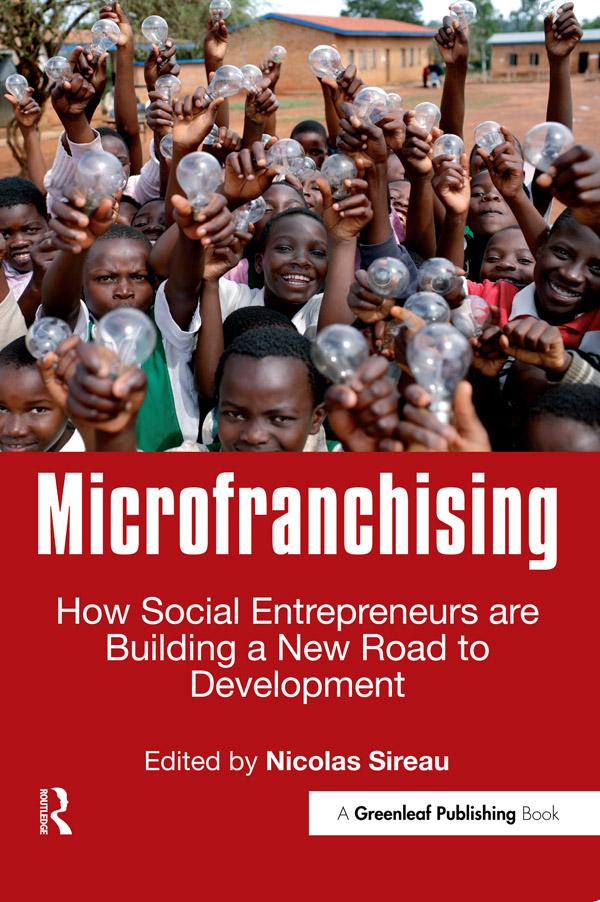
This long-needed book looks at the growth in microfranchising as a tool to generate wealth among poor communities in Africa. The book traces the evolution of the concept of microfranchising, from its foundation in Western models to its implementation in African countries today. It provides practical steps from the world's leading experts on how to set up a microfranchise, from recruiting franchisees, to building a brand and a supply chain. It gives case studies of successful microfranchises, told by the enterprises themselves. It continues with a theoretical analysis of the place of microfranchising within global social entrepreneurship. It ends with a look at the future for microfranchising, with recommendations for development. Edited by the former CEO of SolarAid, which created the Sunny Money microfranchise, the book provides a ground-breaking set of case studies and analysis of microfranchising for development. It brings together academics and practitioners to provide context, analysis and practical advice. Indeed, it provides the theory, the practical advice and the case studies to guide any entrepreneur, NGO, business or government interested in setting up their own microfranchise scheme.
Betal enkelt med kort, Klarna, Apple Pay eller Google Pay. Ikke fornøyd? Du har alltid 14 dagers angrerett. Les mer i våre vilkår. Har du spørsmål, send oss en e-post på hello@memmo.org.
Memmo gjør det enklere å studere – uansett hvor du er i verden. Hos oss samler du pensumbøker og smarte studieverktøy på ett og samme sted: sammendrag, quizer, podkaster og flashcards. Og så Ted, din studiekompis som svarer på alt du lurer på. Over 50 000 studenter studerer allerede her – bygget for at du skal lære raskere og stresse mindre.