
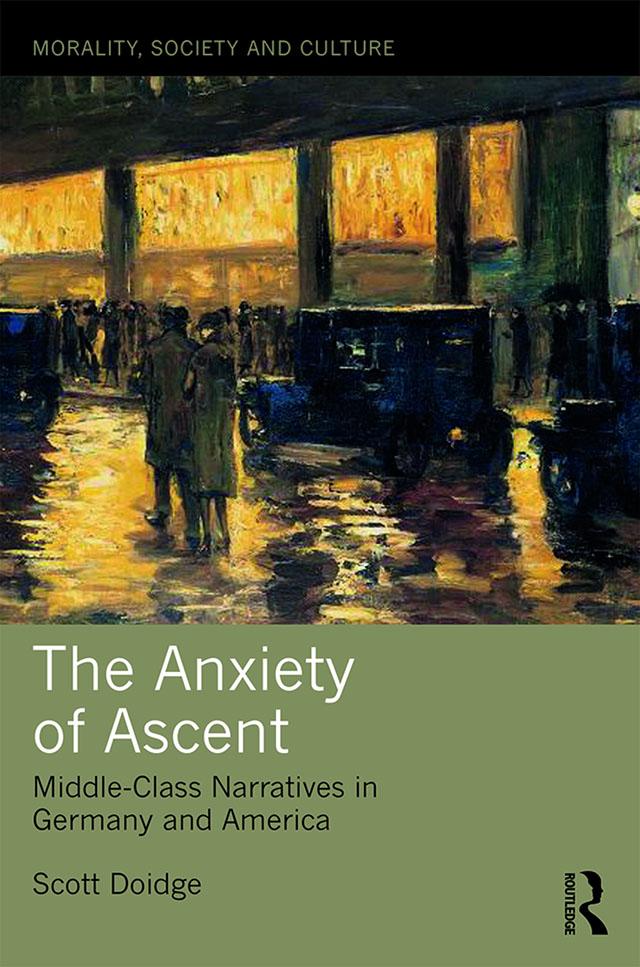
This intriguing book re-evaluates a narrative of cultural decline that developed in the wake of Max Weber’s The Protestant Ethic and the Spirit of Capitalism. For Weber, and a group of influential sociologists that followed, Western modernity is marked by growing disenchantment with the beliefs and values that had previously given a sense of structure and meaning to life. Despite its unparalleled material achievements, the modern West in this reading is suffering from a crisis of meaning and is no longer able to provide authoritative answers to the only really important question: ‘What shall we do and how shall we live?’
This book examines two influential responses to this question: the German bourgeois ideal of the late nineteenth century and the mid-twentieth century American celebration of the middle class. In each period, the exploration is guided by a close reading of a contemporary and retrospective text. For Germany, Gustav Freytag’s novel Debt and Credit (1855) is read against Thomas Mann’s Buddenbrooks (1901), and, for the US, the domestic comedy Father Knows Best (1954–1960) is read against the cable television drama Mad Men (2007–2015). The Anxiety of Ascent casts Weber’s narrative in a more optimistic light, pointing towards the redemptive possibilities contained within everyday life. As such, it will appeal to sociologists and cultural studies scholars interested in cultural sociology, social theory, morality, meaning and the culture of middle-class life.
Betal enkelt med kort, Klarna, Apple Pay eller Google Pay. Ikke fornøyd? Du har alltid 14 dagers angrerett. Les mer i våre vilkår. Har du spørsmål, send oss en e-post på hello@memmo.org.
Memmo gjør det enklere å studere – uansett hvor du er i verden. Hos oss samler du pensumbøker og smarte studieverktøy på ett og samme sted: sammendrag, quizer, podkaster og flashcards. Og så Ted, din studiekompis som svarer på alt du lurer på. Over 50 000 studenter studerer allerede her – bygget for at du skal lære raskere og stresse mindre.