
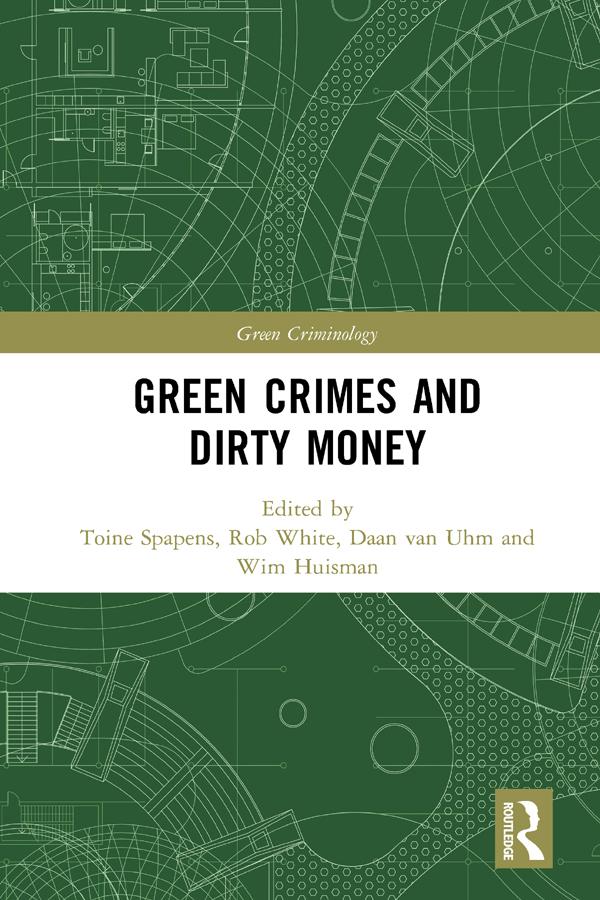
Environmental crimes are primarily driven by financial motives. The combined financial value of illicit trade in protected wildlife, illegal logging and waste trafficking is estimated to come directly after counterfeiting, the narcotic drugs trade and illegal gambling. Logically, the proceeds of these crimes must also be laundered. Goods, however, are not the only money maker for environmental criminals. Corporations may also try to ‘save’ costs by not complying with environmental regulations and thus commit crimes of omission rather than commission. From an enforcement and compliance perspective focusing on the proceeds of crime may therefore be an effective strategy.
This book brings together different perspectives on the financial aspects of environmental crime and harm from a green criminological viewpoint. It addresses the role of economic systems, the value of environmental performance for corporations, money laundering in the context of environmental crime, financial investigation and questions of regulation and penalties.
Discussing these topics from the view of green criminology, sociology and governance, this book will be of great interest to all those concerned about the financial dimensions of crime and the environment.
Betal enkelt med kort, Klarna, Apple Pay eller Google Pay. Ikke fornøyd? Du har alltid 14 dagers angrerett. Les mer i våre vilkår. Har du spørsmål, send oss en e-post på hello@memmo.org.
Memmo gjør det enklere å studere – uansett hvor du er i verden. Hos oss samler du pensumbøker og smarte studieverktøy på ett og samme sted: sammendrag, quizer, podkaster og flashcards. Og så Ted, din studiekompis som svarer på alt du lurer på. Over 50 000 studenter studerer allerede her – bygget for at du skal lære raskere og stresse mindre.