
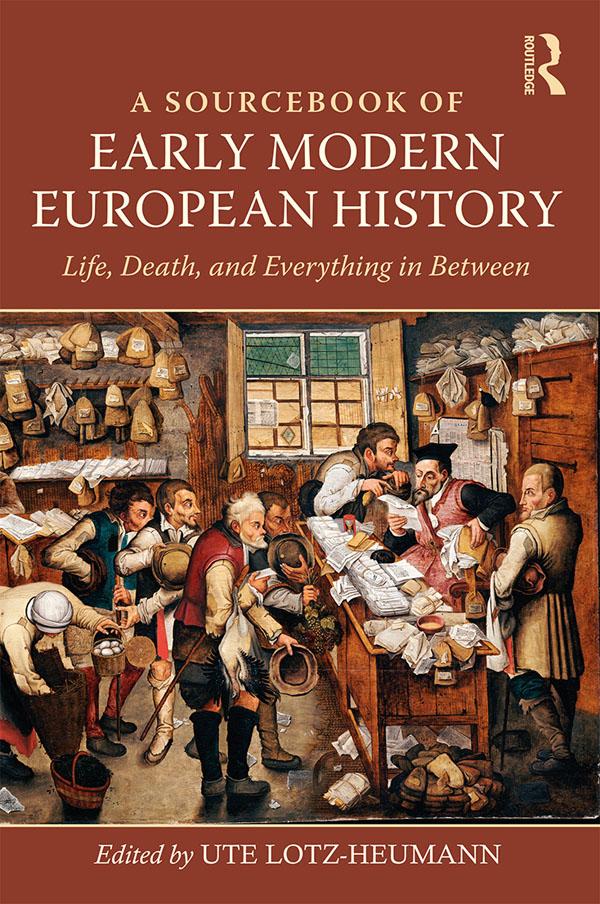
A Sourcebook of Early Modern European History not only provides instructors with primary sources of a manageable length and translated into English, it also offers students a concise explanation of their context and meaning.
By covering different areas of early modern life through the lens of contemporaries’ experiences, this book serves as an introduction to the early modern European world in a way that a narrative history of the period cannot. It is divided into six subject areas, each comprising between twelve and fourteen explicated sources: I. The fabric of communities: Social interaction and social control; II. Social spaces: Experiencing and negotiating encounters; III. Propriety, legitimacy, fi delity: Gender, marriage, and the family; IV. Expressions of faith: Offi cial and popular religion; V. Realms intertwined: Religion and politics; and, VI. Defining the religious other: Identities and conflicts.
Spanning the period from c. 1450 to c. 1750 and including primary sources from across early modern Europe, from Spain to Transylvania, Italy to Iceland, and the European colonies, this book provides an excellent sense of the diversity and complexity of human experience during this time whilst drawing attention to key themes and events of the period. It is ideal for students of early modern history, and of early modern Europe in particular.
Betal enkelt med kort, Klarna, Apple Pay eller Google Pay. Ikke fornøyd? Du har alltid 14 dagers angrerett. Les mer i våre vilkår. Har du spørsmål, send oss en e-post på hello@memmo.org.
Memmo gjør det enklere å studere – uansett hvor du er i verden. Hos oss samler du pensumbøker og smarte studieverktøy på ett og samme sted: sammendrag, quizer, podkaster og flashcards. Og så Ted, din studiekompis som svarer på alt du lurer på. Over 50 000 studenter studerer allerede her – bygget for at du skal lære raskere og stresse mindre.