
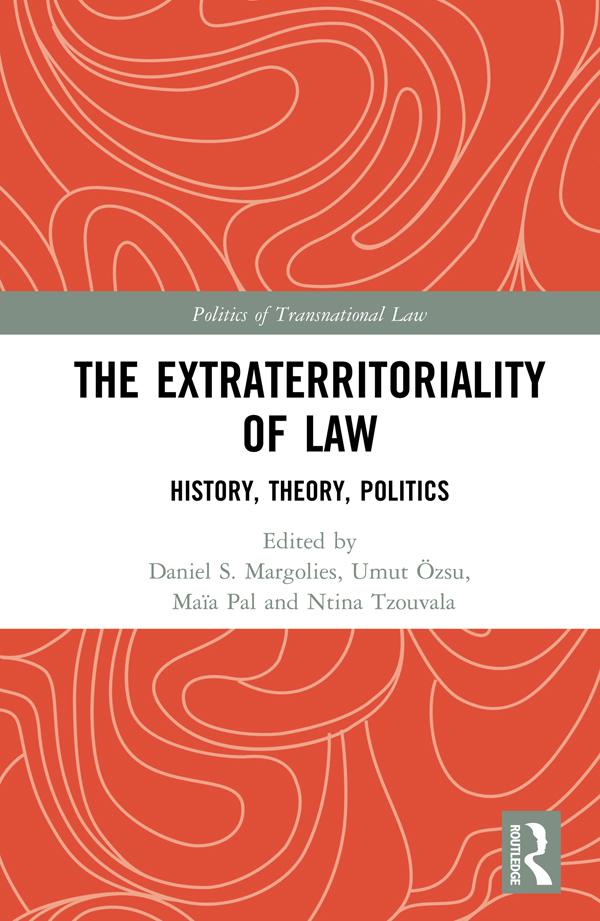
Questions of legal extraterritoriality figure prominently in scholarship on legal pluralism, transnational legal studies, international investment law, international human rights law, state responsibility under international law, and a large number of other areas. Yet many accounts of extraterritoriality make little effort to grapple with its thorny conceptual history, shifting theoretical valence, and complex political roots and ramifications.
This book brings together thirteen scholars of law, history, and politics in order to reconsider the history, theory, and contemporary relevance of legal extraterritoriality. Situating questions of extraterritoriality in a set of broader investigations into state-building, imperialist rivalry, capitalist expansion, and human rights protection, it tracks the multiple meanings and functions of a distinct and far-reaching mode of legal authority. The fundamental aim of the volume is to examine the different geographical contexts in which extraterritorial regimes have developed, the political and economic pressures in response to which such regimes have grown, the highly uneven distributions of extraterritorial privilege that have resulted from these processes, and the complex theoretical quandaries to which this type of privilege has given rise.
The book will be of considerable interest to scholars in law, history, political science, socio-legal studies, international relations, and legal geography.
Betal enkelt med kort, Klarna, Apple Pay eller Google Pay. Ikke fornøyd? Du har alltid 14 dagers angrerett. Les mer i våre vilkår. Har du spørsmål, send oss en e-post på hello@memmo.org.
Memmo gjør det enklere å studere – uansett hvor du er i verden. Hos oss samler du pensumbøker og smarte studieverktøy på ett og samme sted: sammendrag, quizer, podkaster og flashcards. Og så Ted, din studiekompis som svarer på alt du lurer på. Over 50 000 studenter studerer allerede her – bygget for at du skal lære raskere og stresse mindre.