
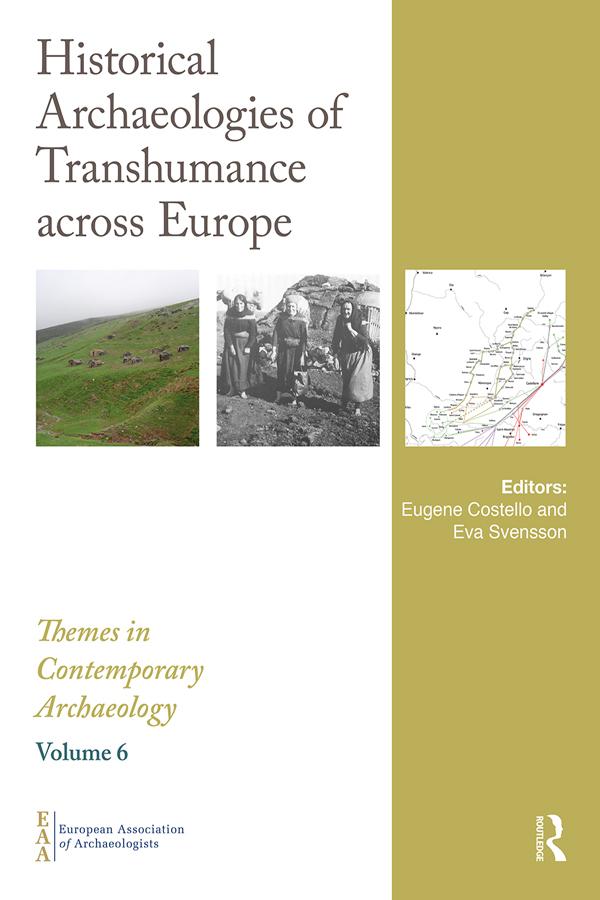
Transhumance is a form of pastoralism that has been practised around the world since animals were first domesticated. Such seasonal movements have formed an important aspect of many European farming systems for several thousand years, although they have declined markedly since the nineteenth century. Ethnographers and geographers have long been involved in recording transhumant practices, and in the last two decades archaeologists have started to add a new material dimension to the subject.
This volume brings together recent advances in the study of European transhumance during historical times, from Sweden to Spain, Romania to Ireland, and beyond that even Newfoundland. While the focus is on the archaeology of seasonal sites used by shepherds and cowherds, the contributions exhibit a high degree of interdisciplinarity. Documentary, cartographic, ethnographic and palaeoecological evidence all play a part in the examination of seasonal movement and settlement in medieval and post-medieval landscapes. Notwithstanding the obvious diversity across Europe in terms of livestock, distances travelled and socio-economic context, an extended introduction to the volume shows that cross-cutting themes are now emerging, including mobility, gendered herding, collective land-use, the agency of non-elite people and competition for grazing and markets.
The book will appeal not only to archaeologists, but to historians, geographers, ethnographers, palaeoecologists and anyone interested in rural lifeways across Europe.
Betal enkelt med kort, Klarna, Apple Pay eller Google Pay. Ikke fornøyd? Du har alltid 14 dagers angrerett. Les mer i våre vilkår. Har du spørsmål, send oss en e-post på hello@memmo.org.
Memmo gjør det enklere å studere – uansett hvor du er i verden. Hos oss samler du pensumbøker og smarte studieverktøy på ett og samme sted: sammendrag, quizer, podkaster og flashcards. Og så Ted, din studiekompis som svarer på alt du lurer på. Over 50 000 studenter studerer allerede her – bygget for at du skal lære raskere og stresse mindre.