
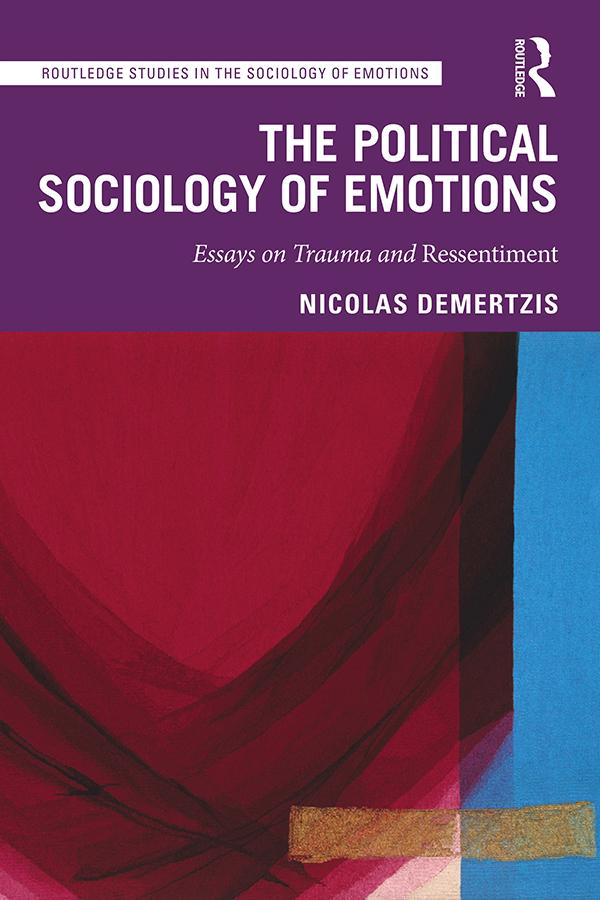
The Political Sociology of Emotions articulates the political sociology of emotions as a sub-field of emotions sociology in relation to cognate disciplines and sub-disciplines.
Far from reducing politics to affectivity, the political sociology of emotions is coterminous with political sociology itself plus the emotive angle added in the investigation of its traditional and more recent areas of research. The worldwide predominance of affective anti-politics (e.g., the securitization of immigration policies, reactionism, terrorism, competitive authoritarianism, nationalism and populism, etc.) makes the political sociology of emotions increasingly necessary in making the prospects of democracy and republicanism in the twenty-first century more intelligible.
Through a weak constructionist theoretical perspective, the book shows the utility of this new sub-field by addressing two central themes: trauma and ressentiment. Trauma is considered as a key cultural-political phenomenon of our times, evoking both negative and positive emotions; ressentiment is a pertaining individual and collective political emotion allied to insecurities and moral injuries. In tandem, they constitute fundamental experiences of late modern times. The value of the political sociology of emotions is revealed in the analysis of civil wars, cultural traumas, the politics of pity, the suffering of distant others in the media, populism, and national identities on both sides of the Atlantic.
Betal enkelt med kort, Klarna, Apple Pay eller Google Pay. Ikke fornøyd? Du har alltid 14 dagers angrerett. Les mer i våre vilkår. Har du spørsmål, send oss en e-post på hello@memmo.org.
Memmo gjør det enklere å studere – uansett hvor du er i verden. Hos oss samler du pensumbøker og smarte studieverktøy på ett og samme sted: sammendrag, quizer, podkaster og flashcards. Og så Ted, din studiekompis som svarer på alt du lurer på. Over 50 000 studenter studerer allerede her – bygget for at du skal lære raskere og stresse mindre.