
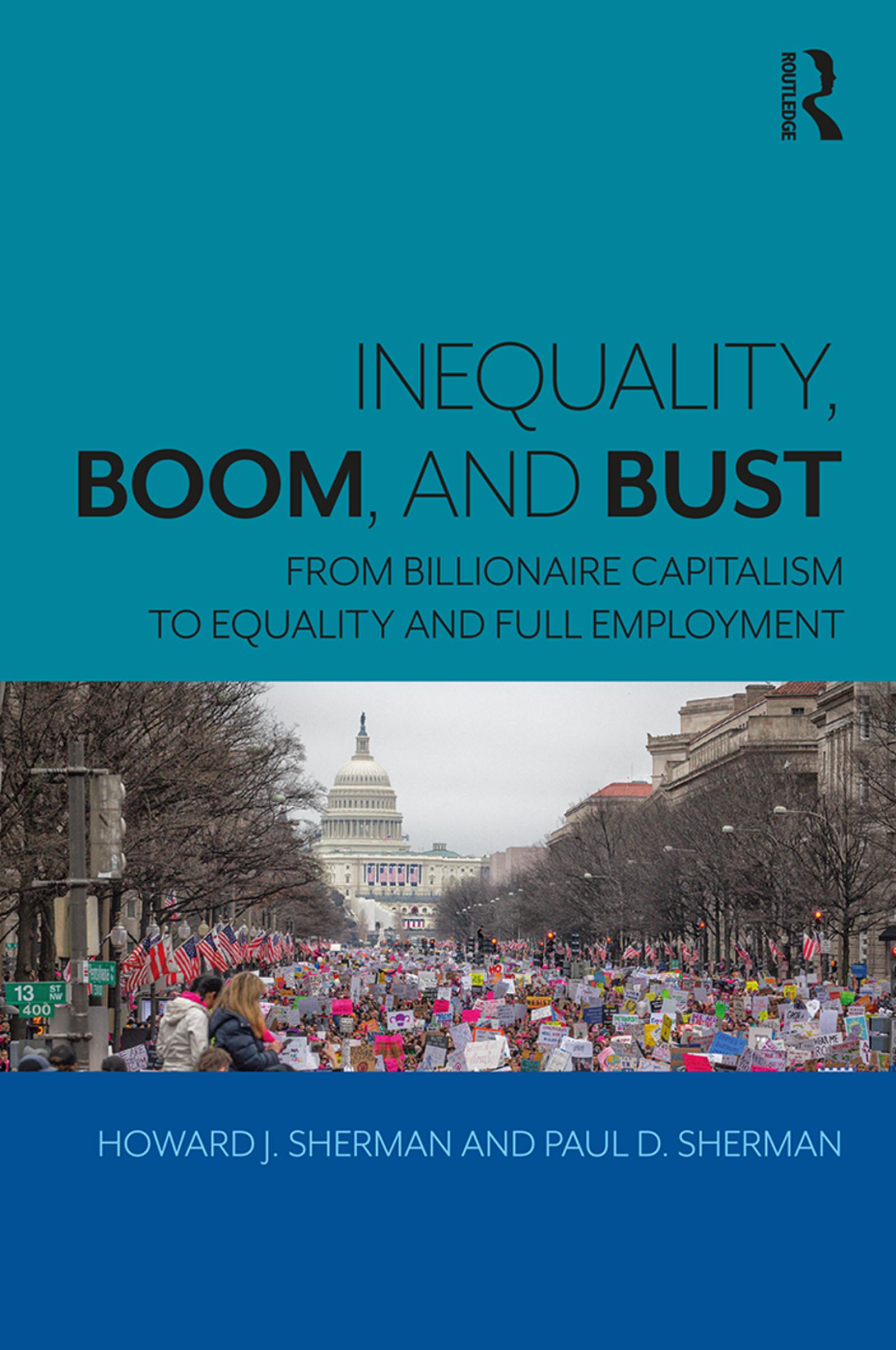
There is enormous inequality between the income and wealth of the richest 1 percent and all other Americans. While the top 1 percent own 42 percent of all wealth in America, the lower half on the income ladder has only 2 percent of all of the wealth. This book develops a viewpoint contrary to the prevailing conservative paradigm, setting out both reasons for this inequality and the impact of this.
To explain inequality, conservative economists focus on individual characteristics such as intelligence and hard work. This book puts forward new evidence to show that changes in economic inequality are primarily due to characteristics inherent in the standard operation of capitalist institutions. Furthermore, the authors seek to explain the cycle of boom and bust by considering political and social factors often overlooked by conservative economists. This book also explores how wealth influences political policies in a way that increases economic inequality even more than its present level.
Through analysis of American political and economic institutions, Inequality, Boom, and Bust presents concrete steps for an activist, progressive policy to greatly reduce inequality through free healthcare, free higher education, and reduced unemployment.
Betal enkelt med kort, Klarna, Apple Pay eller Google Pay. Ikke fornøyd? Du har alltid 14 dagers angrerett. Les mer i våre vilkår. Har du spørsmål, send oss en e-post på hello@memmo.org.
Memmo gjør det enklere å studere – uansett hvor du er i verden. Hos oss samler du pensumbøker og smarte studieverktøy på ett og samme sted: sammendrag, quizer, podkaster og flashcards. Og så Ted, din studiekompis som svarer på alt du lurer på. Over 50 000 studenter studerer allerede her – bygget for at du skal lære raskere og stresse mindre.