
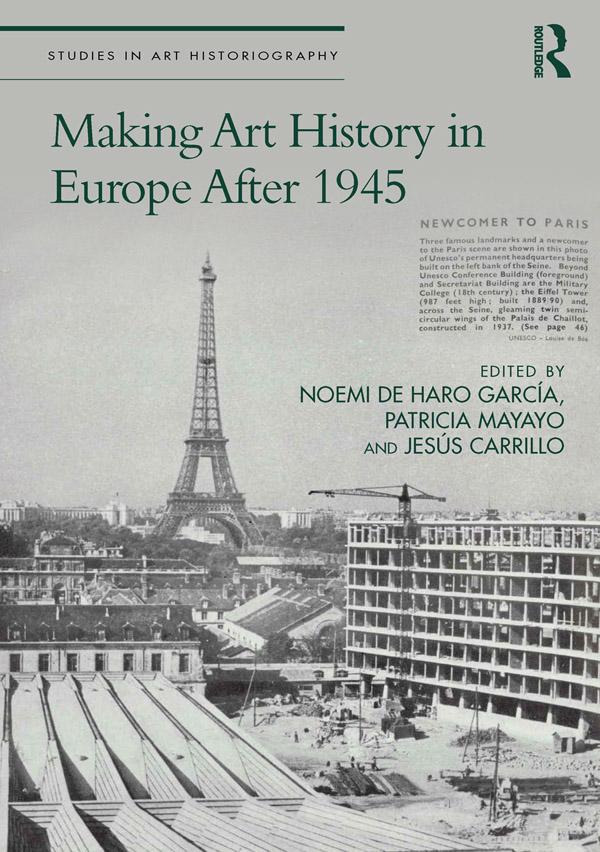
This book analyses the intermeshing of state power and art history in Europe since 1945 and up to the present from a critical, de-centered perspective.
Devoting special attention to European peripheries and to under-researched transnational cultural political initiatives related to the arts implemented after the end of the Second World War, the contributors explore the ways in which this relationship crystallised in specific moments, places, discourses and practices. They make the historic hegemonic centres of the discipline converse with Europe’s Southern and Eastern peripheries, from Portugal to Estonia to Greece.
By stressing the margins’ point of view this volume rethinks the ideological grounds on which art history and the European Union have been constructed as well as the role played by art and culture in the very concept of ‘Europe.’
Betal enkelt med kort, Klarna, Apple Pay eller Google Pay. Ikke fornøyd? Du har alltid 14 dagers angrerett. Les mer i våre vilkår. Har du spørsmål, send oss en e-post på hello@memmo.org.
Memmo gjør det enklere å studere – uansett hvor du er i verden. Hos oss samler du pensumbøker og smarte studieverktøy på ett og samme sted: sammendrag, quizer, podkaster og flashcards. Og så Ted, din studiekompis som svarer på alt du lurer på. Over 50 000 studenter studerer allerede her – bygget for at du skal lære raskere og stresse mindre.