
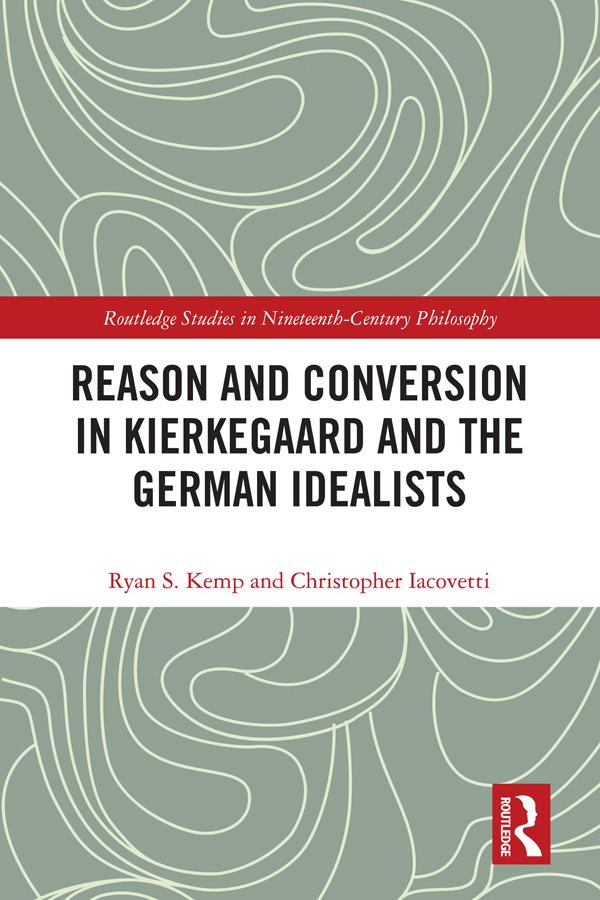
In his late work Religion within the Boundaries of Mere Reason, Immanuel Kant struggles to answer a straightforward, yet surprisingly difficult, question: how is radical conversion—a complete reorientation of a person’s most deeply held values—possible? In this book, Ryan S. Kemp and Christopher Iacovetti examine how this question gets taken up by Kant’s philosophical heirs: Schelling, Fichte, Hegel and Kierkegaard. More than simply developing a novel account of each thinker’s position, Kemp and Iacovetti trace how each philosopher formulates his theory in response to tensions in preceding views, culminating in Kierkegaard’s claim that radical conversion lies outside a person’s control. Kemp and Iacovetti close by examining some of the moral-psychological implications of Kierkegaard’s account, particularly the question of how someone might responsibly relate to values that have, by their own admission, been acquired in contingent and accidental fashion.
Betal enkelt med kort, Klarna, Apple Pay eller Google Pay. Ikke fornøyd? Du har alltid 14 dagers angrerett. Les mer i våre vilkår. Har du spørsmål, send oss en e-post på hello@memmo.org.
Memmo gjør det enklere å studere – uansett hvor du er i verden. Hos oss samler du pensumbøker og smarte studieverktøy på ett og samme sted: sammendrag, quizer, podkaster og flashcards. Og så Ted, din studiekompis som svarer på alt du lurer på. Over 50 000 studenter studerer allerede her – bygget for at du skal lære raskere og stresse mindre.