
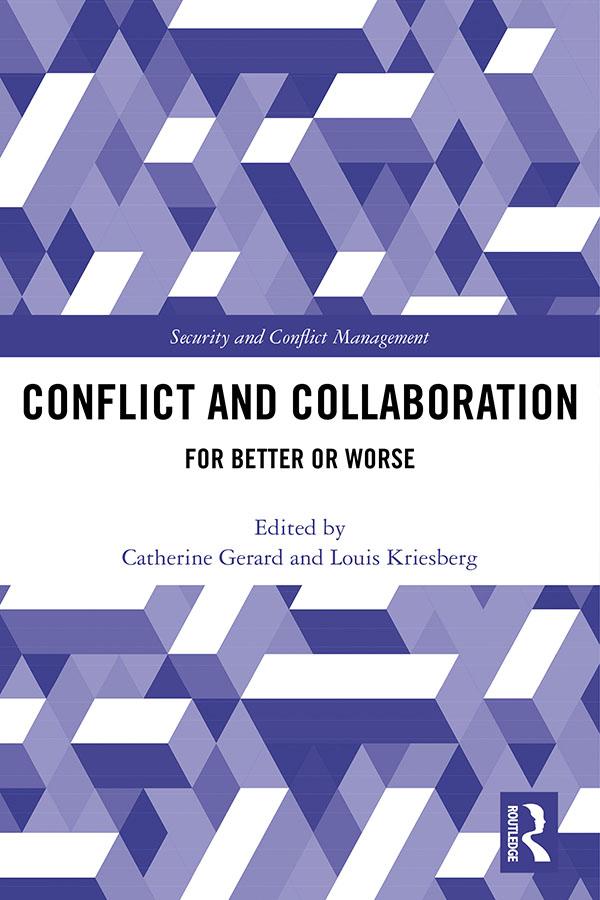
In this volume, scholars from different disciplines join together to examine the overlapping domains of conflict and collaboration studies.
It examines the relationships between ideas and practices in the fields of conflict resolution and collaboration from multiple disciplinary perspectives. The central theme is that conflict and collaboration can be good, bad, or even benign, depending on a number of factors. These include the role of power, design of the process itself, skill level and intent of the actors, social contexts, and world views. The book demonstrates that various blends of conflict and collaboration can be more or less constructively effective. It discusses specific cases, analytical methods, and interventions, and emphasizes both developing propositions and reflecting on specific cases and contexts. The book concludes with specific policy recommendations for many sets of actors—those in peacebuilding, social movements, governments, and communities—plus students of conflict studies.
This book will be of much interest to students, scholars, and practitioners of peace and conflict studies, public administration, sociology, and political science.
Betal enkelt med kort, Klarna, Apple Pay eller Google Pay. Ikke fornøyd? Du har alltid 14 dagers angrerett. Les mer i våre vilkår. Har du spørsmål, send oss en e-post på hello@memmo.org.
Memmo gjør det enklere å studere – uansett hvor du er i verden. Hos oss samler du pensumbøker og smarte studieverktøy på ett og samme sted: sammendrag, quizer, podkaster og flashcards. Og så Ted, din studiekompis som svarer på alt du lurer på. Over 50 000 studenter studerer allerede her – bygget for at du skal lære raskere og stresse mindre.