
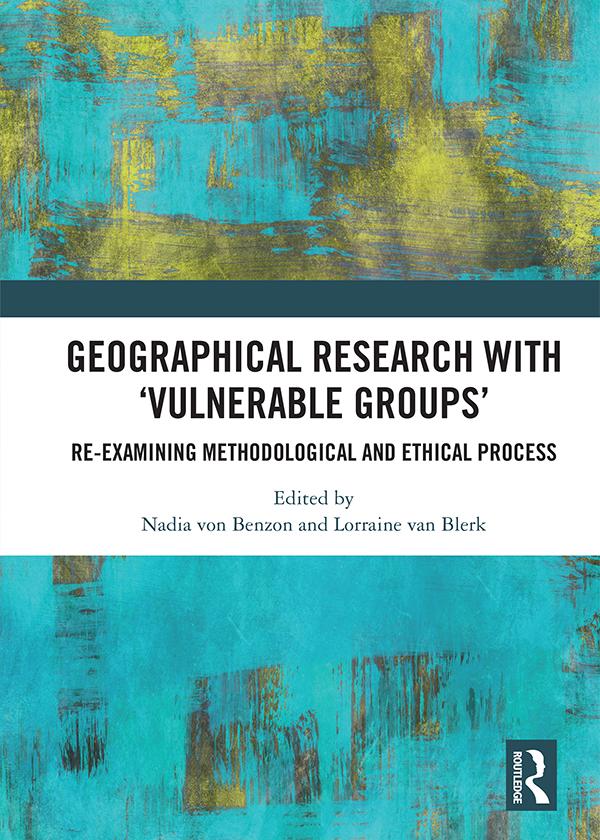
Drawing on varied expertise from specialisms across the sub-disciplines of social and cultural geography, this book seeks to interrogate what it is to do research with people widely considered to be vulnerable. Written from an emancipatory standpoint, this book addresses the ethical and practical challenges that face researchers working with marginalised people. With chapters exploring the authors’ own experiences of working with a wide range of participants including homeless people, indigenous peoples, drug addicts, learning disabled children, and prisoners, the book draws on research undertaken by academics across the globe. Geographical Research with ‘Vulnerable Groups’ unpicks and interrogates each part of the research process, from obtaining ethics permission from review bodies, to recruitment and gatekeepers, through to dissemination of research findings. Throughout the discussion, authors foreground the relational identities of the actors in the research process, highlighting the ways in which institutional attempts to protect marginalised people from risk, perpetuate a perceived, and even material, vulnerability. This honest and empirically driven text will provide an illuminating insight for researchers embarking on research with marginalised people.
The chapters in this book were originally published as a special issue of Social & Cultural Geography.
Betal enkelt med kort, Klarna, Apple Pay eller Google Pay. Ikke fornøyd? Du har alltid 14 dagers angrerett. Les mer i våre vilkår. Har du spørsmål, send oss en e-post på hello@memmo.org.
Memmo gjør det enklere å studere – uansett hvor du er i verden. Hos oss samler du pensumbøker og smarte studieverktøy på ett og samme sted: sammendrag, quizer, podkaster og flashcards. Og så Ted, din studiekompis som svarer på alt du lurer på. Over 50 000 studenter studerer allerede her – bygget for at du skal lære raskere og stresse mindre.