
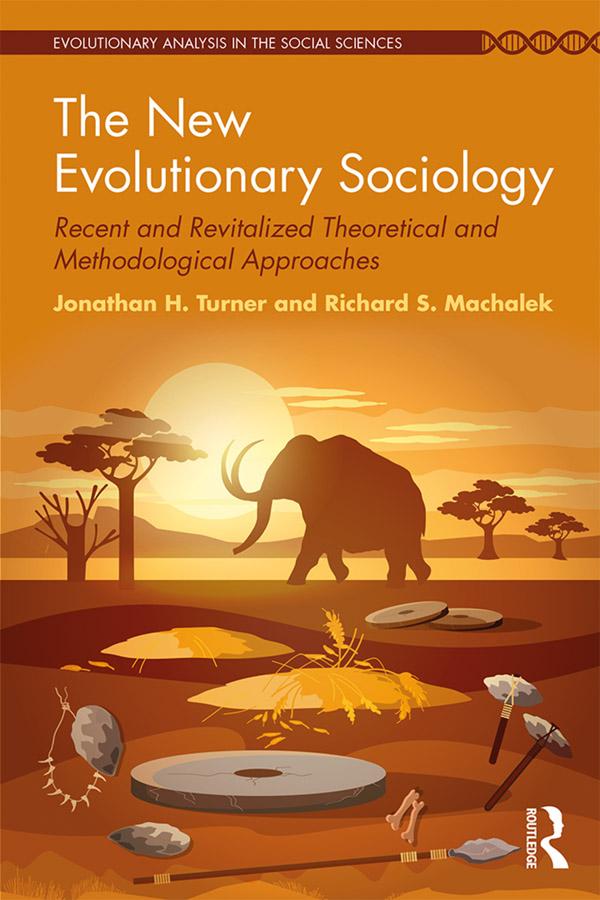
For decades, evolutionary analysis was overlooked or altogether ignored by sociologists. Fears and biases persisted nearly a century after Auguste Comte gave the discipline its name, as did concerns that its effect would only reduce sociology to another discipline – whether biology, psychology, or economics. Worse, apprehension that the application of evolutionary theory would encourage heightened perceptions of racism, sexism, ethnocentrism and reductionism pervaded.
Turner and Machalek argue instead for a new embrace of biology and evolutionary analysis. Sociology, from its very beginnings in the early 19th century, has always been concerned with the study of evolution, particularly the transformation of societies from simple to ever-more complex forms. By comprehensively reviewing the original ways that sociologists applied evolutionary theory and examining the recent renewal and expansion of these early approaches, the authors confront the challenges posed by biology, neuroscience, and psychology to distinct evolutionary approaches within sociology. They emerge with key theoretical and methodological discoveries that demonstrate the critical – and compelling – case for a dramatically enriched sociology that incorporates all forms of comparative evolutionary analysis to its canon and study of sociocultural phenomena.
Betal enkelt med kort, Klarna, Apple Pay eller Google Pay. Ikke fornøyd? Du har alltid 14 dagers angrerett. Les mer i våre vilkår. Har du spørsmål, send oss en e-post på hello@memmo.org.
Memmo gjør det enklere å studere – uansett hvor du er i verden. Hos oss samler du pensumbøker og smarte studieverktøy på ett og samme sted: sammendrag, quizer, podkaster og flashcards. Og så Ted, din studiekompis som svarer på alt du lurer på. Over 50 000 studenter studerer allerede her – bygget for at du skal lære raskere og stresse mindre.