
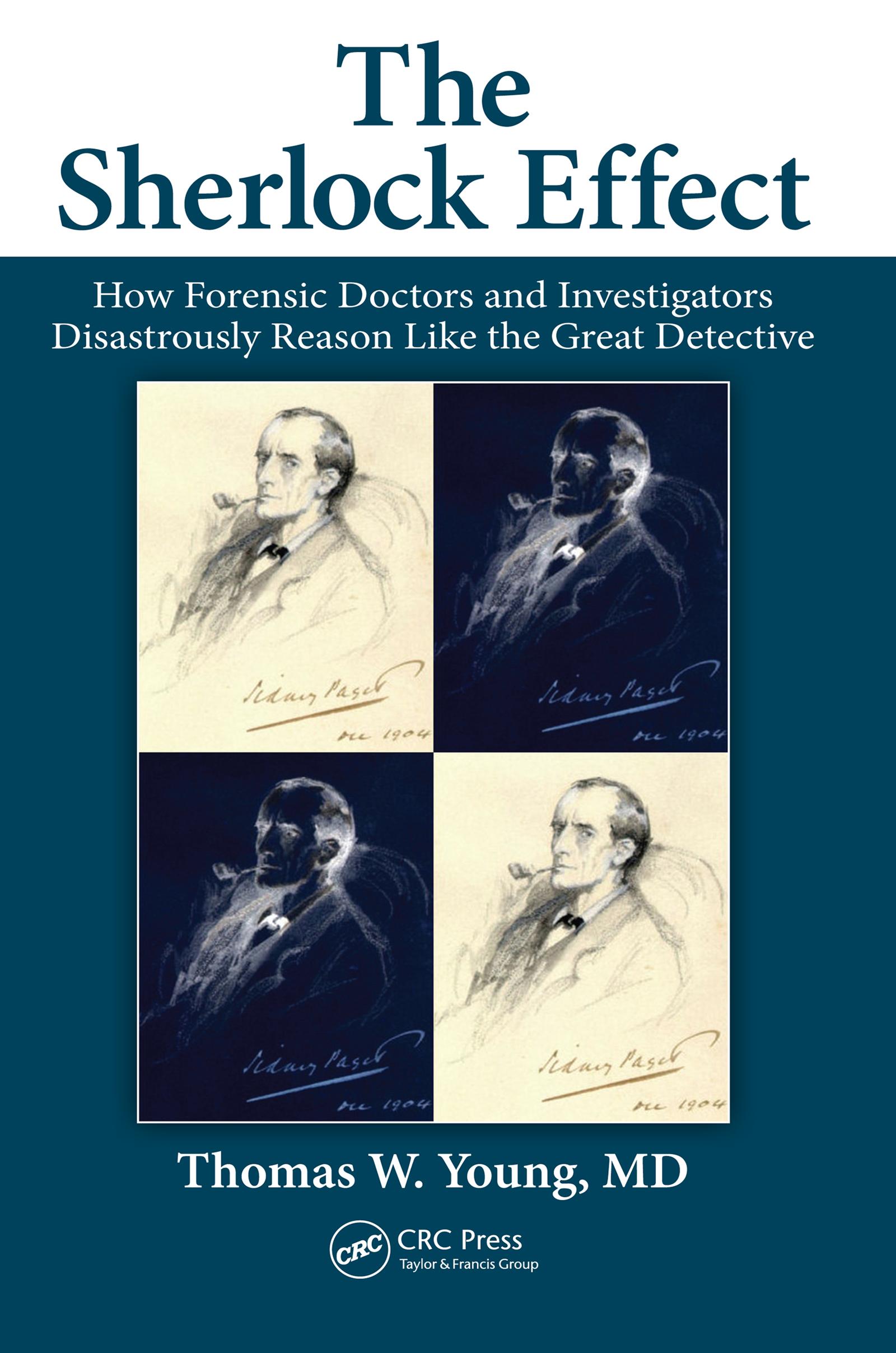
Forensic science is in crisis and at a cross-roads. Movies and television dramas depict forensic heroes with high-tech tools and dazzling intellects who—inside an hour, notwithstanding commercials—piece together past-event puzzles from crime scenes and autopsies. Likewise, Sherlock Holmes—the iconic fictional detective, and the invention of forensic doctor Sir Arthur Conan Doyle—is held up as a paragon of forensic and scientific inspiration—does not "reason forward" as most people do, but "reasons backwards." Put more plainly, rather than learning the train of events and seeing whether the resultant clues match those events, Holmes determines what happened in the past by looking at the clues. Impressive and infallible as this technique appears to be—it must be recognized that infallibility lies only in works of fiction. Reasoning backward does not work in real life: reality is far less tidy.
In courtrooms everywhere, innocent people pay the price of life imitating art, of science following detective fiction. In particular, this book looks at the long and disastrous shadow cast by that icon of deductive reasoning, Sherlock Holmes.
In The Sherlock Effect, author Dr. Thomas W. Young shows why this Sherlock-Holmes-style reasoning does not work and, furthermore, how it can—and has led—to wrongful convictions. Dr. Alan Moritz, one of the early pioneers of forensic pathology in the United States, warned his colleagues in the 1950’s about making the Sherlock Holmes error. Little did Moritz realize how widespread the problem would eventually become, involving physicians in all other specialties of medicine and not just forensic pathologists. Dr. Young traces back how this situation evolved, looking back over the history of forensic medicine, revealing the chilling degree to which forensic experts fail us every day.
While Dr. Young did not want to be the one to write this book, he has felt compelled in the interest of science and truth. This book is measured, well-reasoned, accessible, insightful, and—above all—compelling. As such, it is a must-read treatise for forensic doctors, forensic practitioners and students, judges, lawyers adjudicating cases in court, and anyone with an interest in forensic science.
Betal enkelt med kort, Klarna, Apple Pay eller Google Pay. Ikke fornøyd? Du har alltid 14 dagers angrerett. Les mer i våre vilkår. Har du spørsmål, send oss en e-post på hello@memmo.org.
Memmo gjør det enklere å studere – uansett hvor du er i verden. Hos oss samler du pensumbøker og smarte studieverktøy på ett og samme sted: sammendrag, quizer, podkaster og flashcards. Og så Ted, din studiekompis som svarer på alt du lurer på. Over 50 000 studenter studerer allerede her – bygget for at du skal lære raskere og stresse mindre.