
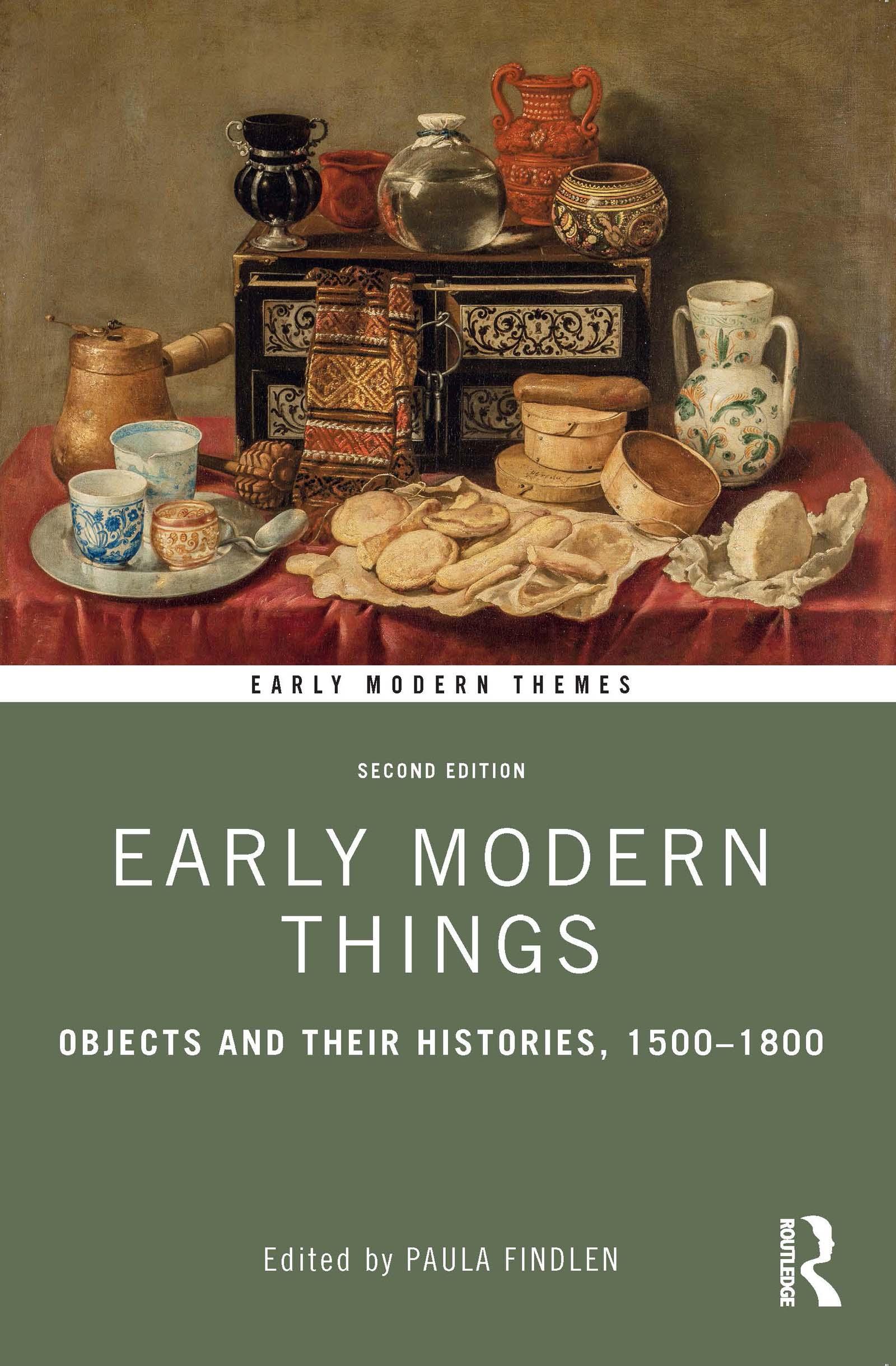
Early Modern Things supplies fresh and provocative insights into how objects – ordinary and extraordinary, secular and sacred, natural and man-made – came to define some of the key developments of the early modern world.
Now in its second edition, this book taps a rich vein of recent scholarship to explore a variety of approaches to the material culture of the early modern world (c. 1500–1800). Divided into seven parts, the book explores the ambiguity of things, representing things, making things, encountering things, empires of things, consuming things, and the power of things. This edition includes a new preface and three new essays on ‘encountering things’ to enrich the volume. These look at cabinets of curiosities, American pearls, and the material culture of West Central Africa. Spanning across the early modern world from Ming dynasty China and Tokugawa Japan to Siberia and Georgian England, from the Kingdom of the Kongo and the Ottoman Empire to the Caribbean and the Spanish Americas, the authors provide a generous set of examples in how to study the circulation, use, consumption, and, most fundamentally, the nature of things themselves.
Drawing on a broad range of disciplinary perspectives and lavishly illustrated, this updated edition of Early Modern Things is essential reading for all those interested in the early modern world and the history of material culture.
Betal enkelt med kort, Klarna, Apple Pay eller Google Pay. Ikke fornøyd? Du har alltid 14 dagers angrerett. Les mer i våre vilkår. Har du spørsmål, send oss en e-post på hello@memmo.org.
Memmo gjør det enklere å studere – uansett hvor du er i verden. Hos oss samler du pensumbøker og smarte studieverktøy på ett og samme sted: sammendrag, quizer, podkaster og flashcards. Og så Ted, din studiekompis som svarer på alt du lurer på. Over 50 000 studenter studerer allerede her – bygget for at du skal lære raskere og stresse mindre.