
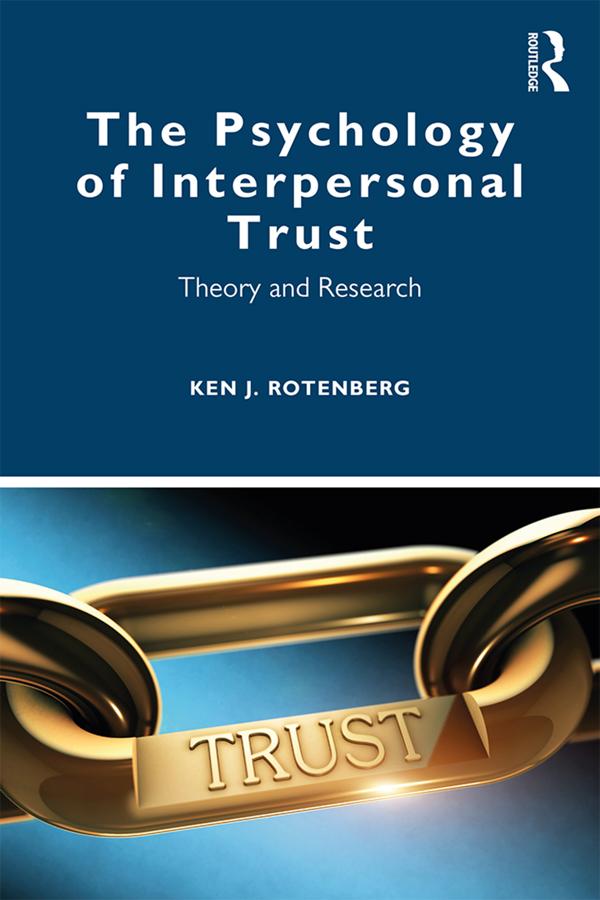
Trust is a crucial facet of social functioning that feeds into our relationships with individuals, groups, and organizations. The Psychology of Interpersonal Trust: Theory and Research examines existing theories, frameworks, and models of trust as well as the methods and designs for examining it. To fully examine how interpersonal trust impacts our lives, Rotenberg reviews the many essential topics trust relates to, including close relationships, trust games, behavioural trust, and trust development.
Designed to encourage researchers to recognize the links between different approaches to trust, this book begins with an overview of the different approaches to interpersonal trust and a description of the methods used to investigate it. Following on from this, each chapter introduces a new subtopic or context, including lying, adjustment, socialization, social media, politics, and health. Each subtopic begins with a short monologue (to provide a personal perspective) and covers basic theory and research. Rotenberg’s applied focus demonstrates the relevance of interpersonal trust and highlights the issues and problems people face in contemporary society.
This is essential reading for students, researchers, and academics in social psychology, especially those with a specific interest in the concept of trust.
Betal enkelt med kort, Klarna, Apple Pay eller Google Pay. Ikke fornøyd? Du har alltid 14 dagers angrerett. Les mer i våre vilkår. Har du spørsmål, send oss en e-post på hello@memmo.org.
Memmo gjør det enklere å studere – uansett hvor du er i verden. Hos oss samler du pensumbøker og smarte studieverktøy på ett og samme sted: sammendrag, quizer, podkaster og flashcards. Og så Ted, din studiekompis som svarer på alt du lurer på. Over 50 000 studenter studerer allerede her – bygget for at du skal lære raskere og stresse mindre.