
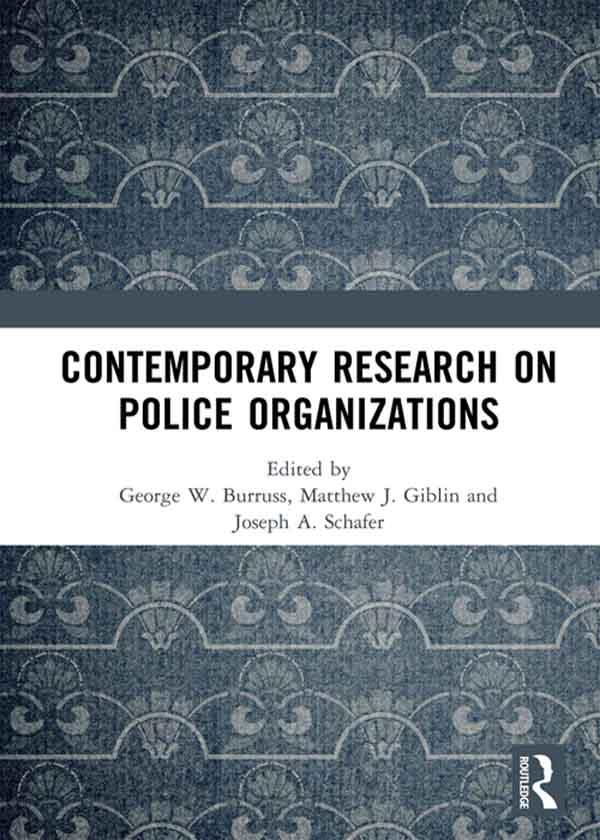
Much research on policing focuses on individual officer decision making in the field, but officers are positioned within organizations. Organizational characteristics, including structures, policies, management, training, culture, traditions, and the environmental context affect individual officer behavior and attitudes. Recent high-profile controversies surrounding policing have generated interest in examining what factors may have led to current crises.
In this book, contributors discuss how police department priorities are made; how departments respond to sexual assault complaints; how forensic scientists deal with job stress and satisfaction; how police use gun crime incident reviews for problem solving and information sharing; how police officers view the use of body-worn cameras given their perceptions of organizational justice; and how officers view their work culture. The purpose of this book is to give policy makers and scholars some guidance on the interplay between the individual and the organization. By understanding this dynamic, police administrators should be able to better devise reform efforts. This book was originally published as a special issue of the Journal of Crime and Justice.
Betal enkelt med kort, Klarna, Apple Pay eller Google Pay. Ikke fornøyd? Du har alltid 14 dagers angrerett. Les mer i våre vilkår. Har du spørsmål, send oss en e-post på hello@memmo.org.
Memmo gjør det enklere å studere – uansett hvor du er i verden. Hos oss samler du pensumbøker og smarte studieverktøy på ett og samme sted: sammendrag, quizer, podkaster og flashcards. Og så Ted, din studiekompis som svarer på alt du lurer på. Over 50 000 studenter studerer allerede her – bygget for at du skal lære raskere og stresse mindre.