
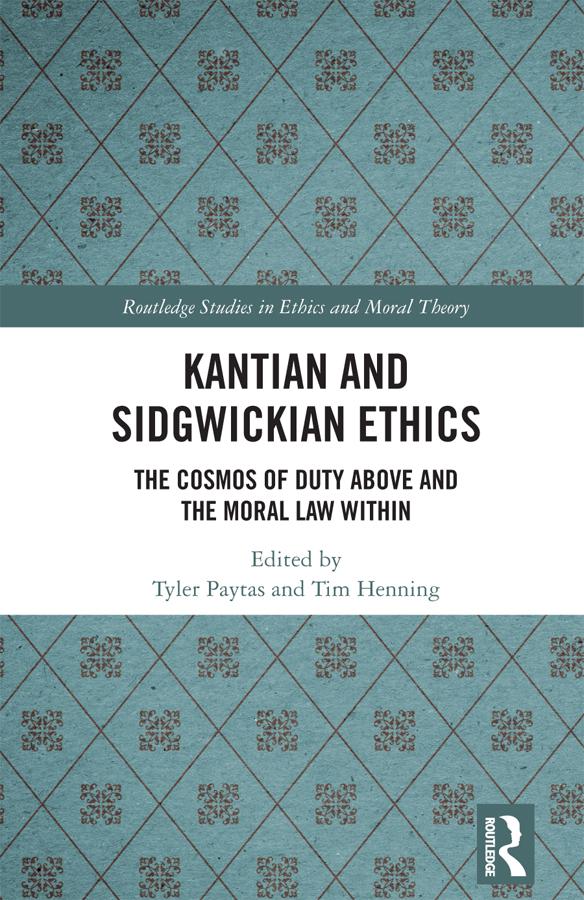
Immanuel Kant and Henry Sidgwick are towering figures in the history of moral philosophy. Kant’s views on ethics continue to be discussed and studied in detail not only in philosophy, but also theology, political science, and legal theory. Meanwhile, Sidgwick is emerging as the philosopher within the utilitarian tradition who merits the same meticulous treatment that Kant receives. As champions of deontology and consequentialism respectively, Kant and Sidgwick disagree on many important issues. However, close examination reveals a surprising amount of consensus on various topics including moral psychology, moral epistemology, and moral theology.
This book presents points of agreement and disagreement in the writings of these two giants of philosophical ethics. The chapters will stimulate discussions among moral theorists and historians of philosophy by applying cutting-edge scholarship on each philosopher to shed light on some of the more perplexing arguments and views of the other, and by uncovering and examining points of agreement between Sidgwick and Kant as possible grounds for greater convergence in contemporary moral philosophy. This is the first full-length volume to investigate Sidgwick and Kant side by side. It will be of major interest to researchers and advanced students working in moral philosophy and its history.
Betal enkelt med kort, Klarna, Apple Pay eller Google Pay. Ikke fornøyd? Du har alltid 14 dagers angrerett. Les mer i våre vilkår. Har du spørsmål, send oss en e-post på hello@memmo.org.
Memmo gjør det enklere å studere – uansett hvor du er i verden. Hos oss samler du pensumbøker og smarte studieverktøy på ett og samme sted: sammendrag, quizer, podkaster og flashcards. Og så Ted, din studiekompis som svarer på alt du lurer på. Over 50 000 studenter studerer allerede her – bygget for at du skal lære raskere og stresse mindre.