
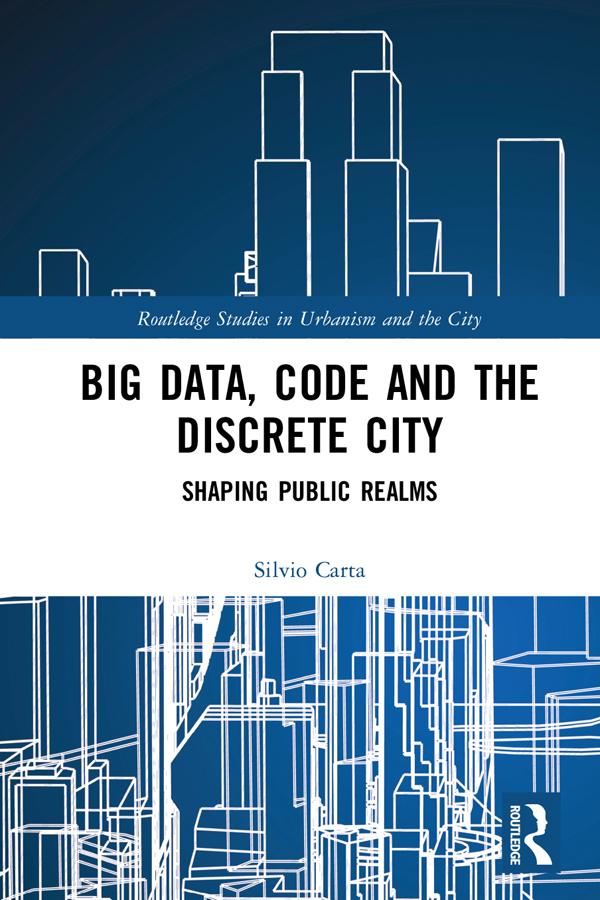
Big Data, Code and the Discrete City explores how digital technologies are gradually changing the way in which the public space is designed by architects, managed by policymakers and experienced by individuals. Smart city technologies are superseding the traditional human experience that has characterised the making of the public space until today. This book examines how computers see the public space and the effect of algorithms, artificial intelligences and automated processes on the human experience in public spaces.
Divided into three parts, the first part of this book examines the notion of discreteness in its origins and applications to computer sciences. The second section presents a dual perspective: it explores the ways in which public spaces are constructed by the computer-driven logic and then translated into control mechanisms, design strategies and software-aided design. This perspective also describes the way in which individuals perceive this new public space, through its digital logic, and discrete mechanisms (from Wi-Fi coverage to self-tracking). Finally, in the third part, this book scrutinises the discrete logic with which computers operate, and how this is permeating into aspects of city life.
This book is valuable for anyone interested in urban studies and digital technologies, and more specifically in big data, urban informatics and public space.
Betal enkelt med kort, Klarna, Apple Pay eller Google Pay. Ikke fornøyd? Du har alltid 14 dagers angrerett. Les mer i våre vilkår. Har du spørsmål, send oss en e-post på hello@memmo.org.
Memmo gjør det enklere å studere – uansett hvor du er i verden. Hos oss samler du pensumbøker og smarte studieverktøy på ett og samme sted: sammendrag, quizer, podkaster og flashcards. Og så Ted, din studiekompis som svarer på alt du lurer på. Over 50 000 studenter studerer allerede her – bygget for at du skal lære raskere og stresse mindre.