
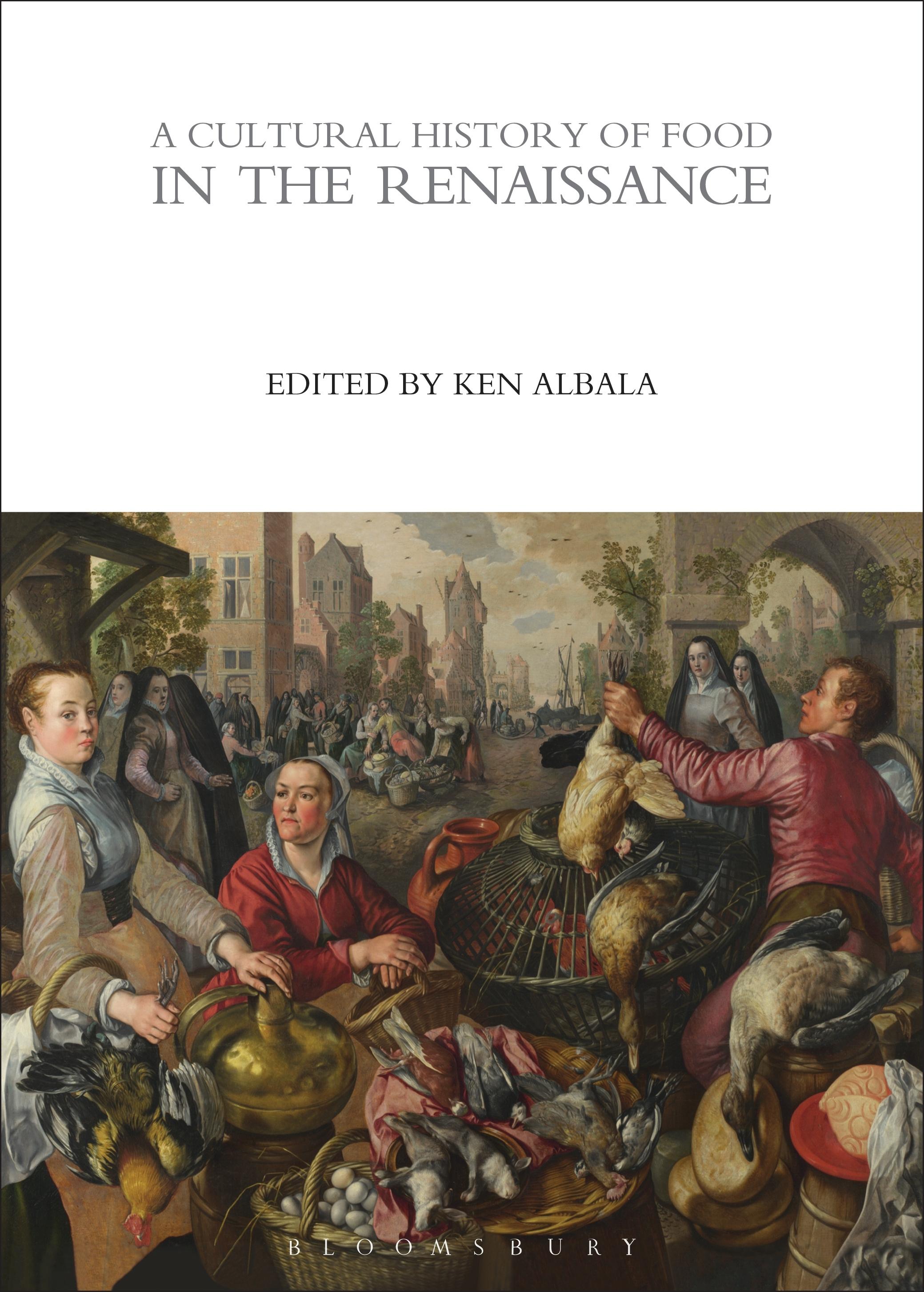
Food and attitudes toward it were transformed in Renaissance Europe. The period between 1300 and 1600 saw the discovery of the New World and the cultivation of new foodstuffs, as well as the efflorescence of culinary literature in European courts and eventually in the popular press, and most importantly the transformation of the economy on a global scale. Food became the object of rigorous investigation among physicians, theologians, agronomists and even poets and artists. Concern with eating was, in fact, central to the cultural dynamism we now recognize as the Renaissance.
A Cultural History of Food in the Renaissance presents an overview of the period with essays on food production, food systems, food security, safety and crises, food and politics, eating out, professional cooking, kitchens and service work, family and domesticity, body and soul, representations of food, and developments in food production and consumption globally.
A Cultural History of Food in the Renaissance presents an overview of the period with essays on food production, food systems, food security, safety and crises, food and politics, eating out, professional cooking, kitchens and service work, family and domesticity, body and soul, representations of food, and developments in food production and consumption globally.
Betal enkelt med kort, Klarna, Apple Pay eller Google Pay. Ikke fornøyd? Du har alltid 14 dagers angrerett. Les mer i våre vilkår. Har du spørsmål, send oss en e-post på hello@memmo.org.
Memmo gjør det enklere å studere – uansett hvor du er i verden. Hos oss samler du pensumbøker og smarte studieverktøy på ett og samme sted: sammendrag, quizer, podkaster og flashcards. Og så Ted, din studiekompis som svarer på alt du lurer på. Over 50 000 studenter studerer allerede her – bygget for at du skal lære raskere og stresse mindre.