
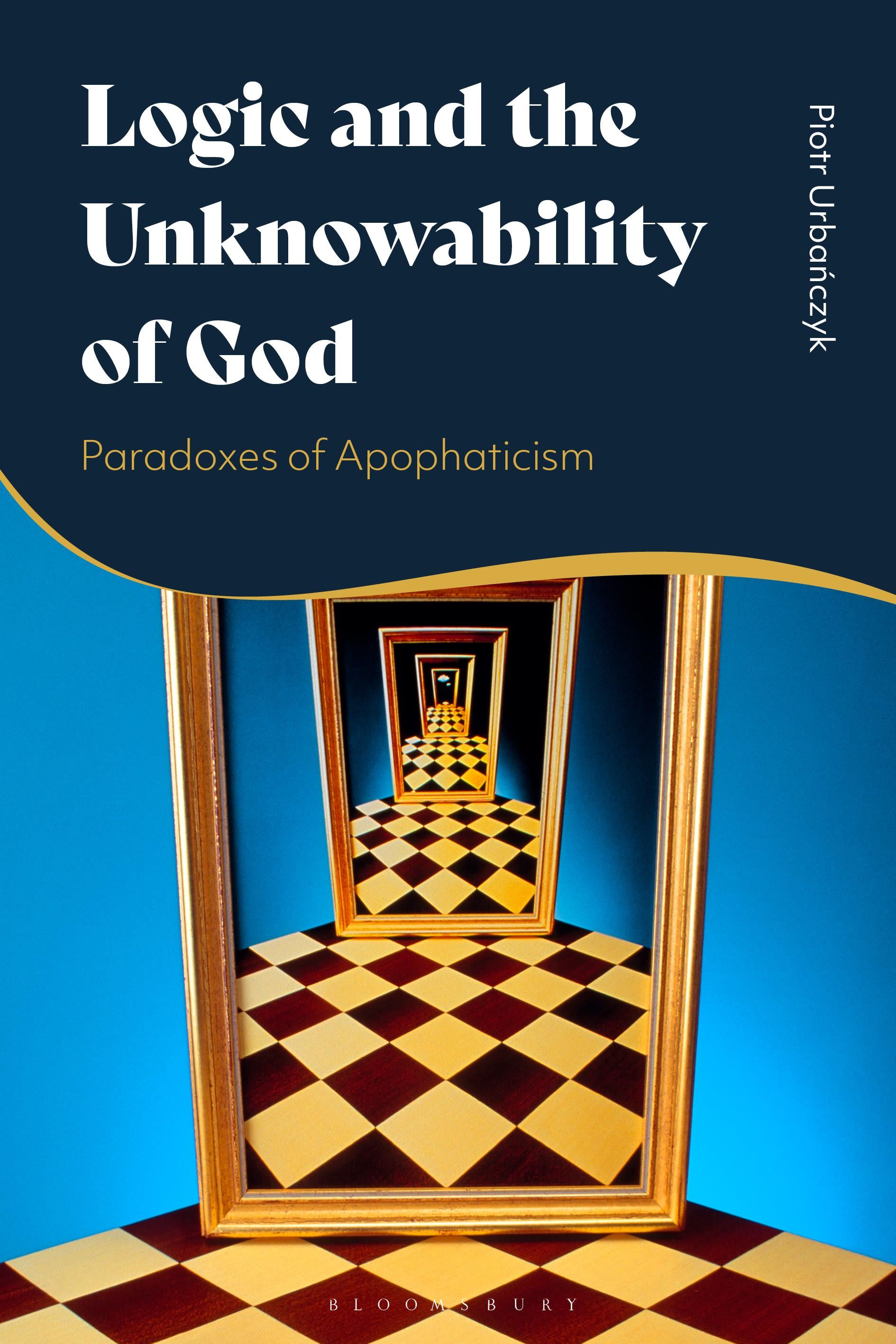
A rigorous analysis of the paradoxes of apophatic theology, revealing its deep logical structure and challenging inconsistencies.
In this book, Piotr Urbanczyk delves into the theory known as negative, or apophatic, theology where God is completely ineffable and unknowable. This doctrine, however, presents a paradox: if we declare that God is ineffable or unknowable, we are, in fact, asserting something about Him.
Investigating three interpretations of apophatic doctrine and highlighting the logical aspects accompanying each, Urbanczyk's interpretation of negative theology emphasizes the transcendence of God in the context of language. In the first part of the book, he reveals that the paradox lying underneath this theory has a self-referential structure characteristic of well-known semantic paradoxes. Another interpretation shifts from language to knowledge, claiming that God is completely unknowable. While "theological skepticism" seems similar to the ineffability view, Urbanczyk argues they are distinct. Using epistemic modal logic, he demonstrates that theological skepticism reflects classic epistemic paradoxes like Moore's problem, the Church-Fitch paradox, and the knower's paradox.
By applying formal logic to the analysis of this doctrine, Urbanczy's book shows how the reconstruction of negative theology can be incredibly beneficial.
In this book, Piotr Urbanczyk delves into the theory known as negative, or apophatic, theology where God is completely ineffable and unknowable. This doctrine, however, presents a paradox: if we declare that God is ineffable or unknowable, we are, in fact, asserting something about Him.
Investigating three interpretations of apophatic doctrine and highlighting the logical aspects accompanying each, Urbanczyk's interpretation of negative theology emphasizes the transcendence of God in the context of language. In the first part of the book, he reveals that the paradox lying underneath this theory has a self-referential structure characteristic of well-known semantic paradoxes. Another interpretation shifts from language to knowledge, claiming that God is completely unknowable. While "theological skepticism" seems similar to the ineffability view, Urbanczyk argues they are distinct. Using epistemic modal logic, he demonstrates that theological skepticism reflects classic epistemic paradoxes like Moore's problem, the Church-Fitch paradox, and the knower's paradox.
By applying formal logic to the analysis of this doctrine, Urbanczy's book shows how the reconstruction of negative theology can be incredibly beneficial.
Betal enkelt med kort, Klarna, Apple Pay eller Google Pay. Ikke fornøyd? Du har alltid 14 dagers angrerett. Les mer i våre vilkår. Har du spørsmål, send oss en e-post på hello@memmo.org.
Memmo gjør det enklere å studere – uansett hvor du er i verden. Hos oss samler du pensumbøker og smarte studieverktøy på ett og samme sted: sammendrag, quizer, podkaster og flashcards. Og så Ted, din studiekompis som svarer på alt du lurer på. Over 50 000 studenter studerer allerede her – bygget for at du skal lære raskere og stresse mindre.