
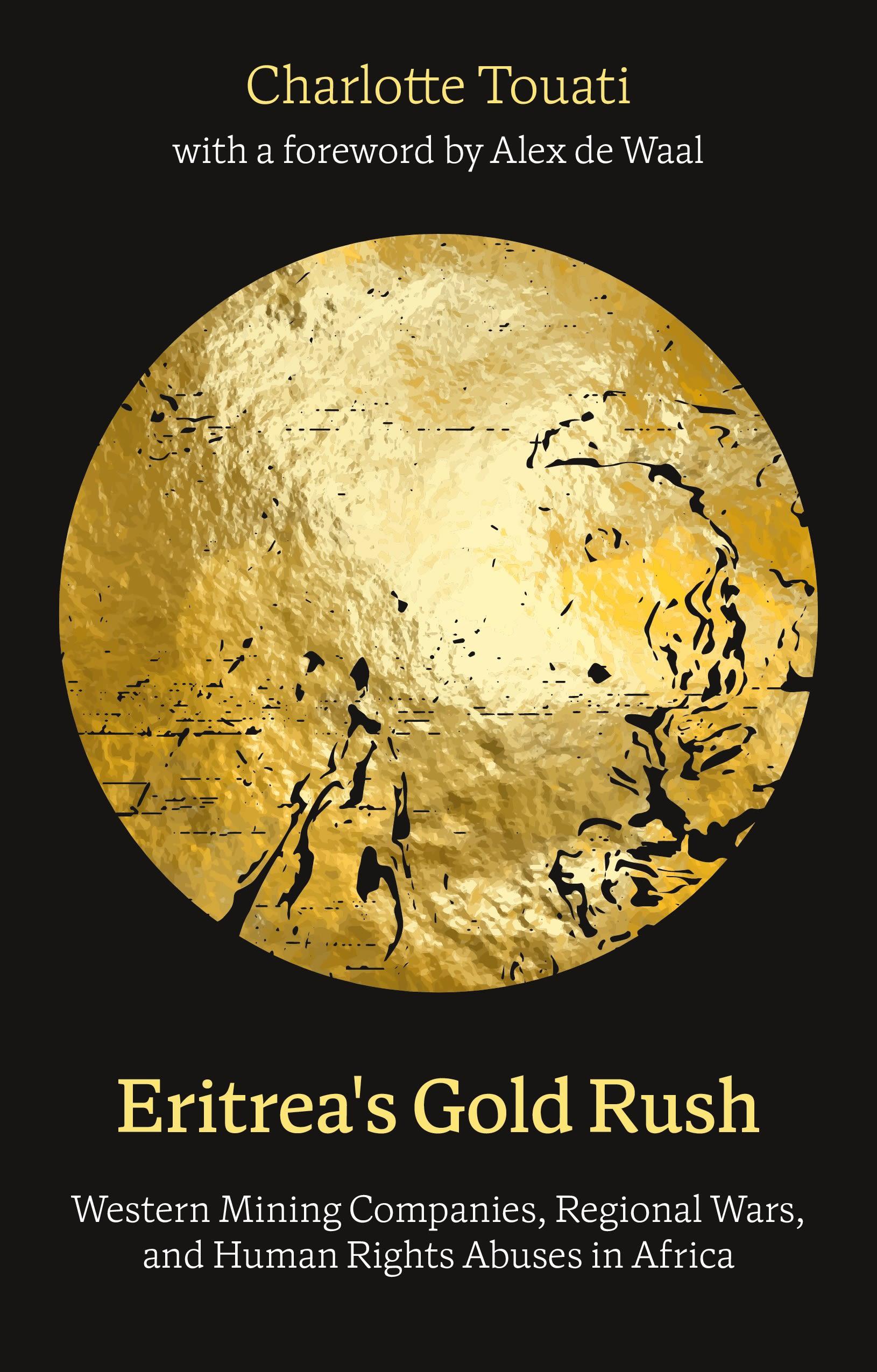
Leading Horn of Africa expert Charlotte Touati exposes the role played by Canadian gold mining company Nevsun and other global actors in propping up the regime of Isayas Aferwerki, one of Africa's most dangerous dictators. In the process, Touati shows how global capital networks help perpetuate economic and political instability in the Horn of Africa, which in turn is fostering violence and volatility throughout other parts of the world.
Using a narrative framework and a core cast of characters to help guide non-specialist readers through her findings, Touati explains the enormous significance of how Nevsun partnered with Aferwerki to open the Bisha gold mine and save his regime from bankruptcy. When Eritrean refugees later claimed they were “conscripted” to work in the mines without pay and abused as part of their National Service, Nevsun hired lobbyists to defend Eritrea's actions and cast the very notion of human rights as a Western “Trojan horse.” Australian, Chinese, and Russian actors gradually became involved, and even the propaganda and disinformation campaigns of the infamous Russian Wagner Group seem ultimately to stem from the rhetoric of Afewerki and his lobbyists.
This violently anti-Western rhetoric was injected into a pan-Africanist discourse to become an ideological and rhetorical toolbox. It was used to prevent any intervention on behalf of Eritreans trapped in their own country or Tigrayans targeted for genocide in neighboring Ethiopia. It was employed to legitimize new conflicts throughout the Sahel and the rest of Africa's notorious “Coup Belt.” And ultimately, it took on even wider global dimensions with regard to the ongoing crisis around the Red Sea ports, which Eritrea controls, and with regard to the question of the influence of the Gulf States in the Horn of Africa.
Using a narrative framework and a core cast of characters to help guide non-specialist readers through her findings, Touati explains the enormous significance of how Nevsun partnered with Aferwerki to open the Bisha gold mine and save his regime from bankruptcy. When Eritrean refugees later claimed they were “conscripted” to work in the mines without pay and abused as part of their National Service, Nevsun hired lobbyists to defend Eritrea's actions and cast the very notion of human rights as a Western “Trojan horse.” Australian, Chinese, and Russian actors gradually became involved, and even the propaganda and disinformation campaigns of the infamous Russian Wagner Group seem ultimately to stem from the rhetoric of Afewerki and his lobbyists.
This violently anti-Western rhetoric was injected into a pan-Africanist discourse to become an ideological and rhetorical toolbox. It was used to prevent any intervention on behalf of Eritreans trapped in their own country or Tigrayans targeted for genocide in neighboring Ethiopia. It was employed to legitimize new conflicts throughout the Sahel and the rest of Africa's notorious “Coup Belt.” And ultimately, it took on even wider global dimensions with regard to the ongoing crisis around the Red Sea ports, which Eritrea controls, and with regard to the question of the influence of the Gulf States in the Horn of Africa.
Sider: 256
Kategori: Ekonomi & Utveckling
e-ISBN: 9781350513570
Fraktvekt: 1.2 kg
Sendes innen: 1-2 dager
Betal enkelt med kort, Klarna, Apple Pay eller Google Pay. Ikke fornøyd? Du har alltid 14 dagers angrerett. Les mer i våre vilkår. Har du spørsmål, send oss en e-post på hello@memmo.org.
Memmo gjør det enklere å studere – uansett hvor du er i verden. Hos oss samler du pensumbøker og smarte studieverktøy på ett og samme sted: sammendrag, quizer, podkaster og flashcards. Og så Ted, din studiekompis som svarer på alt du lurer på. Over 50 000 studenter studerer allerede her – bygget for at du skal lære raskere og stresse mindre.