
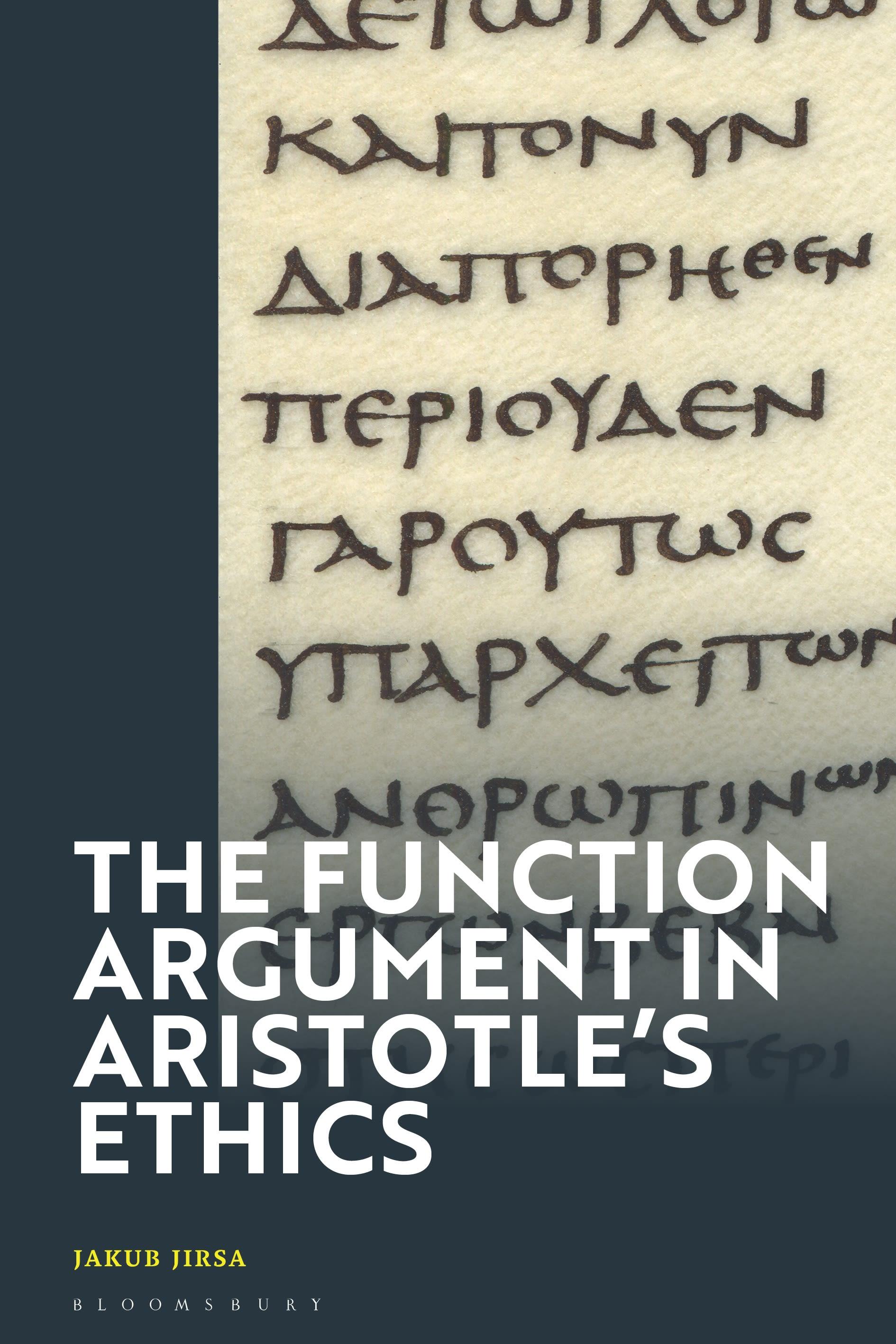
Jakub Jirsa provides the first book-length study of the “function argument”, outlining its central importance for Aristotle's ethics and his understanding of happiness and living well.
The Function Argument in Aristotle's Ethics gives a systematic account of the development of the function argument from Plato's Republic to the Nicomachean Ethics, with an explication of the interdependence between different versions of the argument which appear in Aristotle's ethical writings. In careful close readings of Aristotle's Proptrepticus, the Eudemian Ethics and the Nicomachean Ethics, Jirsa makes the case that the function (ergon) argument – that the function of human beings is virtuous activity of the rational part of the soul – serves as a transition from formal to substantial ethical debate and helps to differentiate between happiness and the happy life. The book then evaluates Aristotle's function argument against contemporary critiques.
With English translations of sections of the Proptrepticus based on the recent reconstruction from ancient sources and fragments, this volume offers a novel context for understanding a key element of Aristotle's ethical works, and is an ideal reference for those studying Aristotelian ethics, virtue ethics and the history of philosophy.
The Function Argument in Aristotle's Ethics gives a systematic account of the development of the function argument from Plato's Republic to the Nicomachean Ethics, with an explication of the interdependence between different versions of the argument which appear in Aristotle's ethical writings. In careful close readings of Aristotle's Proptrepticus, the Eudemian Ethics and the Nicomachean Ethics, Jirsa makes the case that the function (ergon) argument – that the function of human beings is virtuous activity of the rational part of the soul – serves as a transition from formal to substantial ethical debate and helps to differentiate between happiness and the happy life. The book then evaluates Aristotle's function argument against contemporary critiques.
With English translations of sections of the Proptrepticus based on the recent reconstruction from ancient sources and fragments, this volume offers a novel context for understanding a key element of Aristotle's ethical works, and is an ideal reference for those studying Aristotelian ethics, virtue ethics and the history of philosophy.
Betal enkelt med kort, Klarna, Apple Pay eller Google Pay. Ikke fornøyd? Du har alltid 14 dagers angrerett. Les mer i våre vilkår. Har du spørsmål, send oss en e-post på hello@memmo.org.
Memmo gjør det enklere å studere – uansett hvor du er i verden. Hos oss samler du pensumbøker og smarte studieverktøy på ett og samme sted: sammendrag, quizer, podkaster og flashcards. Og så Ted, din studiekompis som svarer på alt du lurer på. Over 50 000 studenter studerer allerede her – bygget for at du skal lære raskere og stresse mindre.