
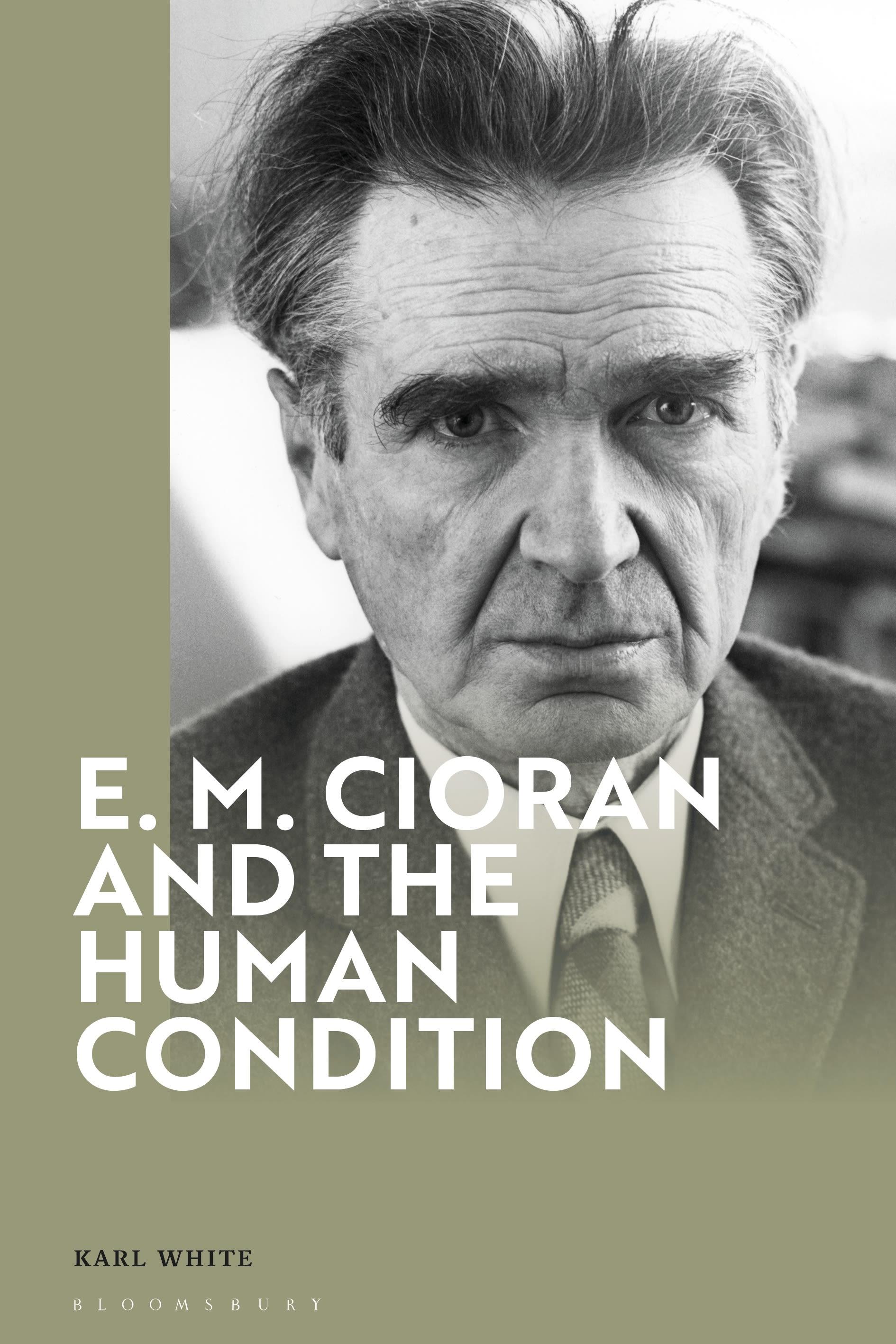
This masterful account situates E.M. Cioran in his rightful place as one of the key figures in French post-war thought.
Acknowledged for decades as a pillar of European culture, the Romanian émigré to Paris has been overlooked by Anglophone scholarship, but by placing him in conversation with acclaimed mainstream thinkers like Martha Nussbaum, Hannah Arendt and Samuel Beckett this book finally redresses that balance.
Cioran is a thinker determined to peel back the layers of 'polite' philosophy to explore the anxious and difficult experience of being human. E.M. Cioran and the Human Condition focuses in on the iconoclastic force of his work and, in particular, his preoccupation with birth, which he conceives of as the source of life's dilemmas. Framing its discussions with enduring theological themes like guilt, original sin, salvation and apocalypse, this book brings the true value of Cioran's work for Western thought to the fore. These ideas often go unnoticed in the work of more conventional thinkers, making Cioran an essential figure in confronting the apocalyptic nature of our own age.
The unique combination of pessimism, dark humour and morbid wit in Cioran's writing pushes us to explore what, if any, future there is for humanity in a world becoming ever more inhuman. This is a lively and thought-provoking introduction to an unjustly marginalized thinker who has much to teach us about the human condition after the crises of the twentieth century.
Acknowledged for decades as a pillar of European culture, the Romanian émigré to Paris has been overlooked by Anglophone scholarship, but by placing him in conversation with acclaimed mainstream thinkers like Martha Nussbaum, Hannah Arendt and Samuel Beckett this book finally redresses that balance.
Cioran is a thinker determined to peel back the layers of 'polite' philosophy to explore the anxious and difficult experience of being human. E.M. Cioran and the Human Condition focuses in on the iconoclastic force of his work and, in particular, his preoccupation with birth, which he conceives of as the source of life's dilemmas. Framing its discussions with enduring theological themes like guilt, original sin, salvation and apocalypse, this book brings the true value of Cioran's work for Western thought to the fore. These ideas often go unnoticed in the work of more conventional thinkers, making Cioran an essential figure in confronting the apocalyptic nature of our own age.
The unique combination of pessimism, dark humour and morbid wit in Cioran's writing pushes us to explore what, if any, future there is for humanity in a world becoming ever more inhuman. This is a lively and thought-provoking introduction to an unjustly marginalized thinker who has much to teach us about the human condition after the crises of the twentieth century.
Betal enkelt med kort, Klarna, Apple Pay eller Google Pay. Ikke fornøyd? Du har alltid 14 dagers angrerett. Les mer i våre vilkår. Har du spørsmål, send oss en e-post på hello@memmo.org.
Memmo gjør det enklere å studere – uansett hvor du er i verden. Hos oss samler du pensumbøker og smarte studieverktøy på ett og samme sted: sammendrag, quizer, podkaster og flashcards. Og så Ted, din studiekompis som svarer på alt du lurer på. Over 50 000 studenter studerer allerede her – bygget for at du skal lære raskere og stresse mindre.