
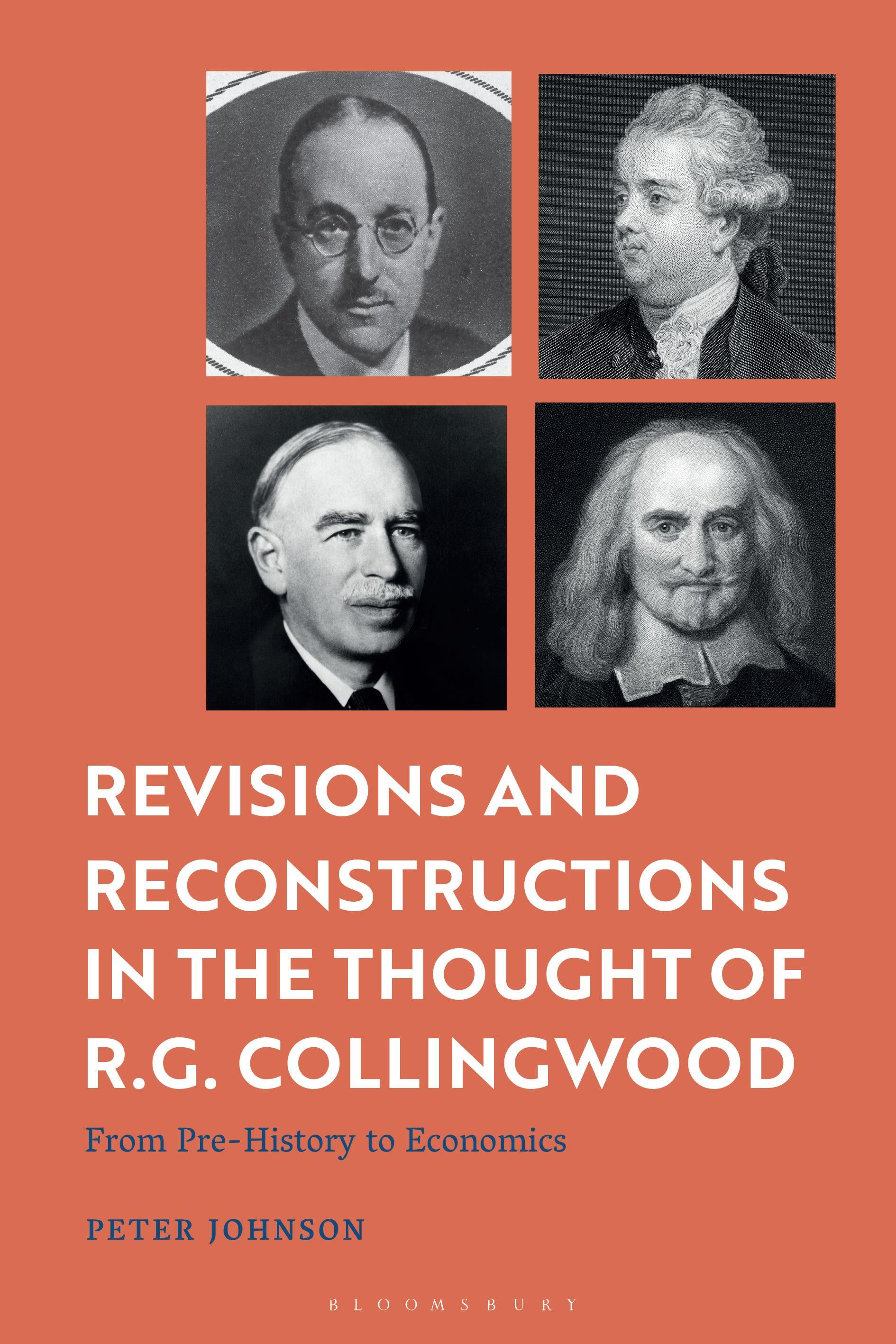
Opening new ground in neglected aspects of R.G. Collingwood's philosophy, Peter Johnson presents essays on Collingwood as a pre-historian, economist, Christian and commentator of Edward Gibbon together with an investigation into the connection between his later works.
The chapters shed light on Collingwood's distinctive account of pre-history, the relationship between his last great works The Principles of History and The New Leviathan, and his views on money in comparison to those of J.M. Keynes. They also consider his assessment of Edward Gibbon as a historian and his use of biblical citation in relation to the work of Thomas Hobbes. Johnson's insightful reflections and in-depth analysis of a range of areas in Collingwood's thinking connect them through historical and conceptual themes relevant to contemporary debates about his philosophy.
Uniting important and unique perspectives for understanding the scope and depth of Collingwood's philosophy, Johnson's detailed examination of previously underexplored topics will be welcomed by students and scholars across philosophy of history, pre-history, economic theory, intellectual history and philosophical hermeneutics.
The chapters shed light on Collingwood's distinctive account of pre-history, the relationship between his last great works The Principles of History and The New Leviathan, and his views on money in comparison to those of J.M. Keynes. They also consider his assessment of Edward Gibbon as a historian and his use of biblical citation in relation to the work of Thomas Hobbes. Johnson's insightful reflections and in-depth analysis of a range of areas in Collingwood's thinking connect them through historical and conceptual themes relevant to contemporary debates about his philosophy.
Uniting important and unique perspectives for understanding the scope and depth of Collingwood's philosophy, Johnson's detailed examination of previously underexplored topics will be welcomed by students and scholars across philosophy of history, pre-history, economic theory, intellectual history and philosophical hermeneutics.
Betal enkelt med kort, Klarna, Apple Pay eller Google Pay. Ikke fornøyd? Du har alltid 14 dagers angrerett. Les mer i våre vilkår. Har du spørsmål, send oss en e-post på hello@memmo.org.
Memmo gjør det enklere å studere – uansett hvor du er i verden. Hos oss samler du pensumbøker og smarte studieverktøy på ett og samme sted: sammendrag, quizer, podkaster og flashcards. Og så Ted, din studiekompis som svarer på alt du lurer på. Over 50 000 studenter studerer allerede her – bygget for at du skal lære raskere og stresse mindre.