
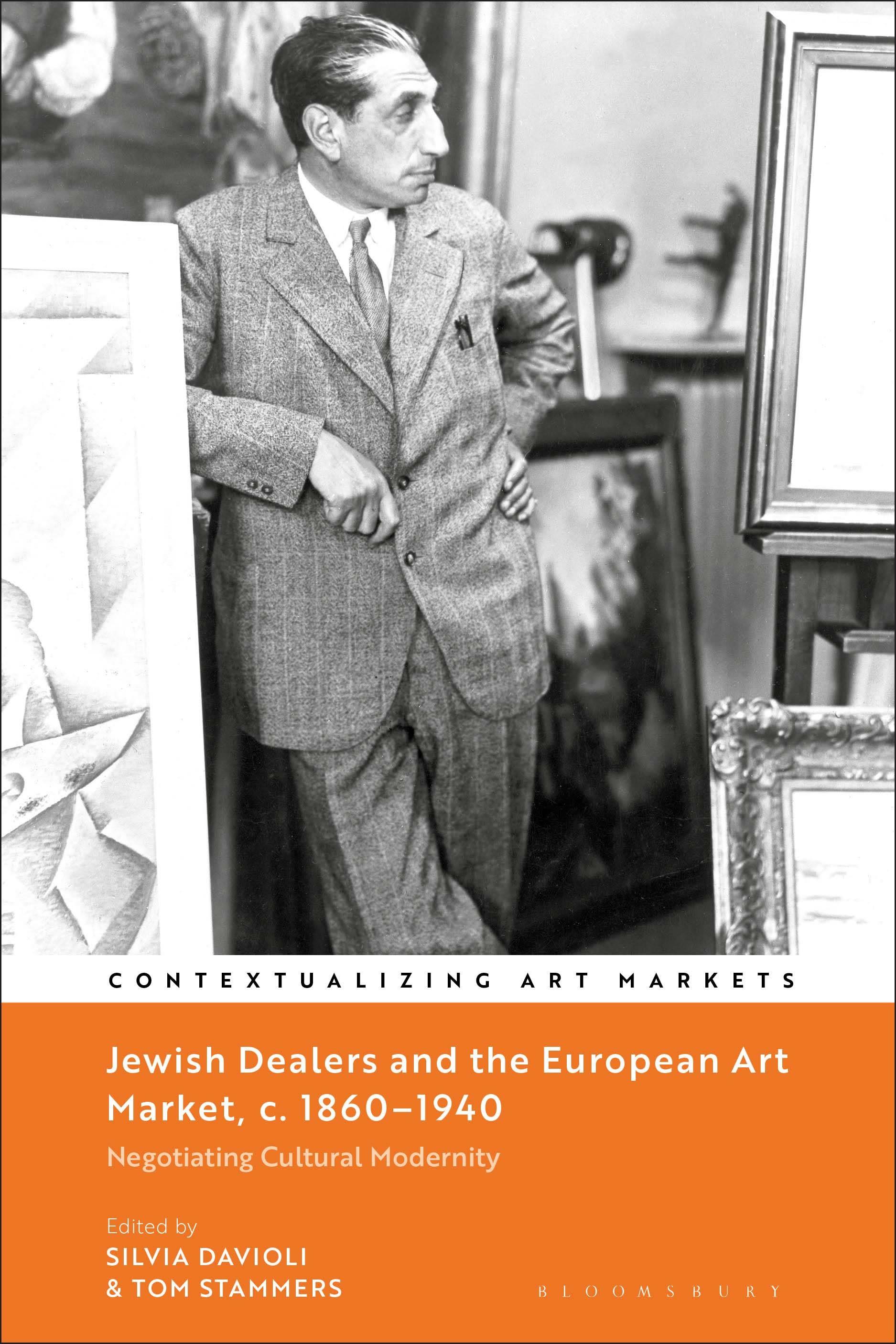
Before the tragedy of the Holocaust, many of the leading art and antiques dealers across Europe were Jewish, establishing dynamic cross-Channel, international and transatlantic networks. Aside from a few famous examples, however, we are only at the beginning of exploring the diversity of Jewish dealers' commercial and cultural worlds, and reflecting on the particular conditions that made possible their dramatic expansion within the profession.
Adopting a wider geography than any previous study, this book brings together a team of distinguished international contributors to consider Jewish art dealers as an interconnected cohort, tied together by common strategies and a shared vulnerability. After an extended historiographical introduction, the volume presents case studies and trends from 1860-1940, including: Jewish family businesses in Western Europe; the role of Jews as mediators of art from East Asia; the antisemitism and suspicion faced by Jewish dealers; Jews as theorists, exhibition makers and promoters of modern art ; and the geographical mobility and professional reinvention of Jewish dealers in times of economic and political crisis.
With a wide variety of illustrations, including paintings, decorative arts, historic photographs and archival material, the volume adopts a mix of methodological approaches to analyse a key chapter in Jewish cultural history and in the history of the international art market.
Includes Afterword by Charles Dellheim, author of Belonging and Betrayal: How Jews Made the Art World Modern (2021).
Adopting a wider geography than any previous study, this book brings together a team of distinguished international contributors to consider Jewish art dealers as an interconnected cohort, tied together by common strategies and a shared vulnerability. After an extended historiographical introduction, the volume presents case studies and trends from 1860-1940, including: Jewish family businesses in Western Europe; the role of Jews as mediators of art from East Asia; the antisemitism and suspicion faced by Jewish dealers; Jews as theorists, exhibition makers and promoters of modern art ; and the geographical mobility and professional reinvention of Jewish dealers in times of economic and political crisis.
With a wide variety of illustrations, including paintings, decorative arts, historic photographs and archival material, the volume adopts a mix of methodological approaches to analyse a key chapter in Jewish cultural history and in the history of the international art market.
Includes Afterword by Charles Dellheim, author of Belonging and Betrayal: How Jews Made the Art World Modern (2021).
Betal enkelt med kort, Klarna, Apple Pay eller Google Pay. Ikke fornøyd? Du har alltid 14 dagers angrerett. Les mer i våre vilkår. Har du spørsmål, send oss en e-post på hello@memmo.org.
Memmo gjør det enklere å studere – uansett hvor du er i verden. Hos oss samler du pensumbøker og smarte studieverktøy på ett og samme sted: sammendrag, quizer, podkaster og flashcards. Og så Ted, din studiekompis som svarer på alt du lurer på. Over 50 000 studenter studerer allerede her – bygget for at du skal lære raskere og stresse mindre.