
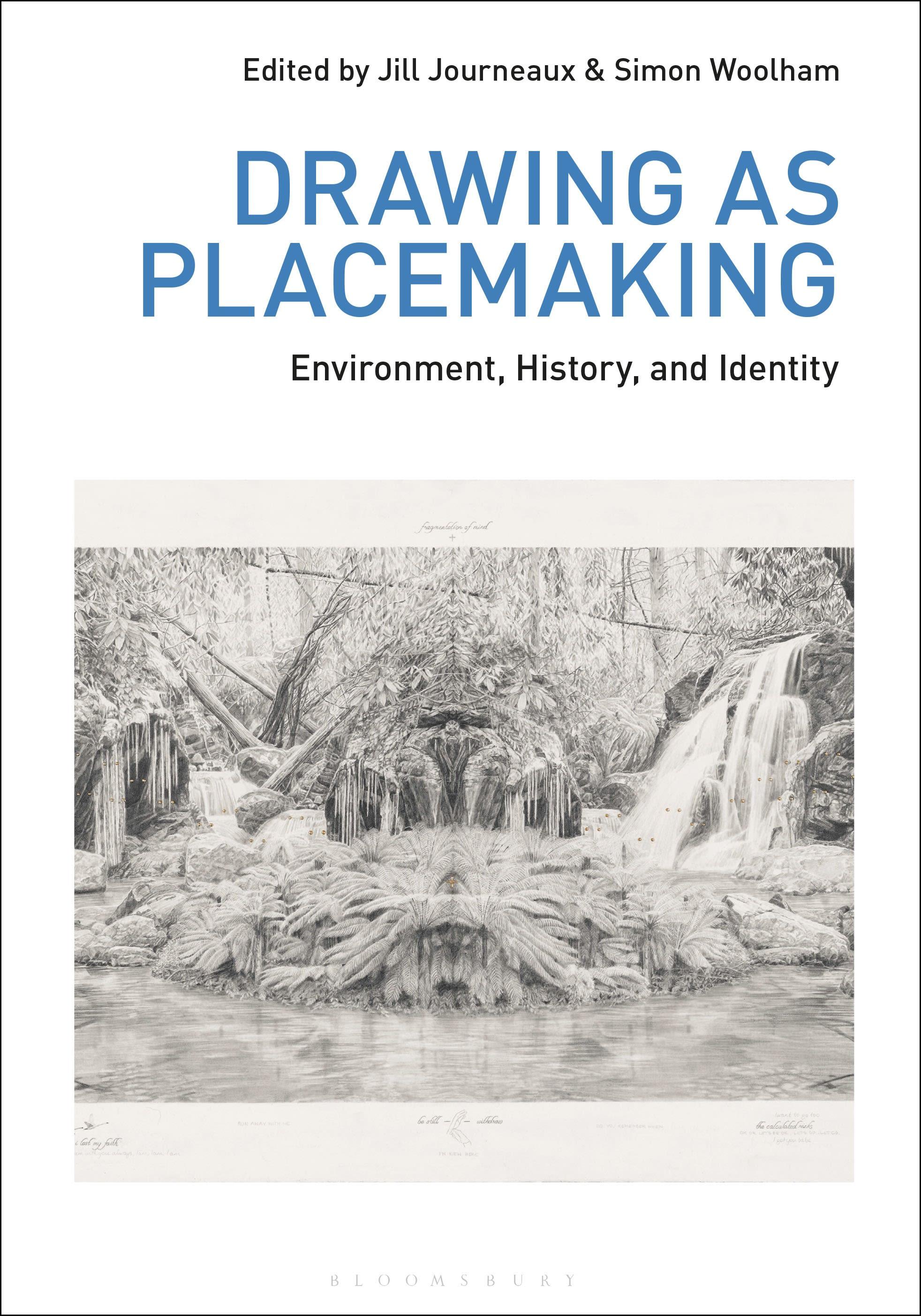
Using a combination of articles and interviews, the book introduces nine contemporary drawing projects that embrace an expansive definition of the discipline, and use their drawing practice to consider how place is understood and made.
Drawing as Placemaking focuses on how drawings and drawing processes can examine and articulate our relationships to placemaking, to our concepts of home, to historical and memorial sites, to our personal histories, and to imagined and actual places.
The contributing artists (from the USA, Canada, Portugal, Germany, Turkey, Japan, New Zealand, Australia and the UK) use expanded drawing approaches to present different perspectives on how drawings are made, and how they can be used to describe, analyse, reimagine, transform and to make new actual, historical, and psychological places. The artist-authored chapters and the conversations with artists are interwoven to facilitate broader conversations about our human interactions with place, through all our senses; what we can see, touch, feel and hear, alongside what we know, theorise or imagine. The re-evaluation of placemaking from a range of cultural perspectives highlights new stories whilst reconsidering older ones.
The book reveals new and contemporary insights into the long historical connection between drawing and placemaking and contributes to new debates around placemaking. It offers a deeper understanding of how we use drawing to better define ourselves and our place in the world.
Drawing as Placemaking focuses on how drawings and drawing processes can examine and articulate our relationships to placemaking, to our concepts of home, to historical and memorial sites, to our personal histories, and to imagined and actual places.
The contributing artists (from the USA, Canada, Portugal, Germany, Turkey, Japan, New Zealand, Australia and the UK) use expanded drawing approaches to present different perspectives on how drawings are made, and how they can be used to describe, analyse, reimagine, transform and to make new actual, historical, and psychological places. The artist-authored chapters and the conversations with artists are interwoven to facilitate broader conversations about our human interactions with place, through all our senses; what we can see, touch, feel and hear, alongside what we know, theorise or imagine. The re-evaluation of placemaking from a range of cultural perspectives highlights new stories whilst reconsidering older ones.
The book reveals new and contemporary insights into the long historical connection between drawing and placemaking and contributes to new debates around placemaking. It offers a deeper understanding of how we use drawing to better define ourselves and our place in the world.
Betal enkelt med kort, Klarna, Apple Pay eller Google Pay. Ikke fornøyd? Du har alltid 14 dagers angrerett. Les mer i våre vilkår. Har du spørsmål, send oss en e-post på hello@memmo.org.
Memmo gjør det enklere å studere – uansett hvor du er i verden. Hos oss samler du pensumbøker og smarte studieverktøy på ett og samme sted: sammendrag, quizer, podkaster og flashcards. Og så Ted, din studiekompis som svarer på alt du lurer på. Over 50 000 studenter studerer allerede her – bygget for at du skal lære raskere og stresse mindre.