
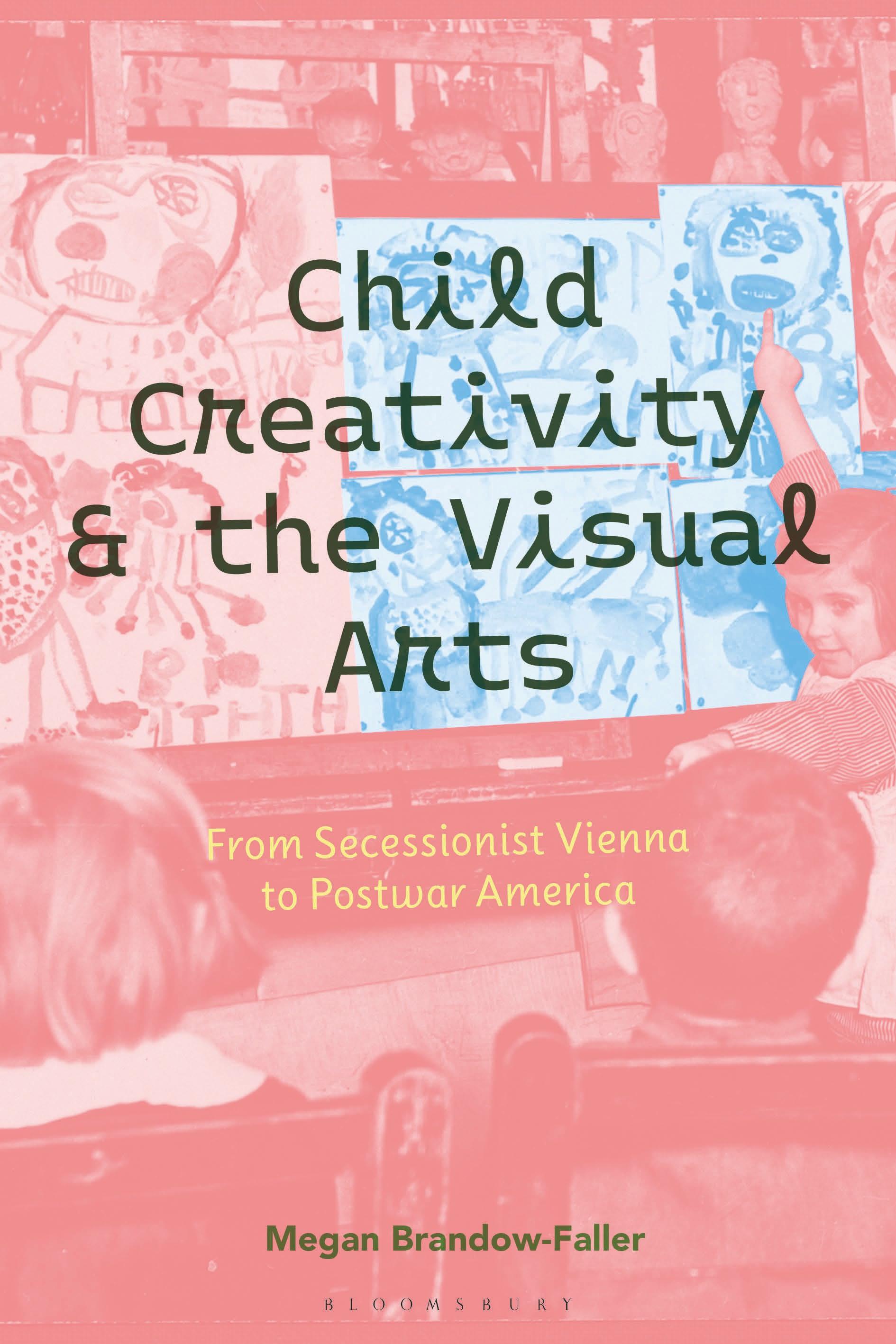
Tracing the dissemination of Secessionist ideas of child creativity – from their origination in early-20th century Vienna through to their eventual commodification in postwar America – this book highlights the central role that visual art has played in child education and in nurturing creativity in elementary and preschool curricula.
Taking the reader through the ideas of three artistic visionaries and their students – Franz Cižek, and Austrian-American émigrés Emmy Zweybrück and Viktor Löwenfeld – this book reveals how these ideas developed in postwar America through a focus on child-centered methods of 'learning by doing' in artistic practice. By centring the visual arts as a vital educational medium, we see how these teachings have been popularized as a means of nurturing creativity in childhood.
Across three chapter length case studies, interspersed with three 'mini chapters' on the reception of each artist-educator's radical teachings in the American education system, Child Creativity and the Visual Arts provides new interpretations into the impact of these three luminaries' differing philosophies on a broader program of socio-political activism in the USA. Drawing on previously untapped archival and primary source materials, it blends deep material culture analysis with narrative elements to present a compelling account of the unrecognized influence of émigré art pedagogy on progressive, international art education. In doing so, it provides fresh transregional and thematic perspectives on early-1900s Vienna as a hotbed of creative and cultural experimentation and 'mecca' of progressive art education.
Taking the reader through the ideas of three artistic visionaries and their students – Franz Cižek, and Austrian-American émigrés Emmy Zweybrück and Viktor Löwenfeld – this book reveals how these ideas developed in postwar America through a focus on child-centered methods of 'learning by doing' in artistic practice. By centring the visual arts as a vital educational medium, we see how these teachings have been popularized as a means of nurturing creativity in childhood.
Across three chapter length case studies, interspersed with three 'mini chapters' on the reception of each artist-educator's radical teachings in the American education system, Child Creativity and the Visual Arts provides new interpretations into the impact of these three luminaries' differing philosophies on a broader program of socio-political activism in the USA. Drawing on previously untapped archival and primary source materials, it blends deep material culture analysis with narrative elements to present a compelling account of the unrecognized influence of émigré art pedagogy on progressive, international art education. In doing so, it provides fresh transregional and thematic perspectives on early-1900s Vienna as a hotbed of creative and cultural experimentation and 'mecca' of progressive art education.
Betal enkelt med kort, Klarna, Apple Pay eller Google Pay. Ikke fornøyd? Du har alltid 14 dagers angrerett. Les mer i våre vilkår. Har du spørsmål, send oss en e-post på hello@memmo.org.
Memmo gjør det enklere å studere – uansett hvor du er i verden. Hos oss samler du pensumbøker og smarte studieverktøy på ett og samme sted: sammendrag, quizer, podkaster og flashcards. Og så Ted, din studiekompis som svarer på alt du lurer på. Over 50 000 studenter studerer allerede her – bygget for at du skal lære raskere og stresse mindre.