
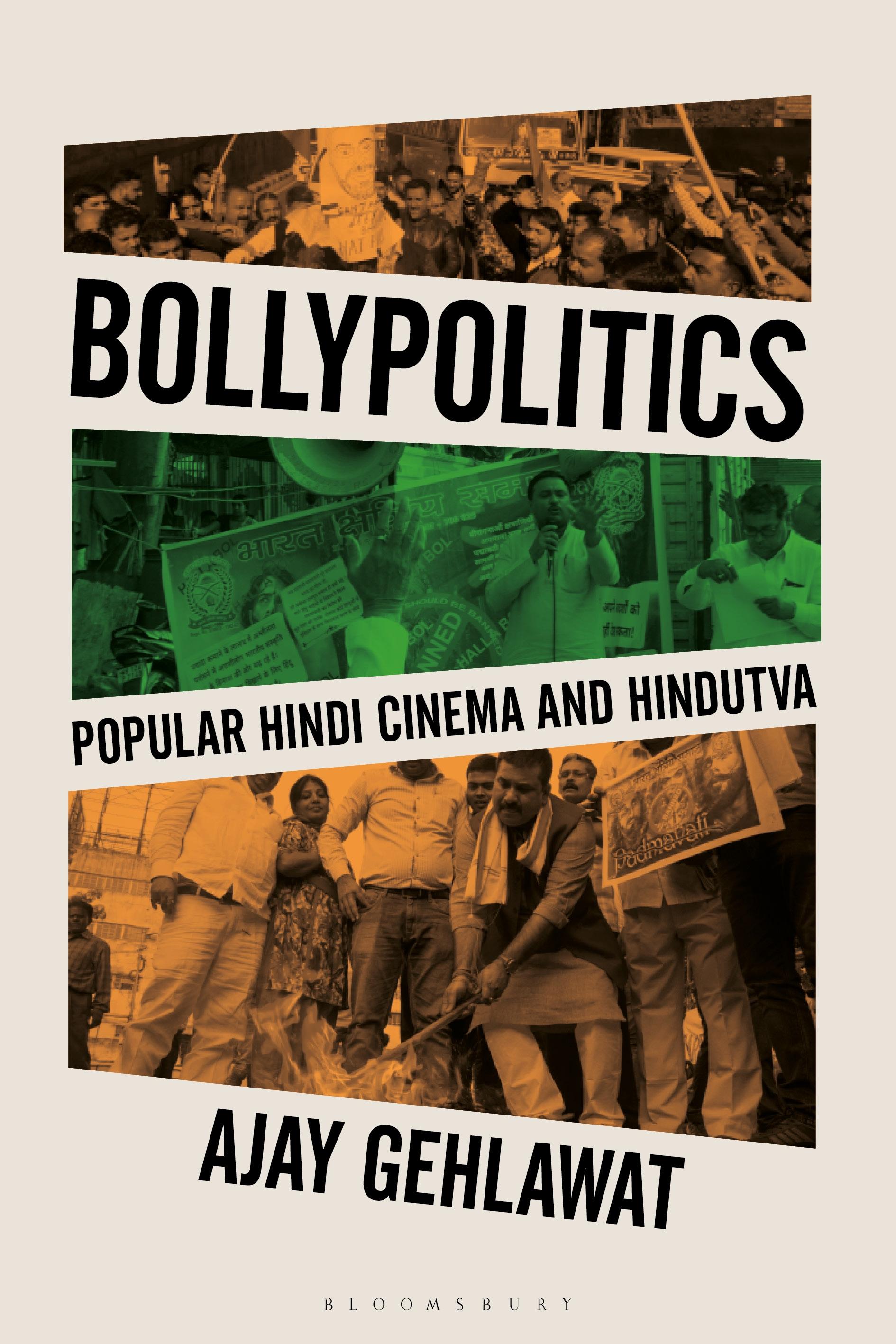
Winner of Best Monograph at the 2025 BAFTSS Awards.
This book provides an in-depth exploration of the evolving landscape of Bollywood cinema in response to recent socio-political changes in India, including a surge in sectarian violence and the ascent of Hindutva, or Hindu nationalism, under Prime Minister Narendra Modi's leadership.
Through a comprehensive analysis of prominent filmmakers and actors like Sanjay Leela Bhansali, Kangana Ranaut, Akshay Kumar, and Anupam Kher, Ajay Gehlawat investigates the extent to which their recent works align with key tenets of the Hindutva movement. He scrutinizes the growing influence of the Bharatiya Janata Party (BJP) on film production, manifesting in collaborations covering diverse themes, from Modi's Clean India initiative to the nation's space exploration endeavors and grand historical epics such as Padmaavat (2018) and Manikarnika (2019) that seek to reshape Indian history in line with Hindutva ideology.
Gehlawat goes on to dissect smaller budget films like Article 15 (2019) and Shubh Mangal Zyada Saavdhan (2020), which tackle pressing social issues like caste-based violence and homophobia exacerbated by the surge in right-wing extremism in India. In doing so, he elucidates the profound and far-reaching impact of Hindutva ideology on Indian cinematic narratives and aesthetics, while also considering the broader implications for Indian society as a whole.
This book provides an in-depth exploration of the evolving landscape of Bollywood cinema in response to recent socio-political changes in India, including a surge in sectarian violence and the ascent of Hindutva, or Hindu nationalism, under Prime Minister Narendra Modi's leadership.
Through a comprehensive analysis of prominent filmmakers and actors like Sanjay Leela Bhansali, Kangana Ranaut, Akshay Kumar, and Anupam Kher, Ajay Gehlawat investigates the extent to which their recent works align with key tenets of the Hindutva movement. He scrutinizes the growing influence of the Bharatiya Janata Party (BJP) on film production, manifesting in collaborations covering diverse themes, from Modi's Clean India initiative to the nation's space exploration endeavors and grand historical epics such as Padmaavat (2018) and Manikarnika (2019) that seek to reshape Indian history in line with Hindutva ideology.
Gehlawat goes on to dissect smaller budget films like Article 15 (2019) and Shubh Mangal Zyada Saavdhan (2020), which tackle pressing social issues like caste-based violence and homophobia exacerbated by the surge in right-wing extremism in India. In doing so, he elucidates the profound and far-reaching impact of Hindutva ideology on Indian cinematic narratives and aesthetics, while also considering the broader implications for Indian society as a whole.
Betal enkelt med kort, Klarna, Apple Pay eller Google Pay. Ikke fornøyd? Du har alltid 14 dagers angrerett. Les mer i våre vilkår. Har du spørsmål, send oss en e-post på hello@memmo.org.
Memmo gjør det enklere å studere – uansett hvor du er i verden. Hos oss samler du pensumbøker og smarte studieverktøy på ett og samme sted: sammendrag, quizer, podkaster og flashcards. Og så Ted, din studiekompis som svarer på alt du lurer på. Over 50 000 studenter studerer allerede her – bygget for at du skal lære raskere og stresse mindre.