
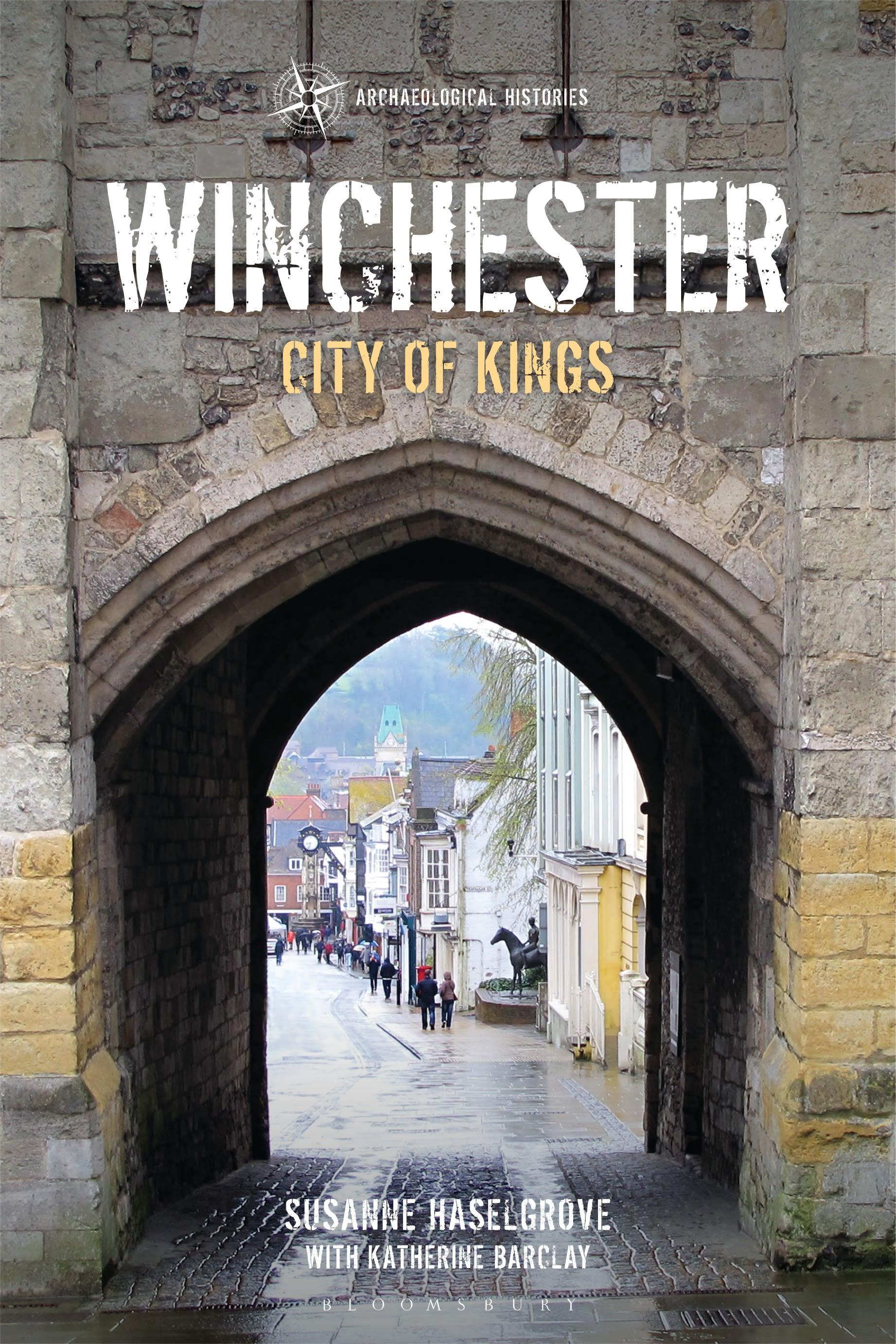
Winchester's rich heritage is brought to life in this uniquely accessible overview of the city's long and intricate physical and cultural history. Examining a wealth of archaeological evidence alongside surviving documentary sources, Susanne Haselgrove and Katherine Barclay paint a compelling picture of its waxing and waning fortunes, from prehistoric origins to early-medieval royal and ecclesiastical powerhouse, and subsequent decline to rebirth in 21st-century popular culture.
Although today Winchester is perhaps best-known globally as one of the key battlegrounds of the video-game Assassin's Creed Valhalla, its history and resonance in the contemporary world is far more complex. At its zenith the city held a prominent position on the national and international stage as a hub of learning and art, and this has endured into the modern age with the establishing of King Alfred as an icon of Britain's imperial past and the birth of environmentalism at the 'Battle of Twyford Down'.
A key part of this story is provided by the results of the ground-breaking and methodologically innovative excavations of the 1960s to 1970s, which played a critical role in the development of urban archaeology as we now know it. Across 19 sites, 3,000 volunteers brought to light the great halls of the kings and bishops, the magnificent Anglo-Saxon minsters and the homes and workshops of ordinary people. Post-excavation analyses revealed the crops and animals grown and imported into the area, how burial customs changed over time and the health of the local populations, while later excavations changed our view of medieval lepers, possibly unearthed King Alfred's body and revealed where two million First World War soldiers lived.
Although today Winchester is perhaps best-known globally as one of the key battlegrounds of the video-game Assassin's Creed Valhalla, its history and resonance in the contemporary world is far more complex. At its zenith the city held a prominent position on the national and international stage as a hub of learning and art, and this has endured into the modern age with the establishing of King Alfred as an icon of Britain's imperial past and the birth of environmentalism at the 'Battle of Twyford Down'.
A key part of this story is provided by the results of the ground-breaking and methodologically innovative excavations of the 1960s to 1970s, which played a critical role in the development of urban archaeology as we now know it. Across 19 sites, 3,000 volunteers brought to light the great halls of the kings and bishops, the magnificent Anglo-Saxon minsters and the homes and workshops of ordinary people. Post-excavation analyses revealed the crops and animals grown and imported into the area, how burial customs changed over time and the health of the local populations, while later excavations changed our view of medieval lepers, possibly unearthed King Alfred's body and revealed where two million First World War soldiers lived.
Betal enkelt med kort, Klarna, Apple Pay eller Google Pay. Ikke fornøyd? Du har alltid 14 dagers angrerett. Les mer i våre vilkår. Har du spørsmål, send oss en e-post på hello@memmo.org.
Memmo gjør det enklere å studere – uansett hvor du er i verden. Hos oss samler du pensumbøker og smarte studieverktøy på ett og samme sted: sammendrag, quizer, podkaster og flashcards. Og så Ted, din studiekompis som svarer på alt du lurer på. Over 50 000 studenter studerer allerede her – bygget for at du skal lære raskere og stresse mindre.