
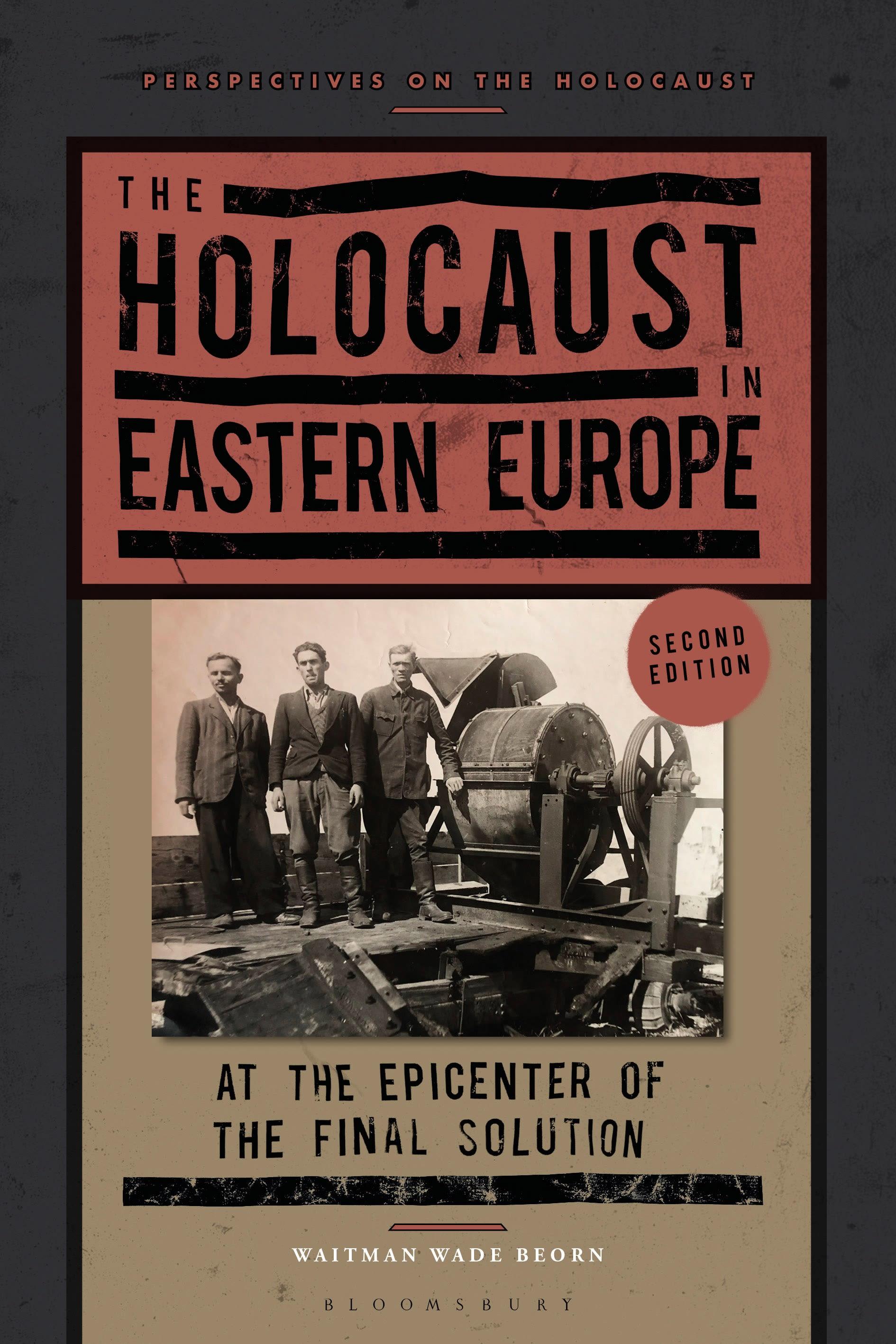
This book provides an authoritative history of the Holocaust in Eastern Europe and makes a compelling case for why the region can be considered 'the epicentre of the final solution'.
Waitman Wade Beorn introduces us to pre-war Jewish life in Eastern Europe, before tracing the escalating nature of Nazi policies in the area during the Second World War. Beorn crucially reflects on the German obsession with the East and its impact on the Nazi genocidal project there. The Holocaust in Eastern Europe also examines Soviet occupation and its consequences for the Shoah, while offering vital coverage of key themes like ghettoization, the Final Solution, rescue, collaboration, resistance, and many others. The book considers the commonalities and differences of regional Holocaust experiences from the perspectives of perpetrators, witnesses, collaborators, and victims/survivors.
Adeptly incorporating material on challenging subjects like sexual violence, the use of slave labour, the treatment of Soviet POWs, and profiteering, this 2nd edition includes two brand new chapters that enhance the scope and usefulness of the text even further; one addresses sources, methods, historiographical debates in the field, and the other focuses on non-Jewish victims of the Nazi genocidal project, such as Soviet prisoners of war, the mental and physically handicapped, Sinti and Roma, and other civilians.
Waitman Wade Beorn introduces us to pre-war Jewish life in Eastern Europe, before tracing the escalating nature of Nazi policies in the area during the Second World War. Beorn crucially reflects on the German obsession with the East and its impact on the Nazi genocidal project there. The Holocaust in Eastern Europe also examines Soviet occupation and its consequences for the Shoah, while offering vital coverage of key themes like ghettoization, the Final Solution, rescue, collaboration, resistance, and many others. The book considers the commonalities and differences of regional Holocaust experiences from the perspectives of perpetrators, witnesses, collaborators, and victims/survivors.
Adeptly incorporating material on challenging subjects like sexual violence, the use of slave labour, the treatment of Soviet POWs, and profiteering, this 2nd edition includes two brand new chapters that enhance the scope and usefulness of the text even further; one addresses sources, methods, historiographical debates in the field, and the other focuses on non-Jewish victims of the Nazi genocidal project, such as Soviet prisoners of war, the mental and physically handicapped, Sinti and Roma, and other civilians.
Betal enkelt med kort, Klarna, Apple Pay eller Google Pay. Ikke fornøyd? Du har alltid 14 dagers angrerett. Les mer i våre vilkår. Har du spørsmål, send oss en e-post på hello@memmo.org.
Memmo gjør det enklere å studere – uansett hvor du er i verden. Hos oss samler du pensumbøker og smarte studieverktøy på ett og samme sted: sammendrag, quizer, podkaster og flashcards. Og så Ted, din studiekompis som svarer på alt du lurer på. Over 50 000 studenter studerer allerede her – bygget for at du skal lære raskere og stresse mindre.