
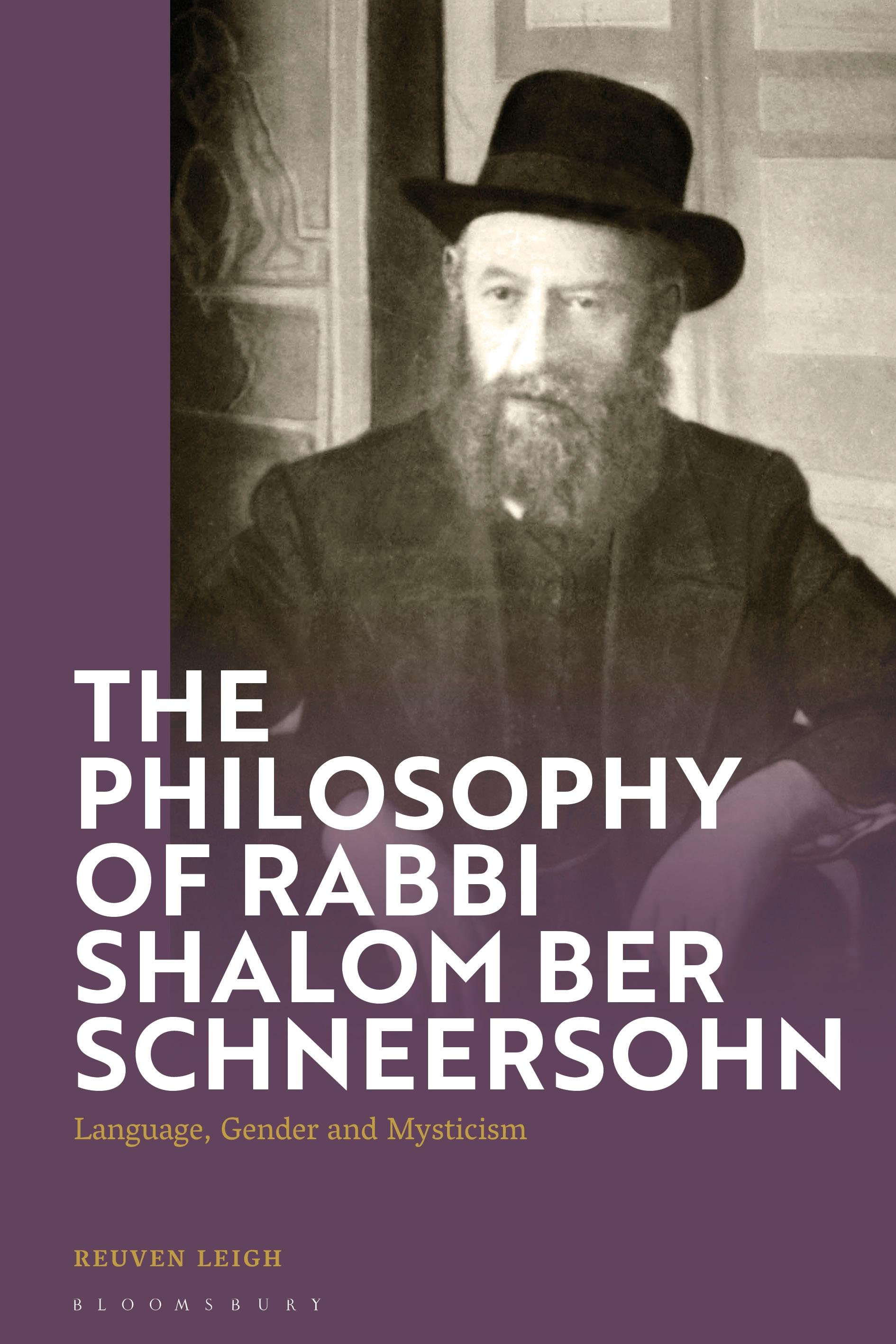
Reuven Leigh provides the first in-depth introduction to the pioneering philosophy of Rabbi Shalom Ber Schneersohn. Bringing him into dialogue with key continental philosophers Emmanuel Levinas, Jacques Derrida and Julia Kristeva, this book reveals how Schneersohn's views anticipated many prominent themes in 20th-century thought.
Shalom Ber Schneersohn (1860-1920) was the fifth Rebbe of the Habad-Lubavitch dynasty. He was a traditional, kabbalistic thinker and yet, beyond mysticism, he wrote extensively on speech, gender and the body. So why is he not better known? Leigh begins by uncovering and contesting numerous scholarly assumptions that have operated to exclude traditional rabbinic thinkers from contemporary philosophical debates.
Seeking to correct this, this book offers a close reading of Schneersohn's 1898 discourses. With the disruption of traditional binary structures being the dominant theme pervading Schneersohn's work, Leigh engages with Levinas' provocative ideas on speech and the feminine. He also highlights how Derridean deconstruction involves a more positive approach to presence that was already anticipated in the writings of Schneersohn. And from the disruption of the hierarchy of signification to the semiotic aspect of language and the maternal body, this book demonstrates how Schneersohn foreshadows a number of Kristeva's central philosophical concerns.
A wide-ranging and inclusive volume, The Philosophy of Rabbi Shalom Ber Schneersohn demonstrates not only how forward-thinking Schneersohn's ideas were over a century ago, but how relevant they still are today.
Shalom Ber Schneersohn (1860-1920) was the fifth Rebbe of the Habad-Lubavitch dynasty. He was a traditional, kabbalistic thinker and yet, beyond mysticism, he wrote extensively on speech, gender and the body. So why is he not better known? Leigh begins by uncovering and contesting numerous scholarly assumptions that have operated to exclude traditional rabbinic thinkers from contemporary philosophical debates.
Seeking to correct this, this book offers a close reading of Schneersohn's 1898 discourses. With the disruption of traditional binary structures being the dominant theme pervading Schneersohn's work, Leigh engages with Levinas' provocative ideas on speech and the feminine. He also highlights how Derridean deconstruction involves a more positive approach to presence that was already anticipated in the writings of Schneersohn. And from the disruption of the hierarchy of signification to the semiotic aspect of language and the maternal body, this book demonstrates how Schneersohn foreshadows a number of Kristeva's central philosophical concerns.
A wide-ranging and inclusive volume, The Philosophy of Rabbi Shalom Ber Schneersohn demonstrates not only how forward-thinking Schneersohn's ideas were over a century ago, but how relevant they still are today.
Betal enkelt med kort, Klarna, Apple Pay eller Google Pay. Ikke fornøyd? Du har alltid 14 dagers angrerett. Les mer i våre vilkår. Har du spørsmål, send oss en e-post på hello@memmo.org.
Memmo gjør det enklere å studere – uansett hvor du er i verden. Hos oss samler du pensumbøker og smarte studieverktøy på ett og samme sted: sammendrag, quizer, podkaster og flashcards. Og så Ted, din studiekompis som svarer på alt du lurer på. Over 50 000 studenter studerer allerede her – bygget for at du skal lære raskere og stresse mindre.