
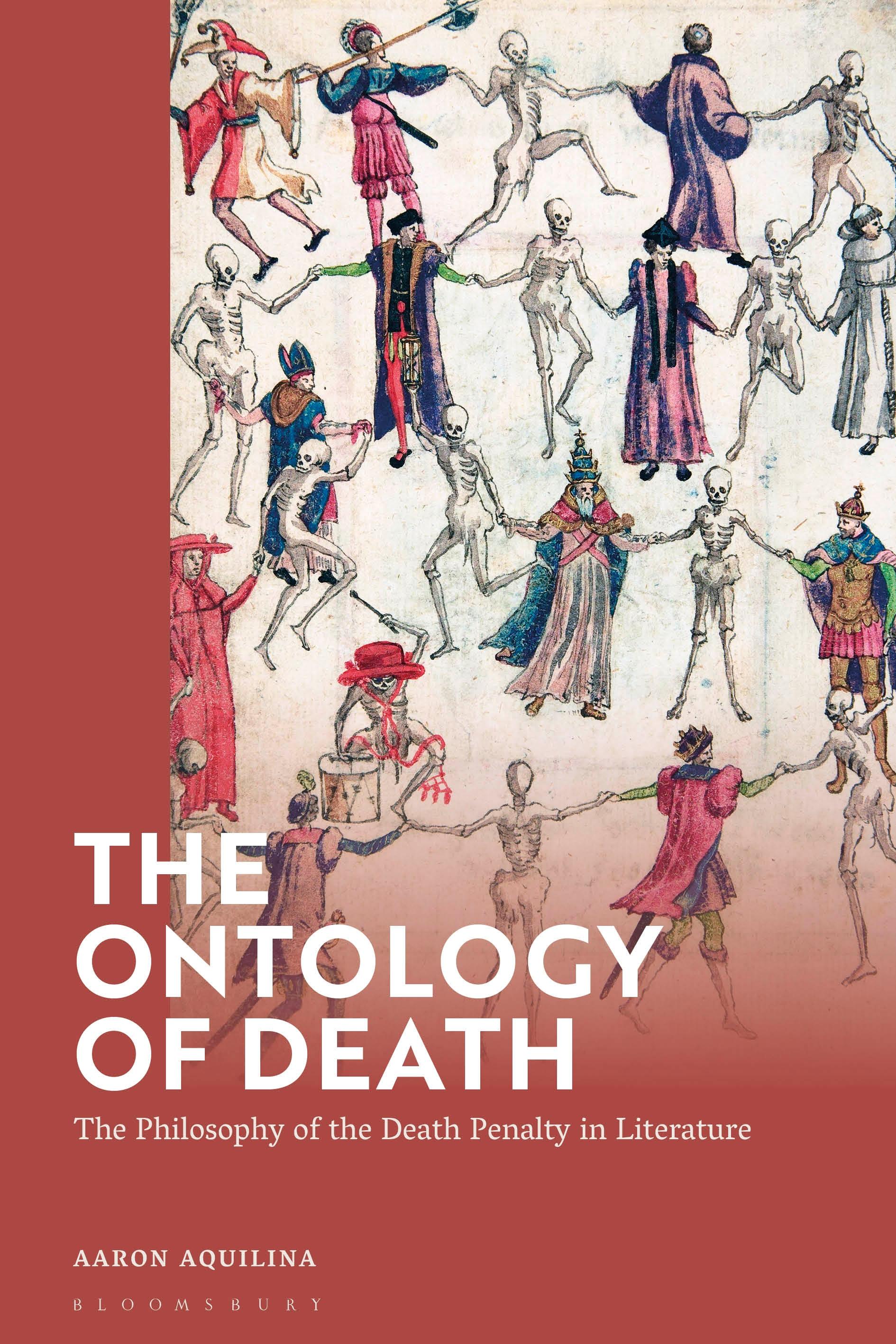
Through examination of the death penalty in literature, Aaron Aquilina contests Heidegger's concept of 'being-towards-death' and proposes a new understanding of the political and philosophical subject.
Dickens, Nabokov, Hugo, Sophocles and many others explore capital punishment in their works, from Antigone to Invitation to a Beheading. Using these varied case studies, Aquilina demonstrates how they all highlight two aspects of the experience. First, they uncover a particular state of being, or more precisely non-being, that comes with a death sentence, and, second, they reveal how this state exists beyond death row, as sovereignty and alterity are by no means confined to a prison cell.
In contrast to Heidegger's being-towards-death, which individualizes the subject – only I can die my own death, supposedly – this book argues that, when condemned to death, the self and death collide, putting under erasure the category of subjectivity itself. Be it death row or not, when the supposed futurity of death is brought into the here and now, we encounter what Aquilina calls 'relational death'. Living on with death severs the subject's relation to itself, the other and political sociality as a whole, rendering the human less a named and recognizable 'being' than an anonymous 'living corpse', a human thing.
In a sustained engagement with Blanchot, Levinas, Hegel, Agamben and Derrida, The Ontology of Death articulates a new theory of the subject, beyond political subjectivity defined by sovereignty and beyond the Heideggerian notion of ontological selfhood.
Dickens, Nabokov, Hugo, Sophocles and many others explore capital punishment in their works, from Antigone to Invitation to a Beheading. Using these varied case studies, Aquilina demonstrates how they all highlight two aspects of the experience. First, they uncover a particular state of being, or more precisely non-being, that comes with a death sentence, and, second, they reveal how this state exists beyond death row, as sovereignty and alterity are by no means confined to a prison cell.
In contrast to Heidegger's being-towards-death, which individualizes the subject – only I can die my own death, supposedly – this book argues that, when condemned to death, the self and death collide, putting under erasure the category of subjectivity itself. Be it death row or not, when the supposed futurity of death is brought into the here and now, we encounter what Aquilina calls 'relational death'. Living on with death severs the subject's relation to itself, the other and political sociality as a whole, rendering the human less a named and recognizable 'being' than an anonymous 'living corpse', a human thing.
In a sustained engagement with Blanchot, Levinas, Hegel, Agamben and Derrida, The Ontology of Death articulates a new theory of the subject, beyond political subjectivity defined by sovereignty and beyond the Heideggerian notion of ontological selfhood.
Betal enkelt med kort, Klarna, Apple Pay eller Google Pay. Ikke fornøyd? Du har alltid 14 dagers angrerett. Les mer i våre vilkår. Har du spørsmål, send oss en e-post på hello@memmo.org.
Memmo gjør det enklere å studere – uansett hvor du er i verden. Hos oss samler du pensumbøker og smarte studieverktøy på ett og samme sted: sammendrag, quizer, podkaster og flashcards. Og så Ted, din studiekompis som svarer på alt du lurer på. Over 50 000 studenter studerer allerede her – bygget for at du skal lære raskere og stresse mindre.