
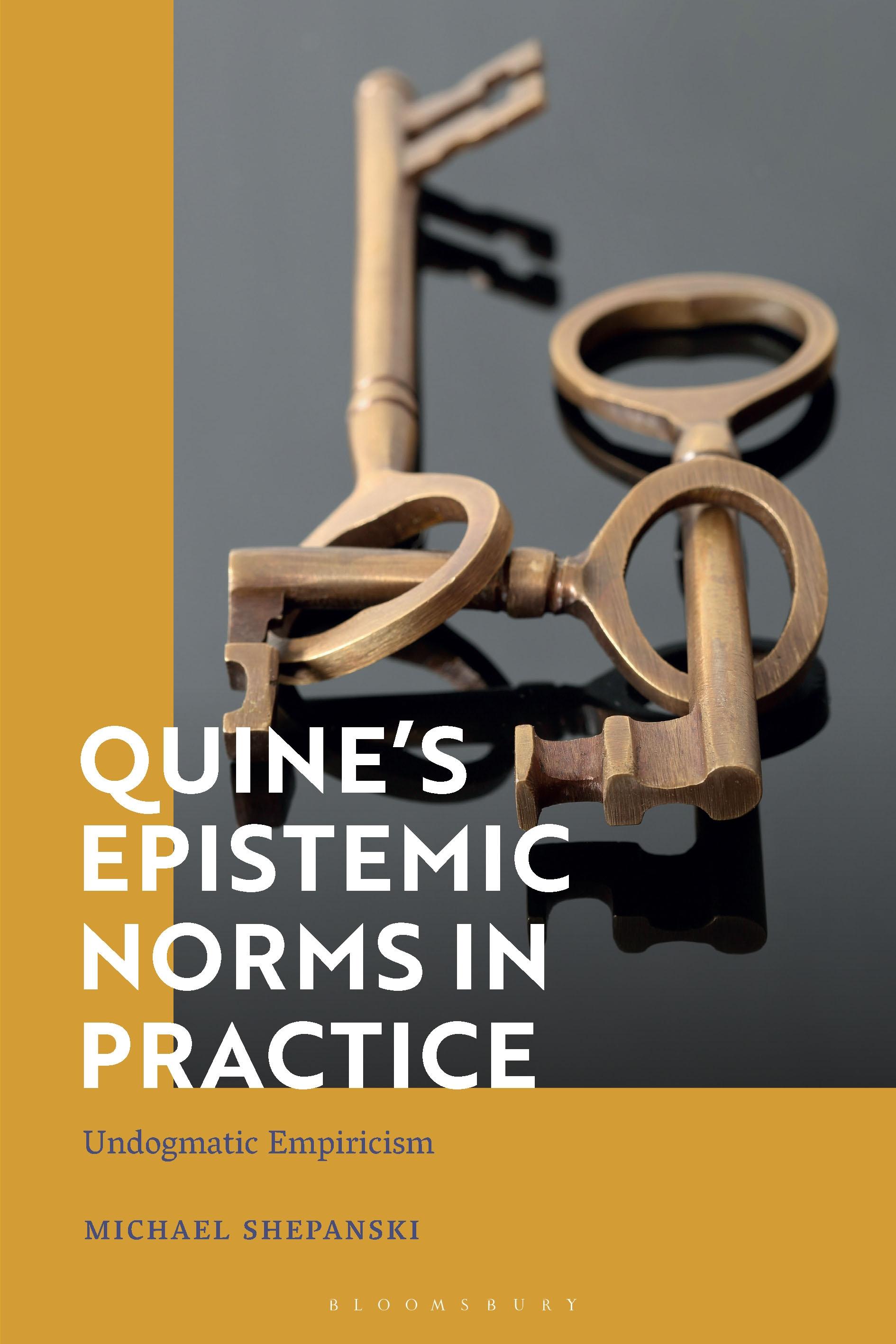
In this illuminating guide to the criteria of rational theorizing, Michael Shepanski identifies, defends and applies W. V. Quine's epistemic norms – the norms that best explain Quine's decisions to accept some theories and not others.
Parts I and II set out the doctrines of this epistemology, demonstrating their potential for philosophical application. Part III is a case study in which Shepanski develops a theory of the propositional attitudes by the method of formalizing inferences to behaviour. He presents critiques of popular alternative views, including foundationalism, the centrality of knowledge and Quine's own epistemological naturalism.
By reassessing Quine's normative epistemology, Shepanski advances our understanding of Quine's philosophy whilst providing a guide for our own theorizing.
Parts I and II set out the doctrines of this epistemology, demonstrating their potential for philosophical application. Part III is a case study in which Shepanski develops a theory of the propositional attitudes by the method of formalizing inferences to behaviour. He presents critiques of popular alternative views, including foundationalism, the centrality of knowledge and Quine's own epistemological naturalism.
By reassessing Quine's normative epistemology, Shepanski advances our understanding of Quine's philosophy whilst providing a guide for our own theorizing.
Betal enkelt med kort, Klarna, Apple Pay eller Google Pay. Ikke fornøyd? Du har alltid 14 dagers angrerett. Les mer i våre vilkår. Har du spørsmål, send oss en e-post på hello@memmo.org.
Memmo gjør det enklere å studere – uansett hvor du er i verden. Hos oss samler du pensumbøker og smarte studieverktøy på ett og samme sted: sammendrag, quizer, podkaster og flashcards. Og så Ted, din studiekompis som svarer på alt du lurer på. Over 50 000 studenter studerer allerede her – bygget for at du skal lære raskere og stresse mindre.