
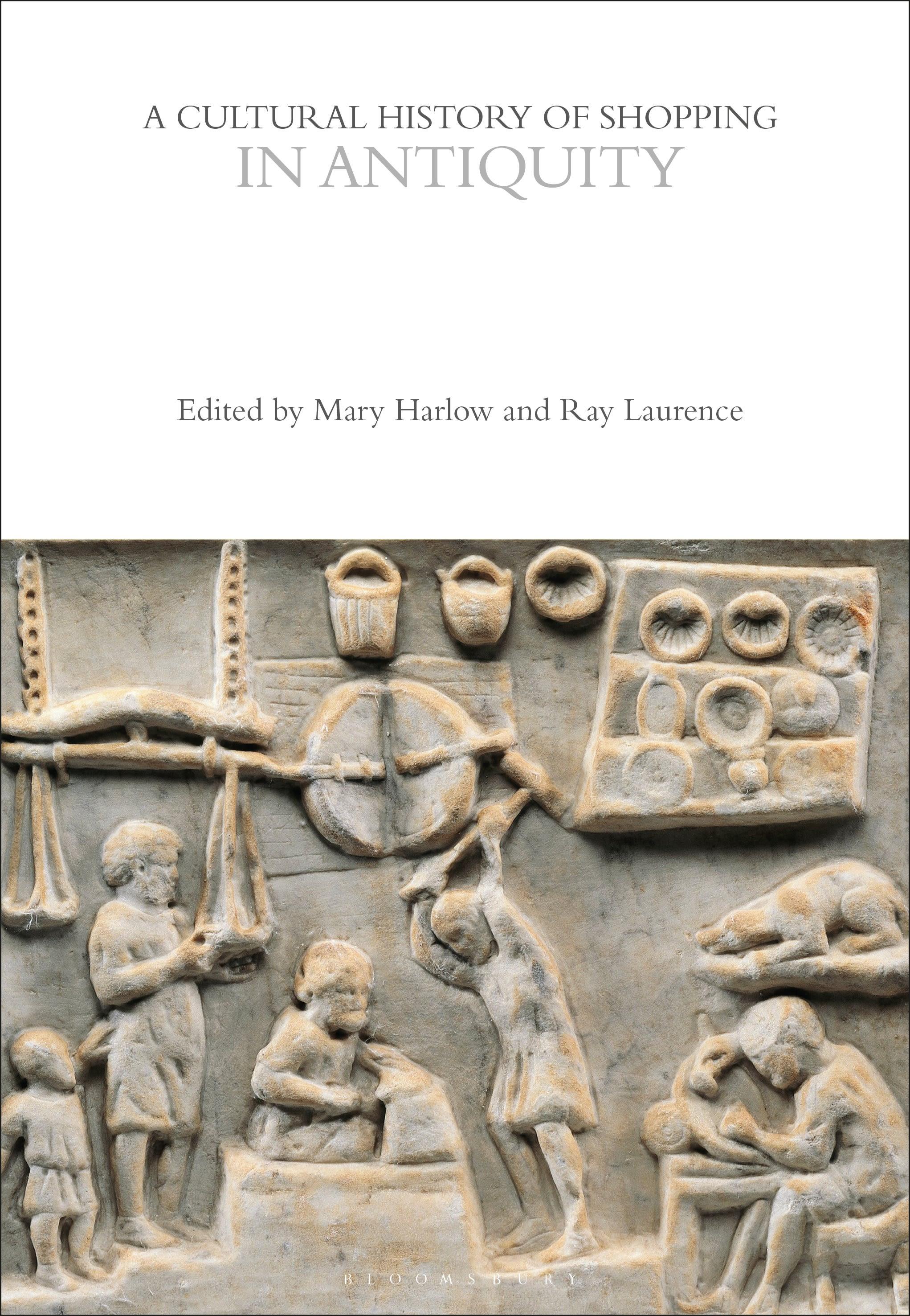
A Cultural History of Shopping was a Library Journal Best in Reference selection for 2022.
Covering the period from 500 BCE to 500 CE, this is the first book to address the cultural history of shoppers and shopping in antiquity. Evidence for the existence of shops has been found across many archaeological sites in Europe, North Africa, and the Middle East but the study of shops and retailing in antiquity is a relatively new subject. From Classical Greece through to the Late Roman Empire, shopping shifted from being a means to an end – a method of supplementing the family diet or providing material goods the household could not manufacture itself – to a form of experience where the processes of browsing and not purchasing became as important as buying. This dramatic transformation is a reflection of the changing material desires of these societies and their perspectives on the ways in which the fulfilment of those desires could be achieved. Recurring themes in this interdisciplinary volume include the lives of 'ordinary' people; the relationship between gender and shopping; the contrast between Greece and Rome; the attitudes towards shopkeepers; the placing of shops in the cityscape; and the zoning of particular crafts and products.
A Cultural History of Shopping in Antiquity presents an overview of the period with themes addressing practices and processes; spaces and places; shoppers and identities; luxury and everyday; home and family; visual and literary representations; reputation, trust and credit; and governance, regulation and the state.
Covering the period from 500 BCE to 500 CE, this is the first book to address the cultural history of shoppers and shopping in antiquity. Evidence for the existence of shops has been found across many archaeological sites in Europe, North Africa, and the Middle East but the study of shops and retailing in antiquity is a relatively new subject. From Classical Greece through to the Late Roman Empire, shopping shifted from being a means to an end – a method of supplementing the family diet or providing material goods the household could not manufacture itself – to a form of experience where the processes of browsing and not purchasing became as important as buying. This dramatic transformation is a reflection of the changing material desires of these societies and their perspectives on the ways in which the fulfilment of those desires could be achieved. Recurring themes in this interdisciplinary volume include the lives of 'ordinary' people; the relationship between gender and shopping; the contrast between Greece and Rome; the attitudes towards shopkeepers; the placing of shops in the cityscape; and the zoning of particular crafts and products.
A Cultural History of Shopping in Antiquity presents an overview of the period with themes addressing practices and processes; spaces and places; shoppers and identities; luxury and everyday; home and family; visual and literary representations; reputation, trust and credit; and governance, regulation and the state.
Sider: 248
Kategori: Arkeologi & Antikvetenskap
e-ISBN: 9781350278431
Fraktvekt: 1.2 kg
Sendes innen: 1-2 dager
Betal enkelt med kort, Klarna, Apple Pay eller Google Pay. Ikke fornøyd? Du har alltid 14 dagers angrerett. Les mer i våre vilkår. Har du spørsmål, send oss en e-post på hello@memmo.org.
Memmo gjør det enklere å studere – uansett hvor du er i verden. Hos oss samler du pensumbøker og smarte studieverktøy på ett og samme sted: sammendrag, quizer, podkaster og flashcards. Og så Ted, din studiekompis som svarer på alt du lurer på. Over 50 000 studenter studerer allerede her – bygget for at du skal lære raskere og stresse mindre.