
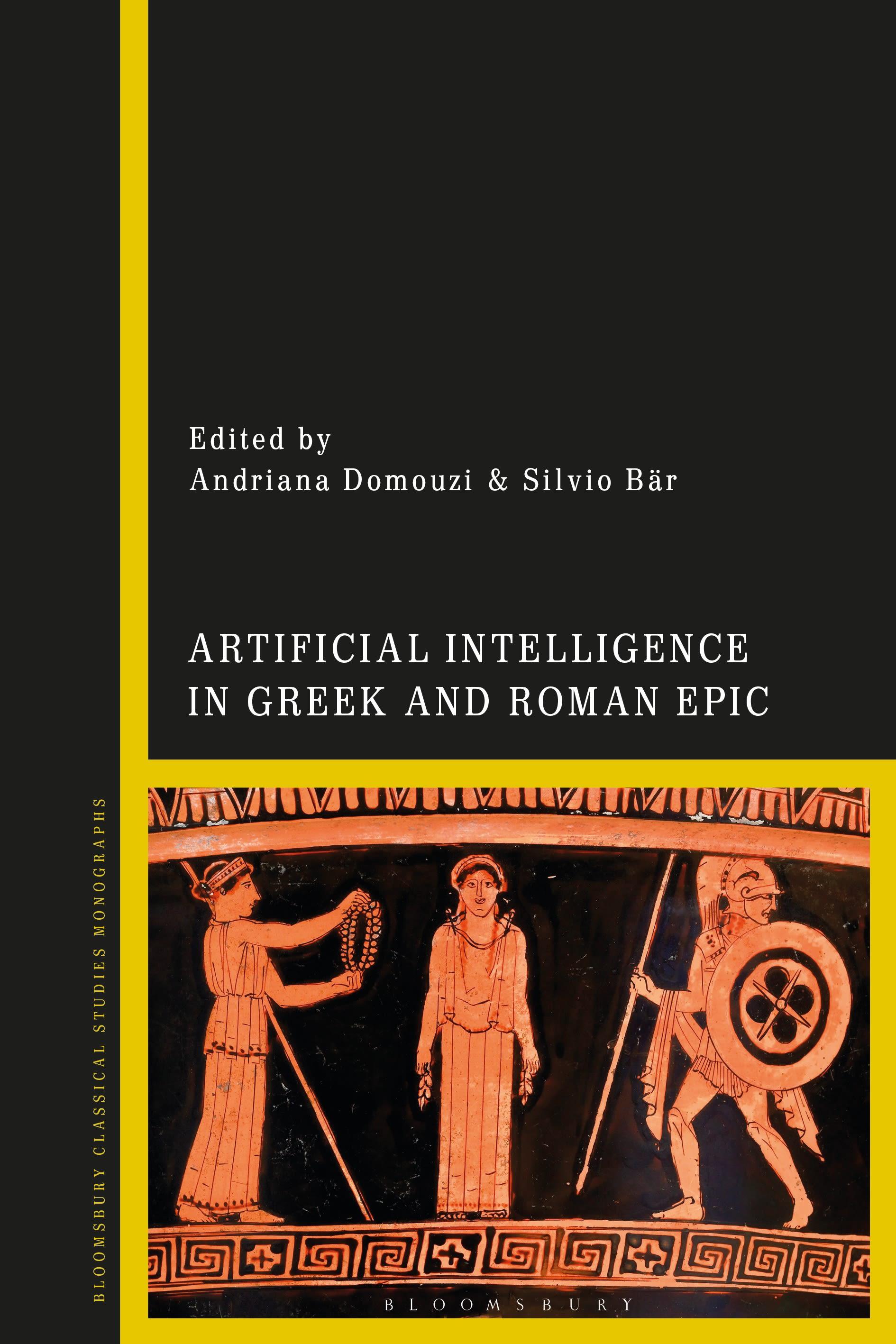
This is the first scholarly exploration of concepts and representations of Artificial Intelligence in ancient Greek and Roman epic, including their reception in later literature and culture. Contributors look at how Hesiod, Homer, Apollonius of Rhodes, Moschus, Ovid and Valerius Flaccus crafted the first literary concepts concerned with automata and the quest for artificial life, as well as technological intervention improving human life.
Parts one and two consider, respectively, archaic Greek, and Hellenistic and Roman, epics. Contributors explore the representations of Pandora in Hesiod, and Homeric automata such as Hephaestus' wheeled tripods, the Phaeacian king Alcinous' golden and silver guard dogs, and even the Trojan Horse. Later examples cover Artificial Intelligence and automation (including Talos) in the Argonautica of Apollonius and Valerius Flaccus, and Pygmalion's ivory woman in Ovid's Metamorphoses. Part three underlines how these concepts benefit from analysis of the ekphrasis device, within which they often feature. These chapters investigate the cyborg potential of the epic hero and the literary implications of ancient technology. Moving into contemporary examples, the final chapters consider the reception of ancient literary Artificial Intelligence in contemporary film and literature, such as the Czech science-fiction epic Starvoyage, or Small Cosmic Odyssey by Jan Kr?esadlo (1995) and the British science-fiction novel The Holy Machine by Chris Beckett (2004).
Parts one and two consider, respectively, archaic Greek, and Hellenistic and Roman, epics. Contributors explore the representations of Pandora in Hesiod, and Homeric automata such as Hephaestus' wheeled tripods, the Phaeacian king Alcinous' golden and silver guard dogs, and even the Trojan Horse. Later examples cover Artificial Intelligence and automation (including Talos) in the Argonautica of Apollonius and Valerius Flaccus, and Pygmalion's ivory woman in Ovid's Metamorphoses. Part three underlines how these concepts benefit from analysis of the ekphrasis device, within which they often feature. These chapters investigate the cyborg potential of the epic hero and the literary implications of ancient technology. Moving into contemporary examples, the final chapters consider the reception of ancient literary Artificial Intelligence in contemporary film and literature, such as the Czech science-fiction epic Starvoyage, or Small Cosmic Odyssey by Jan Kr?esadlo (1995) and the British science-fiction novel The Holy Machine by Chris Beckett (2004).
Betal enkelt med kort, Klarna, Apple Pay eller Google Pay. Ikke fornøyd? Du har alltid 14 dagers angrerett. Les mer i våre vilkår. Har du spørsmål, send oss en e-post på hello@memmo.org.
Memmo gjør det enklere å studere – uansett hvor du er i verden. Hos oss samler du pensumbøker og smarte studieverktøy på ett og samme sted: sammendrag, quizer, podkaster og flashcards. Og så Ted, din studiekompis som svarer på alt du lurer på. Over 50 000 studenter studerer allerede her – bygget for at du skal lære raskere og stresse mindre.