
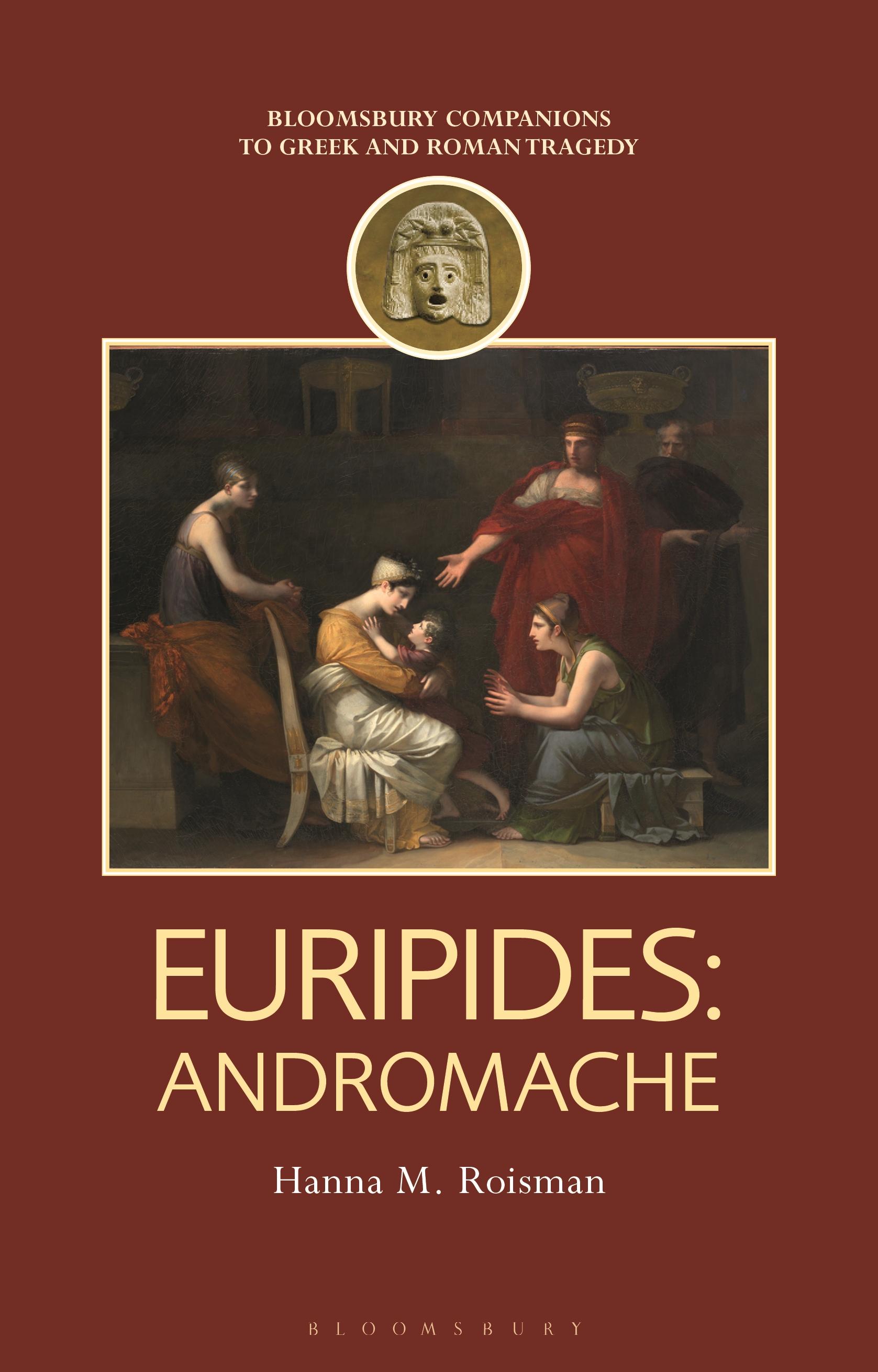
The book is written mainly for students to enable them better to appreciate and enjoy Euripides' Andromache. Its presentation seeks to combine depth of analysis with clarity and accessibility. It discusses Greek theatre and performance, the myth behind the play, and the literary, intellectual, and political context in which it was written and first performed. The book provides analyses of the various characters, and highlights the play's ambiguities and complexities. What makes Andromache of special interest is the fact that, of the 32 extant tragedies, it might have been originally produced outside Athens. This in turn leads the discussion of how the play's scrutiny of the Spartan characters affected the off-stage audience.
Andromache is the only play that portrays the human toll caused by the Trojan War to both the Trojan and the Greek sides. After the Fall of Troy, Andromache, former wife of Hector, has been given to Neoptolemus, Achilles' son, as a war-prize. Andromache bore Neoptolemus a son, Molossus, before Neoptolemus married Hermione, the daughter of Menelaus and Helen. While Neoptolemus is away, Menelaus and Hermione attempt to kill Andromache and Molossus, causing a rift between the two families who were the major players in the War: the house of Atreus and the house of Peleus, father of Achilles. Although Neoptolemus is murdered, the play ends with a prophecy for the future of the line of descent of Peleus and Thetis in the form of the blessed kingdom of Molossia.
Andromache is the only play that portrays the human toll caused by the Trojan War to both the Trojan and the Greek sides. After the Fall of Troy, Andromache, former wife of Hector, has been given to Neoptolemus, Achilles' son, as a war-prize. Andromache bore Neoptolemus a son, Molossus, before Neoptolemus married Hermione, the daughter of Menelaus and Helen. While Neoptolemus is away, Menelaus and Hermione attempt to kill Andromache and Molossus, causing a rift between the two families who were the major players in the War: the house of Atreus and the house of Peleus, father of Achilles. Although Neoptolemus is murdered, the play ends with a prophecy for the future of the line of descent of Peleus and Thetis in the form of the blessed kingdom of Molossia.
Betal enkelt med kort, Klarna, Apple Pay eller Google Pay. Ikke fornøyd? Du har alltid 14 dagers angrerett. Les mer i våre vilkår. Har du spørsmål, send oss en e-post på hello@memmo.org.
Memmo gjør det enklere å studere – uansett hvor du er i verden. Hos oss samler du pensumbøker og smarte studieverktøy på ett og samme sted: sammendrag, quizer, podkaster og flashcards. Og så Ted, din studiekompis som svarer på alt du lurer på. Over 50 000 studenter studerer allerede her – bygget for at du skal lære raskere og stresse mindre.