
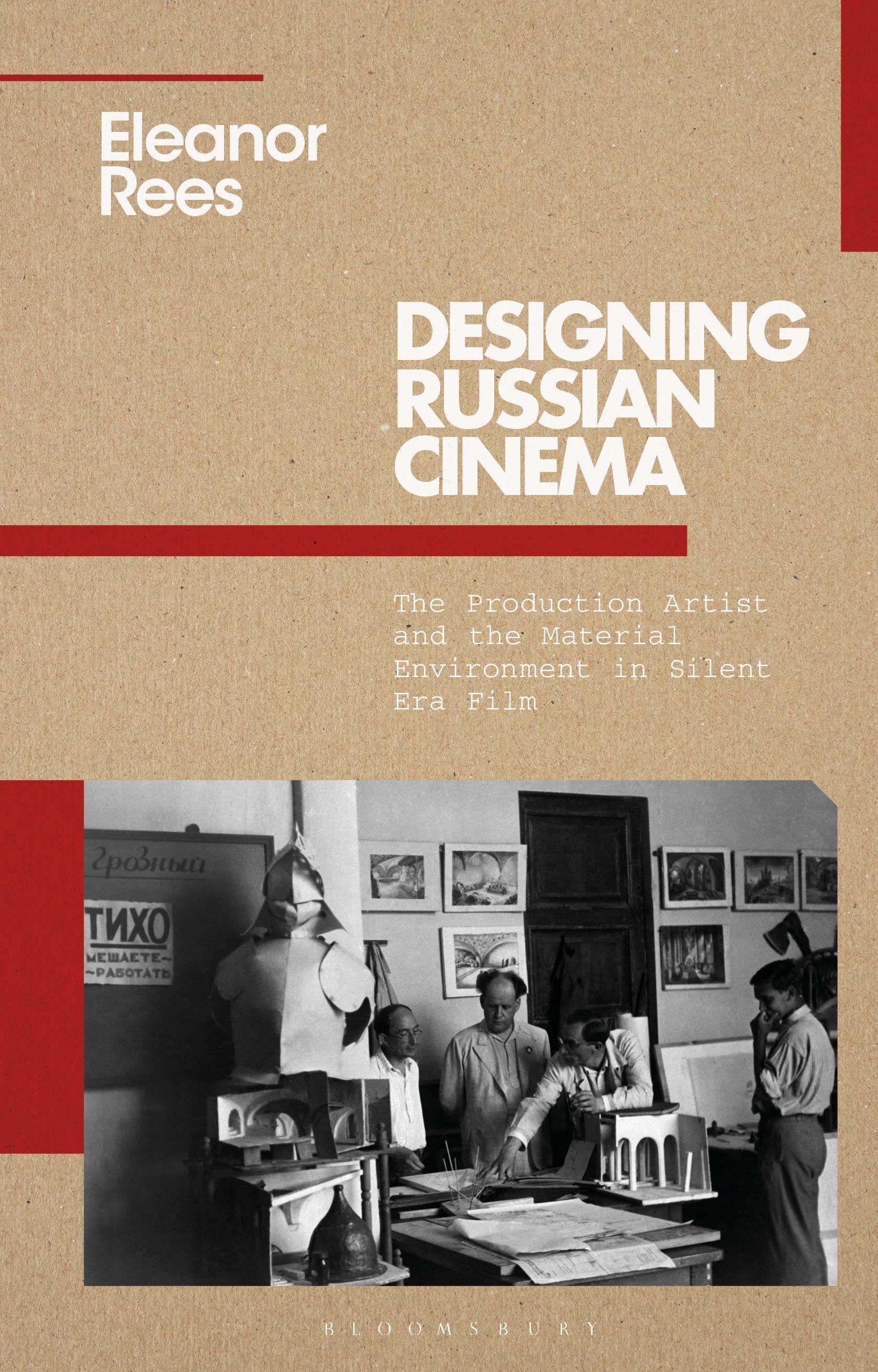
This book highlights the significant role that production artists played when Russian cinema was still in its infancy. It uncovers Russian cinema's connections with other art forms, examining how production artists drew on both aesthetic traditions and modernist experiments in architecture, painting and theatre as they explored the new medium of cinema and its potential to engender new models of perception and forms of audience engagement.
Drawing on set design sketches, archival documents and film-makers' memoirs, Eleanor Rees reveals how less-canonical films such as Behind the Screen (Kulisy ekrana, 1919) and Palace and Fortress (Dvorets i krepost´, 1923), were remarkable from a design perspective, and also provides new readings of well-known films, such as Children of the Age (Deti veka, 1915) and Strike (Stachka, 1925). Rees brings to light information on significant but understudied figures such as Vladimir Egorov and Sergei Kozlovskii, and highlights the involvement of well-known figures such as Lev Kuleshov and Aleksandr Rodchenko.
Unlike the majority of late Imperial directors and camera operators, many early-Russian production artists continued to work in cinema in the Soviet era and to draw on practices forged before the 1917 Revolution. In spanning the entire silent era, this book highlights the often overlooked continuities between the late-Imperial and early-Soviet periods of cinema, thus questioning traditional historical periodisations.
Drawing on set design sketches, archival documents and film-makers' memoirs, Eleanor Rees reveals how less-canonical films such as Behind the Screen (Kulisy ekrana, 1919) and Palace and Fortress (Dvorets i krepost´, 1923), were remarkable from a design perspective, and also provides new readings of well-known films, such as Children of the Age (Deti veka, 1915) and Strike (Stachka, 1925). Rees brings to light information on significant but understudied figures such as Vladimir Egorov and Sergei Kozlovskii, and highlights the involvement of well-known figures such as Lev Kuleshov and Aleksandr Rodchenko.
Unlike the majority of late Imperial directors and camera operators, many early-Russian production artists continued to work in cinema in the Soviet era and to draw on practices forged before the 1917 Revolution. In spanning the entire silent era, this book highlights the often overlooked continuities between the late-Imperial and early-Soviet periods of cinema, thus questioning traditional historical periodisations.
Sider: 256
Kategori: Film- & Medievetenskap
e-ISBN: 9781350246379
Fraktvekt: 1.2 kg
Sendes innen: 1-2 dager
Betal enkelt med kort, Klarna, Apple Pay eller Google Pay. Ikke fornøyd? Du har alltid 14 dagers angrerett. Les mer i våre vilkår. Har du spørsmål, send oss en e-post på hello@memmo.org.
Memmo gjør det enklere å studere – uansett hvor du er i verden. Hos oss samler du pensumbøker og smarte studieverktøy på ett og samme sted: sammendrag, quizer, podkaster og flashcards. Og så Ted, din studiekompis som svarer på alt du lurer på. Over 50 000 studenter studerer allerede her – bygget for at du skal lære raskere og stresse mindre.