
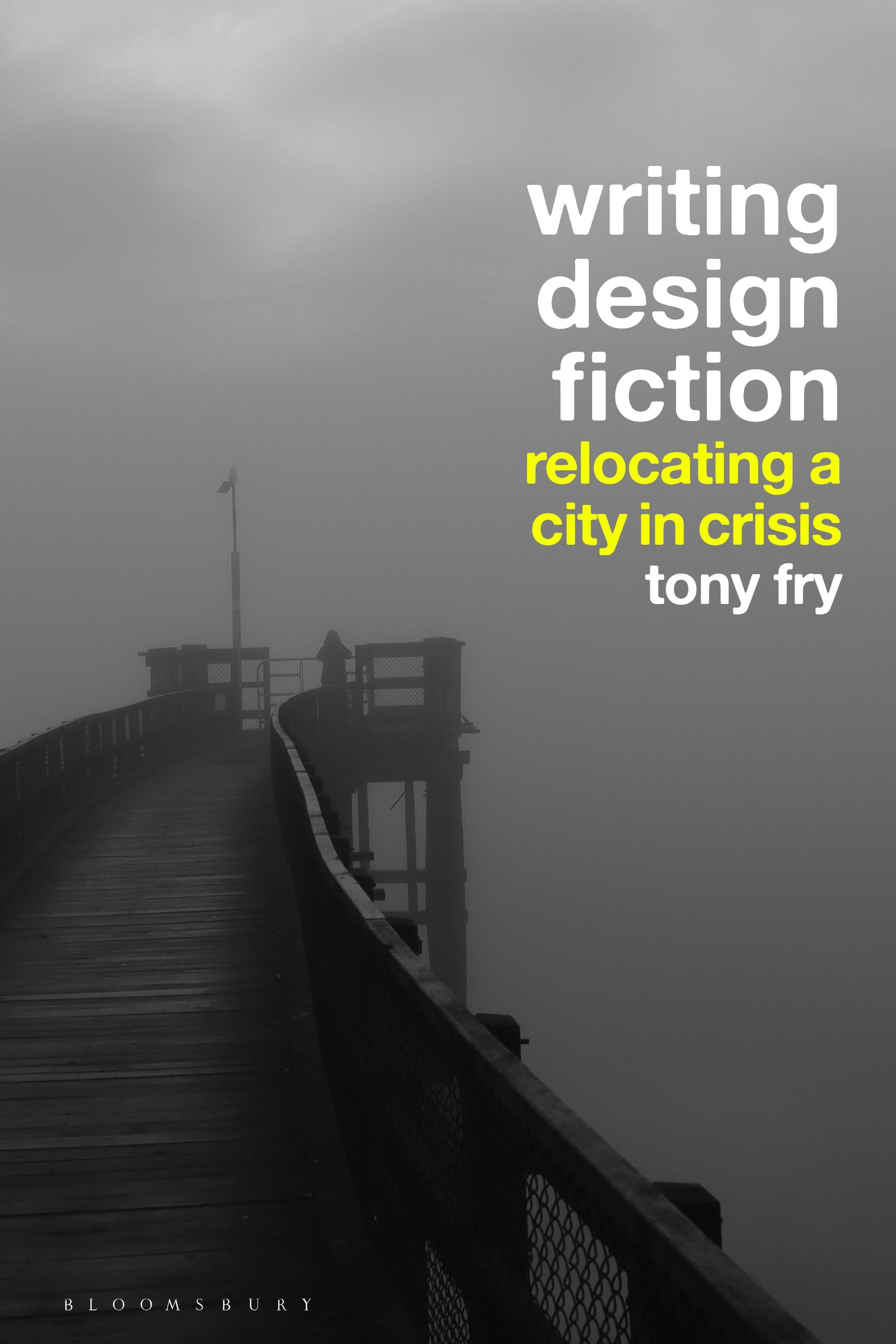
Written by leading design philosopher Tony Fry, Writing Design Fiction: Relocating a City in Crisis is both an introduction to the power of “design fiction” in the design process, and a novella-length work of fiction in itself-telling the dramatic story of the relocation of the City of Harshon.
Set in the near future, Harshon, a delta city, is facing environmental catastrophe due to rising sea levels-consequently, a decision is made to relocate the entire city inland. A diverse cast of voices-including an architect, a journalist, an economist, a construction worker, and residents-narrate the extraordinary challenges and complexities which follow. This work presents a real-world scenario which, in coming decades, will face many of the world's cities. The fictional format provides a novel way of exploring the very serious inherent technical, social, political, economic and cultural challenges. The story provides a rehearsal of the design challenges which are likely to face architects, planners, and designers in an uncertain global future.
“Design fiction” is a fast-growing area within design and architecture, increasingly deployed as a serious methodology by designers as a tool in scenario planning. Writing Design Fiction takes the practice to a higher level conceptually and theoretically, but also practically. The book is divided into four parts, with the fictional narrative bookended by further critical analysis. Part One shows how a critique of existing modes of design fiction can lead to more grounded and critical thinking and practice. Part Three critically reflects on the narrative, while Part Four presents the practical application of the second order design fiction approach. This book demonstrates the value of a more developed mode of design fiction to students, professional designers and architects across the breadth of design practices, as well as to other disciplines interested in the future of cities.
Set in the near future, Harshon, a delta city, is facing environmental catastrophe due to rising sea levels-consequently, a decision is made to relocate the entire city inland. A diverse cast of voices-including an architect, a journalist, an economist, a construction worker, and residents-narrate the extraordinary challenges and complexities which follow. This work presents a real-world scenario which, in coming decades, will face many of the world's cities. The fictional format provides a novel way of exploring the very serious inherent technical, social, political, economic and cultural challenges. The story provides a rehearsal of the design challenges which are likely to face architects, planners, and designers in an uncertain global future.
“Design fiction” is a fast-growing area within design and architecture, increasingly deployed as a serious methodology by designers as a tool in scenario planning. Writing Design Fiction takes the practice to a higher level conceptually and theoretically, but also practically. The book is divided into four parts, with the fictional narrative bookended by further critical analysis. Part One shows how a critique of existing modes of design fiction can lead to more grounded and critical thinking and practice. Part Three critically reflects on the narrative, while Part Four presents the practical application of the second order design fiction approach. This book demonstrates the value of a more developed mode of design fiction to students, professional designers and architects across the breadth of design practices, as well as to other disciplines interested in the future of cities.
Betal enkelt med kort, Klarna, Apple Pay eller Google Pay. Ikke fornøyd? Du har alltid 14 dagers angrerett. Les mer i våre vilkår. Har du spørsmål, send oss en e-post på hello@memmo.org.
Memmo gjør det enklere å studere – uansett hvor du er i verden. Hos oss samler du pensumbøker og smarte studieverktøy på ett og samme sted: sammendrag, quizer, podkaster og flashcards. Og så Ted, din studiekompis som svarer på alt du lurer på. Over 50 000 studenter studerer allerede her – bygget for at du skal lære raskere og stresse mindre.