
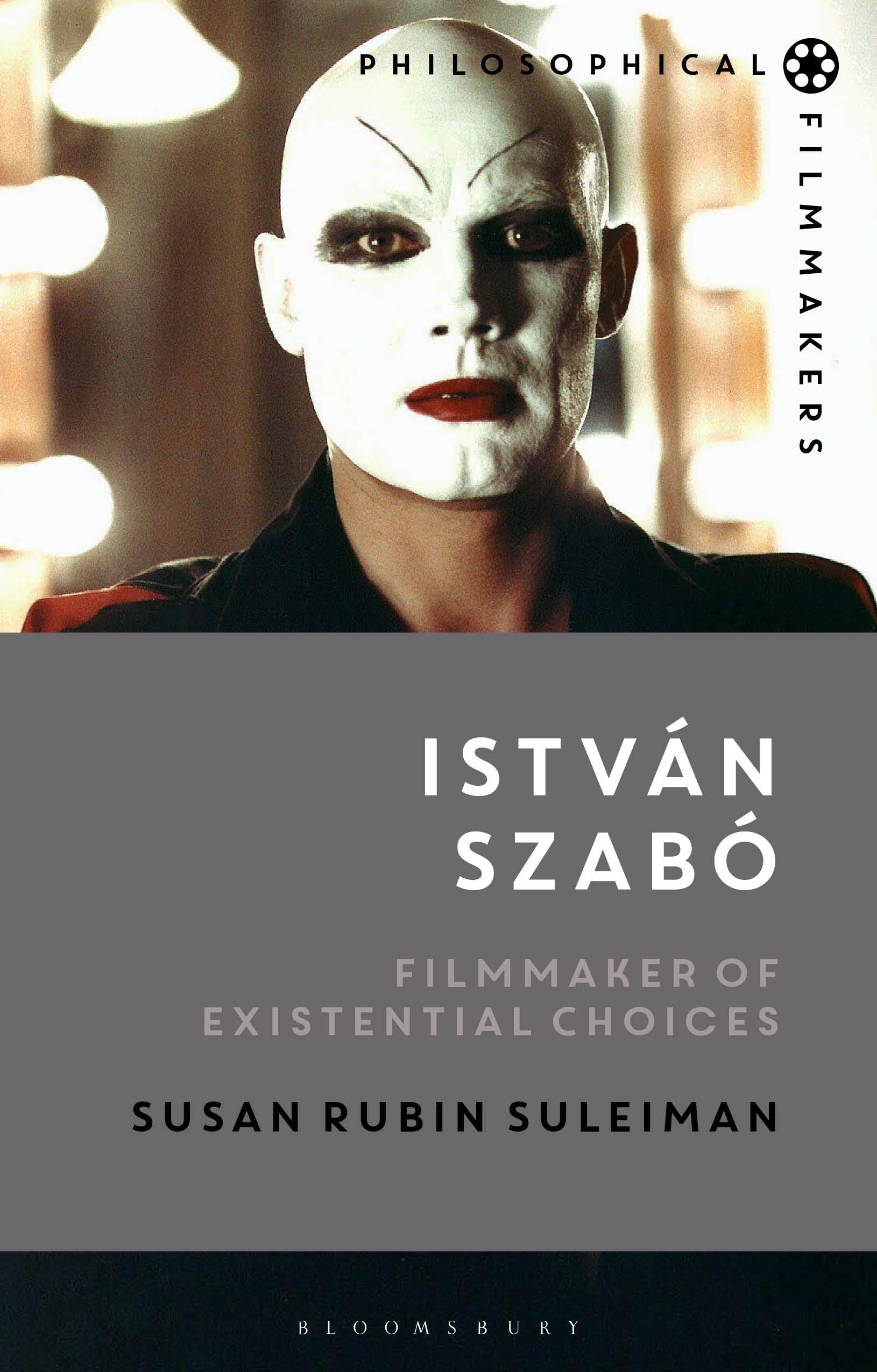
István Szabó is one of the few Hungarian filmmakers to have earned a major international reputation over the past half century. This thoughtful and original book is the first examination of Szabó's contribution to contemporary thought, engaging the troubled history of Europe in the 20th and 21st centuries.
István Szabó's importance as a filmmaker lies not only in his attention to film's formal elements but in his deep and ongoing engagement with some of the most urgent ethical and existential questions of our time.
With detailed analyses of István Szabó's major films, from his 1960s works to his Academy Award for Best Foreign Film winner, Mephisto, and on through Szabó's last film in 2020, Final Report, Susan Rubin Suleiman focuses on four important questions pertaining to existential choice: to leave home or to stay in a communist country? To collaborate or not with an authoritarian regime? To affirm or to deny one's Jewishness in the face of antisemitism? To seek or to give up on community in the face of individual or national conflicts? Above all, Suleiman addresses the single most important philosophical question that haunts Szabó's work, as it does that of many other Central European intellectuals and filmmakers of our time. That is, how do individuals attempt, through the life choices they make or that are foisted on them, to create a viable self in extreme historical situations over which they have no control?
István Szabó's importance as a filmmaker lies not only in his attention to film's formal elements but in his deep and ongoing engagement with some of the most urgent ethical and existential questions of our time.
With detailed analyses of István Szabó's major films, from his 1960s works to his Academy Award for Best Foreign Film winner, Mephisto, and on through Szabó's last film in 2020, Final Report, Susan Rubin Suleiman focuses on four important questions pertaining to existential choice: to leave home or to stay in a communist country? To collaborate or not with an authoritarian regime? To affirm or to deny one's Jewishness in the face of antisemitism? To seek or to give up on community in the face of individual or national conflicts? Above all, Suleiman addresses the single most important philosophical question that haunts Szabó's work, as it does that of many other Central European intellectuals and filmmakers of our time. That is, how do individuals attempt, through the life choices they make or that are foisted on them, to create a viable self in extreme historical situations over which they have no control?
Betal enkelt med kort, Klarna, Apple Pay eller Google Pay. Ikke fornøyd? Du har alltid 14 dagers angrerett. Les mer i våre vilkår. Har du spørsmål, send oss en e-post på hello@memmo.org.
Memmo gjør det enklere å studere – uansett hvor du er i verden. Hos oss samler du pensumbøker og smarte studieverktøy på ett og samme sted: sammendrag, quizer, podkaster og flashcards. Og så Ted, din studiekompis som svarer på alt du lurer på. Over 50 000 studenter studerer allerede her – bygget for at du skal lære raskere og stresse mindre.